REVIEW · MILAN
Milan: Street Art Tour of Ortica, Milan’s open air museum
Book on GetYourGuide →Operated by Tour in Milan · Bookable on GetYourGuide
Street art in Milan, with context. Ortica is Milan’s first open-air museum district, and this 2-hour walk is built to show you not just what’s painted, but why it matters. You’ll follow a local guide through backstreets shaped by viaducts, railway tracks, and the Lambro River, and you’ll connect the dots between old graffiti, today’s mural culture, and the community project driving it forward.
I love how the Or.Me. Project (Otica Memoria) turns murals into public storytelling, with over 20 large-scale works by the Orticanoodles collective. I also love that the guide explains the techniques and the social impact, so the walls feel like a living history lesson, not random decoration. One consideration: if you expect every corner to be packed with street art houses, you might want a few more stops focused on additional facades.
Ortica has had an identity shift in the last decade, from industrial fringe and a somewhat forgotten working-class area to a destination for art and memory. The payoff here is that you leave knowing how street art can regenerate a neighborhood—and how to look at it with sharper eyes.
In This Review
- Key things that make this Ortica street art tour worth it
- Ortica’s street art feels like a neighborhood story, not a photo hunt
- Or.Me. Project and the Orticanoodles murals: what you’re actually looking at
- Walking the flow in Ortica: from Argonne to murals, photos, and viewpoints
- Price and value: how $49 stacks up for a 2-hour mural education
- Guides make or break a street art tour: what to expect in the real talk
- Who should book this Ortica tour, and who might want to skip it
- Practical tips so you leave with great photos and a better eye
- Should you book the Milan Ortica street art tour?
- FAQ
- How long is the Ortica street art tour?
- Where is the meeting point?
- What language is the tour guide speaking?
- How big is the group?
- Is the tour wheelchair accessible?
- How much does the tour cost?
- What’s included, and what’s not included?
- Can I cancel if my plans change?
Key things that make this Ortica street art tour worth it
- Ortica’s transformation: from overlooked industrial fringe to Milan’s first open-air museum district
- Or.Me. Project murals: over 20 large-scale works tied to Milan’s collective memory
- A story-based approach: heroes, workers, musicians, activists, and forgotten figures in public art
- Street art evolution explained: from underground rebellion toward recognized cultural form
- Real photo moments: planned photo stops plus a viewpoint during the walk
- Small group feel: limited to 8 participants with an English-speaking guide
Ortica’s street art feels like a neighborhood story, not a photo hunt
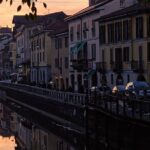
When people say street art is everywhere, it’s easy to treat it like background. This walk changes that. Ortica isn’t just a place with murals; it’s a district shaped by physical boundaries—viaducts, railway tracks, and the Lambro River—that once left it feeling isolated. Historically working-class and somewhat ignored, it’s only in the last decade that the area’s reputation shifted in a big way.
That’s the first reason I like this tour: the art is tied to place. You’re not walking through a generic “street art zone.” Instead, you’re seeing how the neighborhood’s past and its reshaped identity show up on the walls.
The second reason is the guide layer. The tour is designed to give you a framework—history, origins, present, and future of street art—so when you look at a mural, you understand the cultural signals behind it. You also learn that graffiti and street art can function as cultural commentary and urban regeneration, not only as style.
There’s one tradeoff to be aware of. The walk is focused on the most creative and meaningful pieces the guide wants you to see. That’s great for understanding the main works and their messages, but if your ideal tour is nonstop street art on every building, you may wish the route included a few more facades with additional street art.
You can also read our reviews of more museum experiences in Milan
Or.Me. Project and the Orticanoodles murals: what you’re actually looking at
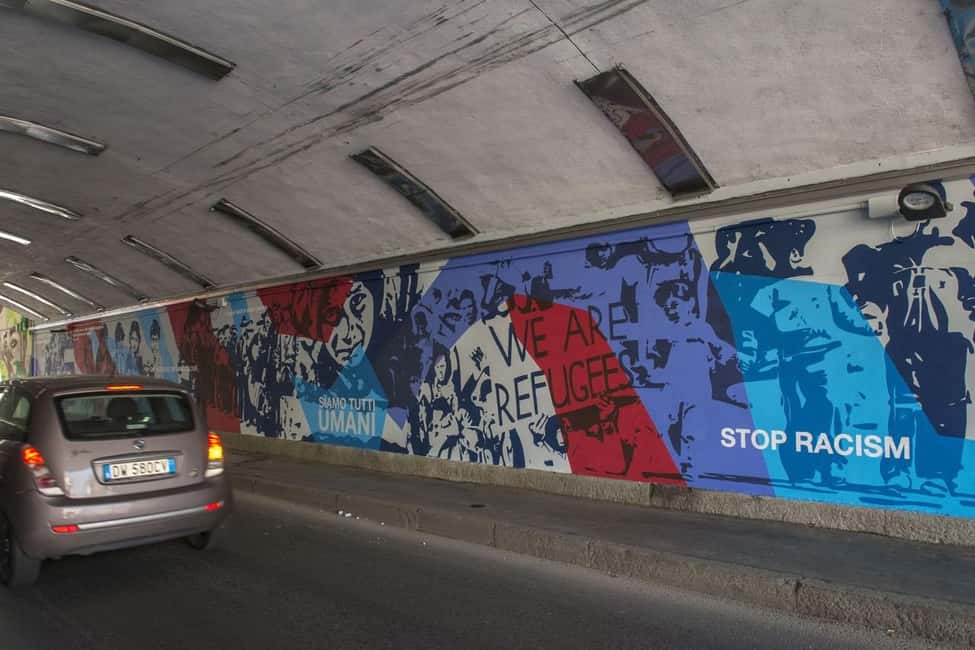
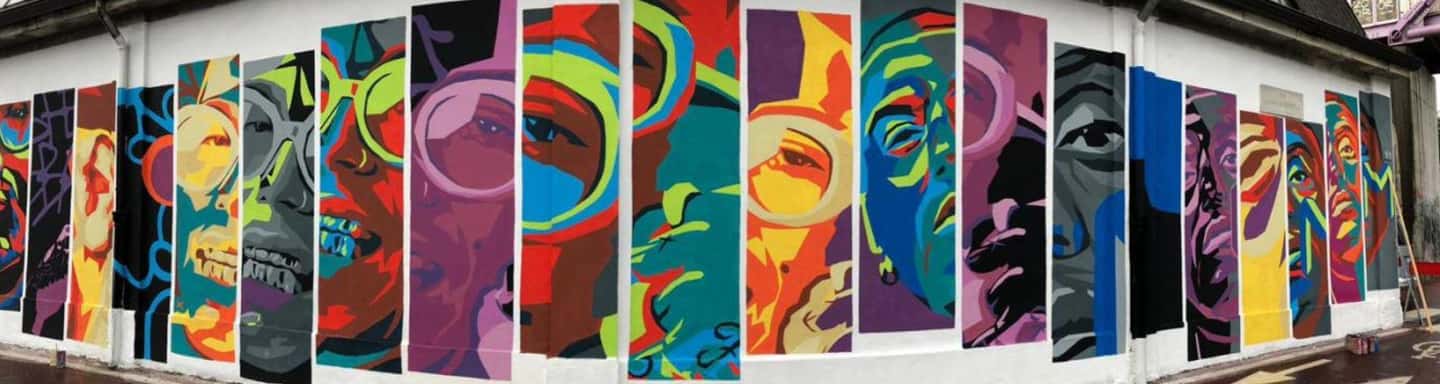
The center of the experience is the Or.Me. Project (Otica Memoria), a major urban art initiative led by the Orticanoodles artist collective. This matters because the murals aren’t presented as decoration. Each one is part of a larger community storytelling effort meant to preserve and interpret memory—Milan’s heroes, workers, musicians, activists, and figures that time often forgets.
Here’s what I find useful for your expectations: the tour is built around the idea that street art is a visual language with content. You’re guided through murals that cover different kinds of social and cultural themes, including anti-fascist partisans, jazz legends, factory workers, and feminist icons. Those topics give you something to think about while you’re standing there looking up close.
You’re also told how the project connects to community involvement. The murals are created with participation from local residents, which changes how the art lands. It’s not just outsiders painting a wall for Instagram. It’s a living museum feel, where residents and the district’s identity are part of the narrative.
And because the tour is specifically about the evolution of graffiti and street art in Milan, you’ll also hear how the scene moved from underground rebellion toward a recognized cultural form. You’ll learn about different techniques and styles used by today’s street artists. Even if you don’t know mural terminology yet, you’ll start to spot patterns—how artists build emotion through color choices, how composition guides your eye, and how imagery can carry political and cultural meaning.
If you want one mental shortcut: think of the murals as chapters. The guide helps you read them in order.
Walking the flow in Ortica: from Argonne to murals, photos, and viewpoints
The tour starts at Argonne, meeting outside the metro stop Argonne on line 4. The guide is there with the agency logo, which is handy if you’re arriving in a hurry. From this point, the walk is organized into timed segments that keep the pace friendly without turning the experience into a sprint.
The first short guided segment is about getting you oriented. Even though it’s brief, it sets the lens for what comes next: where the district is, how it developed, and why street art took hold here in the way it did. This is the part that helps you avoid the common mistake of just staring at images without understanding what you’re seeing.
Next is the main guided portion in Ortica (the longest block). This is where you spend most of your time with the most significant murals and story explanations. You’ll cover the origins and present of street art, the way techniques and styles differ, and the stories behind the works. This is also where you learn how street art has transformed how people experience and talk about the places they live.
Then there’s a photo stop, followed by short free time. I like that structure. The guide points you to what matters, then you get a chance to shoot your own angles and absorb the walls without listening for every second. Short free time keeps the group moving, but it still gives you room to actually look.
Later in the walk you’ll return to guided segments again, which is useful because it means the tour doesn’t just front-load the information. You get additional context and more interpretation as the route changes. The final viewpoint photo stop is exactly what it sounds like: a place to pause and take pictures from a better angle. It’s also a nice moment to shift from close-up mural reading back to big-picture district viewing.
Practical note: you’re on your feet for a little over two hours total, and the neighborhood’s paths are part of what makes it feel real. Comfortable shoes are not optional if you want to enjoy it fully.
Price and value: how $49 stacks up for a 2-hour mural education
At $49 per person for a 2-hour walking tour, you’re paying for two things that are hard to replicate on your own: guided interpretation and curated sightlines. Street art is everywhere in cities, but most people can’t instantly tell which murals have the most cultural weight or how a district’s story connects to what’s painted on the walls.
This tour is built to give you that interpretive layer—history and culture of street art, plus a focus on Ortica’s transformation and the Or.Me. murals that anchor the narrative. You also get the small-group setup (limited to 8), which matters because you’ll likely want to ask questions while you’re standing in front of a specific piece.
So what you’re really buying is time with a guide who can translate the visuals into meaning. If you’re the type of traveler who likes learning the background behind what you see (instead of just taking photos), this price can feel very fair.
What’s not included matters too. Transportation to and from the activity and food/drinks are not part of the ticket. Since it’s a walking tour, it’s smart to plan your nearest metro arrival and bring a snack plan afterward if you’re hungry.
Guides make or break a street art tour: what to expect in the real talk
The quality of a street art tour often hinges on the guide voice—how clearly they connect the images to history and how easily they talk. This one stands out for that human element. I’ve seen firsthand that guides like Lucy can bring real enthusiasm and professionalism, and it shows in how the stories come alive instead of feeling like a script. Another guide, Luca, is described as informative and easy to chat with, which is exactly the vibe you want when questions pop up while you’re looking at a mural’s details.
You’ll get the tour in English, so you’re not stuck trying to piece together meaning from pictures on your phone. And with a small group of up to 8 participants, the pace stays conversational rather than rushed.
You can also read our reviews of more tours and experiences in Milan
Who should book this Ortica tour, and who might want to skip it
This tour is a strong match if you want street art with context. It’s also for you if you like neighborhoods with a real past—working-class roots, industrial fringe history, and the kind of physical geography that can shape how a city develops.
It’s especially good if you’re curious about the Or.Me. Project themes—memory, identity, and how public art can connect people. You’ll learn about multiple types of subjects painted through the project, and you’ll see the district’s shift from forgotten to visible.
You might think twice if you want a tour that’s basically a wide scanning route with lots of random murals and a heavy focus on sheer volume. The tour aims at the most creative and significant works, so the emphasis is on storytelling quality over mural quantity.
Good to know for planning: it’s wheelchair accessible, so it’s designed with mobility needs in mind. If you’re traveling with someone who needs that, it’s a reassuring detail.
Practical tips so you leave with great photos and a better eye
This is one of those experiences where small choices pay off.
Wear comfortable shoes. You’re walking through a real district, not a perfectly flat museum floor.
Check the weather forecast. The tour can be rescheduled in case of bad weather, so don’t plan it as your only outdoor activity if the forecast is questionable.
Photography is encouraged, but please be respectful. Street art is public art, but the neighborhood is still a community. Keep your attention on the artwork and don’t block walkways.
One smart approach: shoot the mural in three stages—wide shot first to catch the whole composition, then a closer angle to catch detail, then one photo with your perspective shifted so you can see how the mural sits in its real street setting. The viewpoint stop at the end makes the “whole district” angle easier.
Finally, slow down for the story parts. The guide’s explanations are what turn a mural from a picture into something you’ll remember later.
Should you book the Milan Ortica street art tour?
If you like your travel photos with meaning, book it. For $49, you’re getting a focused 2-hour guided walk centered on Ortica’s open-air museum identity and the Or.Me. Project murals with clear historical and cultural context. The small group size and the English-speaking guide help you actually understand what you’re seeing, not just pass by it.
I’d skip or compare alternatives if your main goal is maximum mural volume with zero listening time. This tour prioritizes interpretation and the most significant works, including a planned photo stop and a viewpoint, but it’s still a walking tour with a guided narrative.
If you’re visiting Milan and want something real beyond the usual landmarks, this is one of the most practical ways to see how street art can reshape a place.
FAQ
How long is the Ortica street art tour?
It lasts 2 hours.
Where is the meeting point?
You meet outside metro stop Argonne (line 4), and the guide will be there with the agency logo.
What language is the tour guide speaking?
The tour is in English.
How big is the group?
It’s a small group limited to 8 participants.
Is the tour wheelchair accessible?
Yes, the tour is wheelchair accessible.
How much does the tour cost?
The price is $49 per person.
What’s included, and what’s not included?
Included: a guided tour of Ortica’s street art, insights into the history and culture of street art, and exploration of Milan’s first open-air museum district. Not included: transportation to/from the activity and food and drinks.
Can I cancel if my plans change?
Yes. You can cancel up to 24 hours in advance for a full refund.