REVIEW · MILAN
Street Art&Urban Vibes in Milan’s Most Exciting Rising Areas
Book on GetYourGuide →Operated by FollowMi Around · Bookable on GetYourGuide
Milan has layers you can’t see from the Duomo. This 2-hour street art walk takes you into Milan’s emerging areas, where buildings wear open-air artworks and the vibe feels local, not staged. I like the way the tour combines photo stops with a guide who explains what you’re looking at, not just where to stand.
The tour is led by a street-art lover local expert (one guide named Simon is noted for extra effort and showing surprising corners). You also get real context on Milanese and Italian street art, including how street art can act as protest. The only real drawback: you’ll be walking outdoors for the full 2 hours, and the tour does not include getting you to the meeting point.
If you’re the type who likes stepping off the main routes, this one makes Milan feel personal fast. You’ll hit a series of streets and small creative spots, with stops that mix guided walking and time to photograph what you find. And you’ll come away with stories you can actually use when you’re back in the rest of the city.
In This Review
- Key Highlights to Know Before You Go
- Why Milan’s Newer Street-Art Streets Feel More Real
- Meeting at Scaringi Pastry (Pasteur Area): Start Smart
- Via Padova: Your First Real Chance to Read the Walls
- Via Giovanni Pontano: Where Walking Becomes Seeing
- Viale Monza: The Moment the Neighborhood Starts Speaking
- Mosso, Bici&Radici, and Hug: Art Meets Everyday Milan
- The Story Behind Milan’s Street Art (Without a Full Lecture)
- Price and Value: Is $90.63 Fair for Two Hours?
- Who This Street Art Walk Fits Best
- Practical Tips for Enjoying Every Stop
- Should You Book This Street Art Safari in Milan?
- FAQ
- How long is the street art tour?
- How much does the tour cost?
- When does the tour start?
- Where does the tour meet?
- Where does the tour end?
- What languages are the live guides available in?
- Is this tour a private group?
- Is public transportation included?
- What is included in the tour price?
- Is the tour wheelchair accessible?
Key Highlights to Know Before You Go
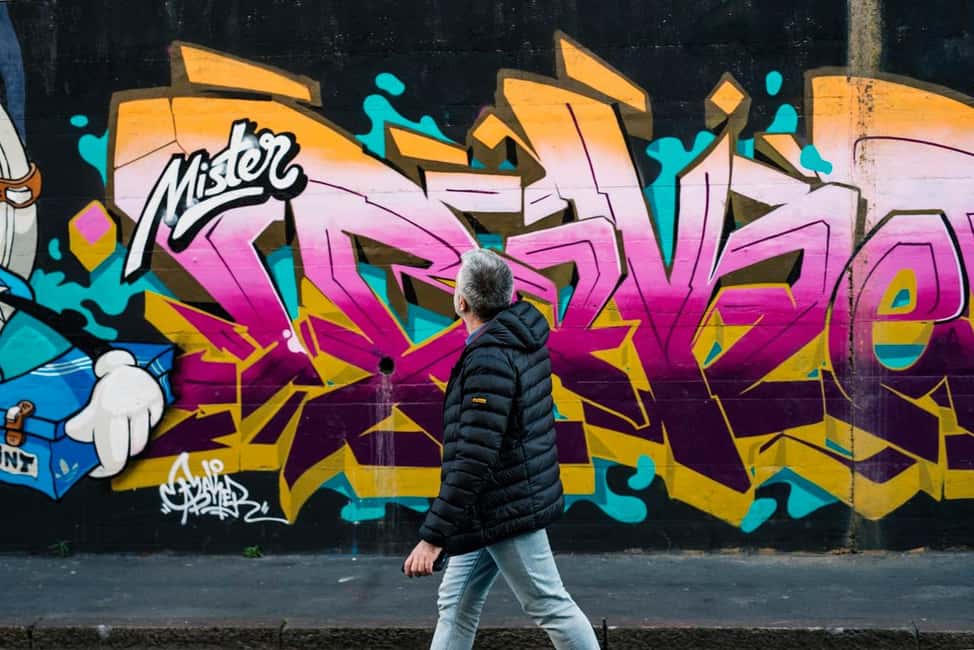
- A two-hour urban photo safari focused on murals you can spot on the move
- Street-art local expert guidance that helps you read the walls
- Rising Milan neighborhoods where street art connects to everyday life
- Milanese and Italian street-art background with a focus on past and present
- Small alternative businesses you pass and sometimes stop for during the walk
- Private group and wheelchair accessible for a more comfortable pace
Why Milan’s Newer Street-Art Streets Feel More Real
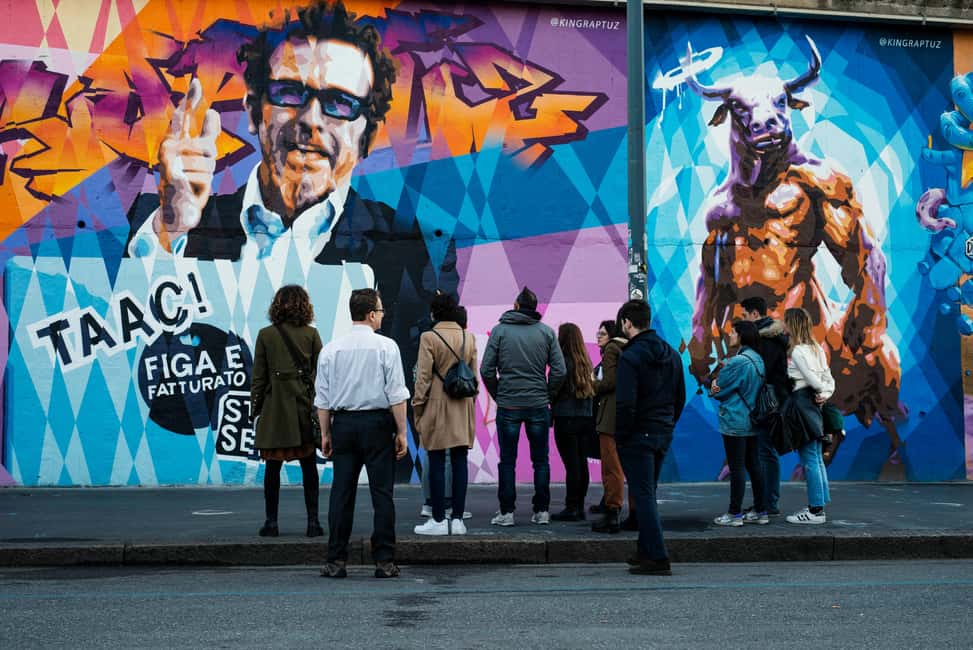
Milan isn’t only about fashion windows and grand facades. In the areas this tour covers, the city shows another side: the kind shaped by artists working close to where people actually live.
The walking route is designed around “open-air artworks,” meaning you’ll see murals and street art directly on the buildings—no museum glass, no audio headset needed. What I like here is that the tour doesn’t treat street art like a one-time sightseeing event. It frames it as part of Milan’s current culture, and part of a longer conversation that includes protest, identity, and neighborhood memory.
You’ll also get a sense of how street art changes the look of ordinary streets. That matters for your photos, of course. But it also changes how you experience the city. Instead of looking at Milan from one iconic spot, you start noticing layers: walls, textures, tags, larger compositions, and the way artists respond to where they’re painting.
You can also read our reviews of more tours and experiences in Milan
Meeting at Scaringi Pastry (Pasteur Area): Start Smart
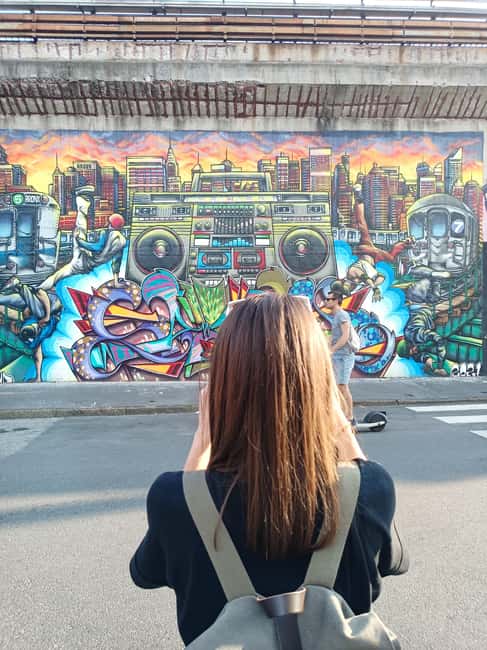
You’ll begin at the meeting point in front of the Scaringi pastry shop, in the Pasteur area. That’s a practical setup: pastries are easy to find, and you can grab a quick coffee before you start if you want.
The tour runs in a private group format, and it’s led by a live guide in English and Italian. Even if your Italian is basic, having a guide who can switch languages keeps the experience smooth. You’ll also be walking as a group with guided stops, so you won’t spend your time figuring out where to go next.
One detail worth planning around: public transportation to reach the meeting point isn’t included. That’s not a dealbreaker—just handle your commute so you’re not stressed at the start. Aim to arrive a few minutes early so you can settle in before the first photo stop.
Via Padova: Your First Real Chance to Read the Walls
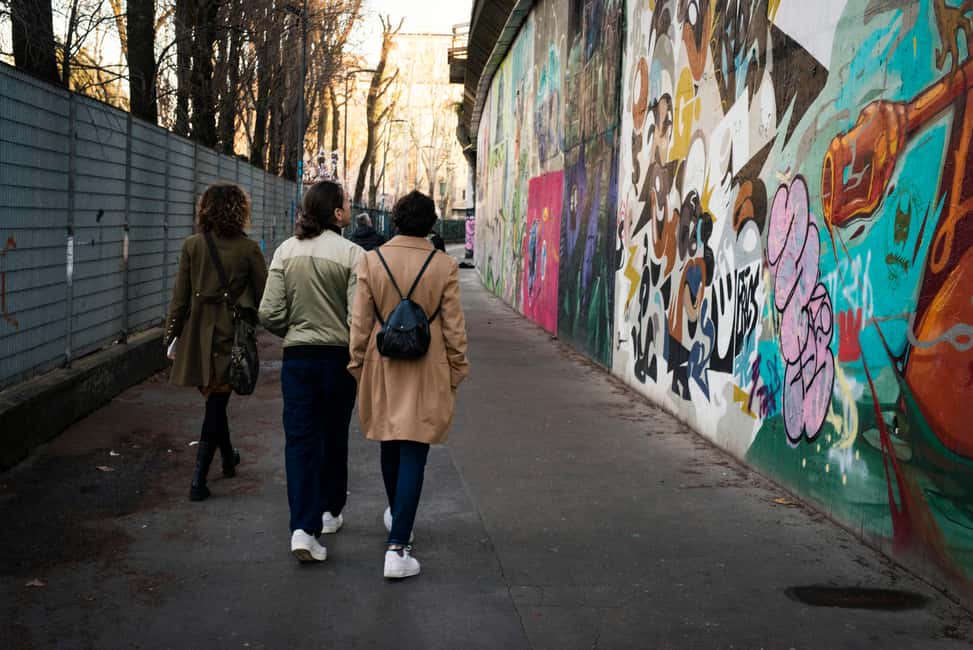
Via Padova is the first street listed on the route, with a photo stop plus guided tour time. This is a good place to start because your eyes are fresh and you’re still learning what your guide wants you to notice.
At stops like Via Padova, you’ll typically get help with the “how to look” part of street art. Instead of just pointing at art, the guide is meant to explain the notions behind it—where it fits in Milan’s street-art story, how the style connects to other examples, and why the setting matters.
Photo-stop time here is also useful for timing. You’ll learn quickly that you can’t always photograph a mural the same way from the same angle every time. The guide’s job is to help you find the spot where the artwork and the street context make sense in a frame.
What to do during this stop: keep your camera ready, but also listen. The best photos usually come from understanding what you’re aiming to capture: a face or character, the way colors sit against the building, or the message tone the artist is using.
Via Giovanni Pontano: Where Walking Becomes Seeing
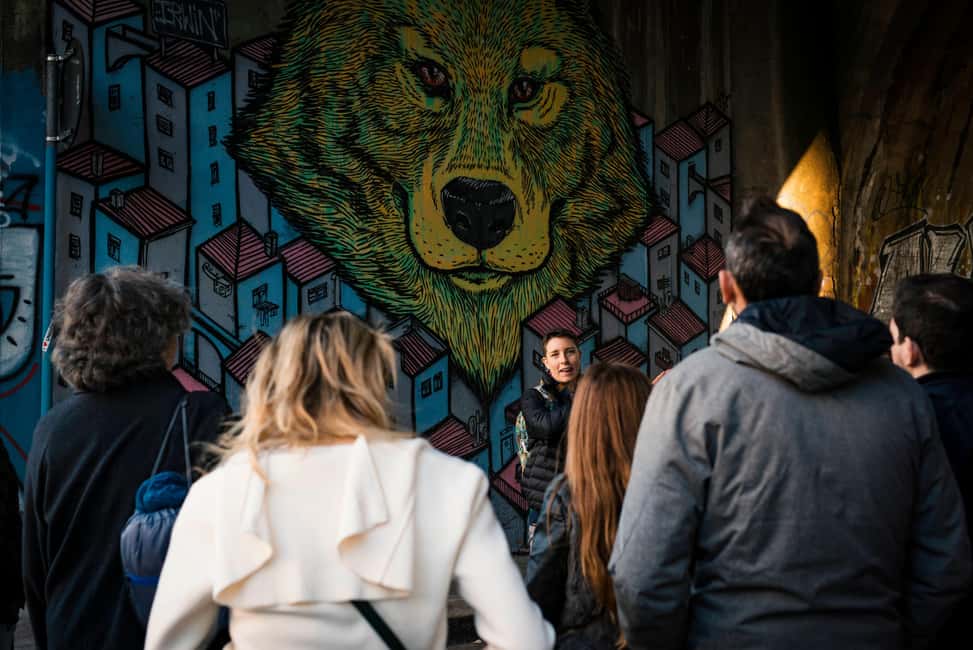
Next up is Via Giovanni Pontano. Like Via Padova, it’s listed as a photo stop, with visit and guided tour time. This kind of repetition is intentional. You get the rhythm of the walk: pause, look, learn, and photograph—then move on.
This stop helps you connect two dots:
1) Street art can be visually impressive.
2) It’s also communication. The tour description points to working-class streets where street art can be a form of protest, and that theme usually becomes clearer the more you walk.
By the time you reach Pontano, you’ll likely notice that some walls feel like declarations, while others feel like conversation—small marks that add to the scene rather than dominate it. Your guide’s context is what helps you see the difference.
A practical tip: try quick shots first, then slow down. At some angles you’ll get the full mural; at others you’ll get details. Both are worth capturing, but the guide can help you decide what details to look for so your shots don’t become random.
Viale Monza: The Moment the Neighborhood Starts Speaking
Then comes Viale Monza, another photo stop with guided visit time. Streets like this can shift the mood. Wide avenues, different building types, and changing pedestrian flow can all affect how street art shows itself.
This is where the tour’s “alternative neighborhood” angle becomes real. The route isn’t just about murals on one perfect wall. It’s about street art in context—how it interacts with ordinary city life and how the neighborhood identity comes through as you move.
If you’re hoping for an Instagram-ready walk, this stop is one to pay attention to for composition. Even without specific artwork names provided, Viale Monza is set up as a structured photo moment, which usually means the guide knows where the visual story lands.
What I like about having multiple photo stops: you don’t wait for the one big moment. You’re collecting evidence throughout the walk, and your photos start telling a better story by the end.
Mosso, Bici&Radici, and Hug: Art Meets Everyday Milan
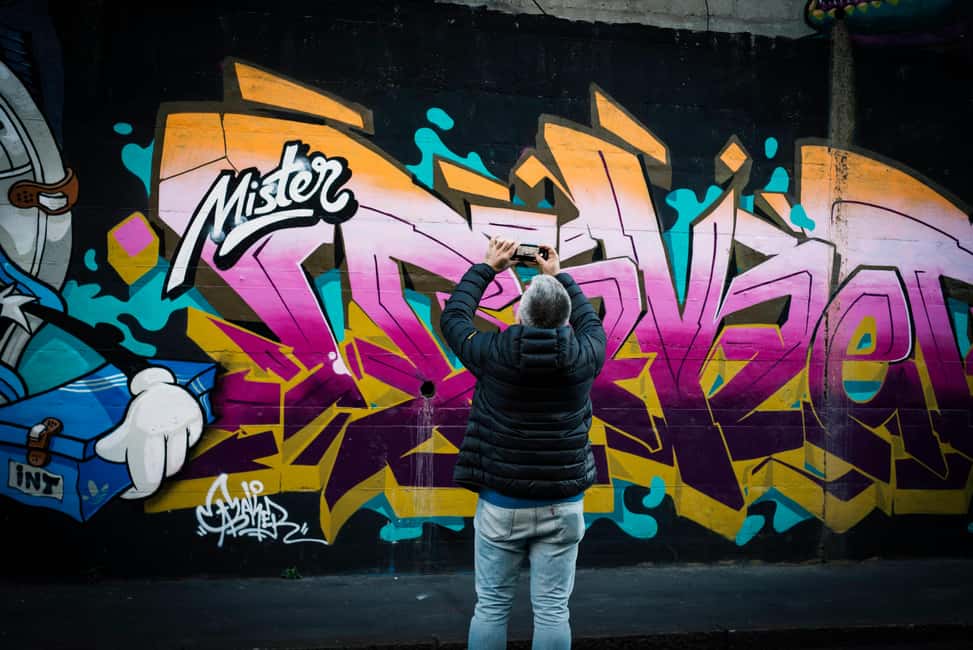
After Viale Monza, the tour moves to stops listed as mosso, Bici&Radici, and Hug. These are named stops, and the itinerary consistently labels them as photo stop, visit, and guided tour.
Even without extra detail on each location, the structure suggests something important: this route is designed to connect street art with the small places around it. The tour description even calls out “small and alternative businesses.” That’s a key part of the value here. You’re not only collecting photos of walls; you’re also getting a feel for how creative communities operate in the open.
Bici&Radici, in particular, sounds like the kind of spot that’s part of the neighborhood’s daily rhythm—something you’d more likely notice in real life than on a postcard itinerary. That’s exactly what you want from a street art walk: the sense that the art isn’t just decoration. It’s part of the neighborhood’s network of culture and identity.
How to enjoy these stops: pause long enough to look at the relationship between the art and the space it’s in. Does it sit quietly with the storefront? Does it feel confrontational against the street? Does it look like it belongs to the place, or like it arrived as a new voice? Your guide’s job is to help you interpret that.
The Story Behind Milan’s Street Art (Without a Full Lecture)
One of the tour’s core promises is learning “notions about the history of Milanese and Italian street art.” You also get guided explanations tied to Milan’s past and present, plus the idea that street art can function as protest on working-class streets.
You don’t need to be an expert to get value from this. The point is understanding street art as a visual language with context—why an artist chooses a specific message, why a location matters, and how styles evolve over time. When the guide does this well, street art stops feeling like random decoration and starts feeling like a city-wide timeline.
This is also where the local guide matters most. A skilled guide can tell you what to look for beyond color and composition. That might mean explaining recurring themes, the meaning behind certain choices, or how the neighborhood has changed. The goal is to make your viewing smarter, not just louder.
If your guide happens to be Simon, the experience description and feedback highlight that he makes an effort and shows hidden corners with an informative, surprising approach. That kind of guide energy usually changes the whole tone of a walk: less “tour,” more “guided exploration.”
Price and Value: Is $90.63 Fair for Two Hours?
The price is listed as $90.63 per person for a duration of 2 hours. Is that worth it? In my view, it becomes fair if you want a guided, story-focused route rather than a self-guided photo hunt.
What you’re paying for is not just standing in front of murals. You’re paying for:
- a street-art local expert who can explain what you’re seeing
- a structured set of stops (multiple streets plus named local locations)
- private group format, which typically makes the pace and attention more tailored
Also, the tour description positions itself as the only street art tour in Milan. That claim may be marketing, but it signals the intent: this isn’t a general “see Milan” walk. It’s street art, and it’s focused.
One cost to account for: public transportation to reach the meeting point isn’t included. If you add local transit, your total day cost will be a bit higher. Still, for a 2-hour specialist walk in an expensive city, it’s usually the kind of activity that’s best when you’re traveling with curiosity and time constraints.
Who This Street Art Walk Fits Best
This tour makes the most sense if you:
- love street art and want your photos to have meaning, not just pretty colors
- prefer emerging neighborhoods over the obvious checklist
- like conversations about art and culture where the city feels lived-in
- want to discover small alternative businesses alongside the murals
It also works if you’re visiting Milan for the first time but don’t want your whole trip to be “famous buildings only.” This gives you a different lens on the city.
Where it may not fit is if you’re chasing only major landmarks or if you dislike walking outdoors. The focus is the street-level art scene. You’re not going to get a highlight tour of the top monuments here.
Practical Tips for Enjoying Every Stop
Here’s how to get the most from a 2-hour street art photo safari:
- Wear comfortable shoes. The route is multiple streets and named stops.
- Bring a camera, but also plan to look up. Street art often rewards different viewing distances.
- Expect the walk to be guided, not silent. Your best photos usually happen after the guide points out what matters.
- If you’re traveling with a friend, a private group format can still feel fun. You’ll get attention without being lost in a large crowd.
- If you’re sensitive to weather, check the forecast. Since it’s outdoors the whole time, your comfort matters.
If you want your experience to feel smooth, keep your questions ready. Guides love specifics: the meaning of a symbol, why a wall looks the way it does, or how the neighborhood got to this point.
Should You Book This Street Art Safari in Milan?
Book it if you want Milan beyond the classic postcard route. This is a focused street art experience with a local guide, multiple structured photo stops, and a clear theme: emerging neighborhoods, open-air artworks, and street art connected to Milan’s own history and present-day culture.
Skip it if you want a monument-heavy day or you’d rather explore entirely on your own with no guidance. The value here is the interpretation: understanding why the art is where it is, and how it fits the city around it.
If you’re aiming for a memorable Milan moment that’s creative, city-living, and different from the usual tourist loop, this one is an easy yes.
FAQ
How long is the street art tour?
The tour duration is 2 hours.
How much does the tour cost?
The price is $90.63 per person.
When does the tour start?
You’ll need to check availability to see starting times.
Where does the tour meet?
The start point is in front of the Scaringi pastry shop.
Where does the tour end?
The tour ends back at the meeting point.
What languages are the live guides available in?
The live tour guide is available in English and Italian.
Is this tour a private group?
Yes, it’s listed as a private group.
Is public transportation included?
No, public transportation to reach the meeting point is not included.
What is included in the tour price?
Included is a street art lover local expert guide.
Is the tour wheelchair accessible?
Yes, it’s listed as wheelchair accessible.