REVIEW · MILAN
Milan: Private Segway Tour with Live Local Guide – 4 hours
Book on Viator →Operated by City Guided Tour · Bookable on Viator
Your bearings go on fast. This private Milan Segway tour is an efficient way to see a stack of the city’s big sights in a half-day, with a personal guide who can answer questions as you glide. I love two things most: the customized route (it can flex based on what you want to see and even where you’re staying), and the calm, step-by-step coaching that makes riding feel manageable quickly—guides like Emilio are specifically praised for that patient start. The main thing to consider is weather: this experience requires good conditions, and several key stops are outdoor views, with some interior access left to optional ticketing.
You’ll roll through Milan by Segway with a helmet on, mostly stopping for short photo breaks and context. Expect to cover a wide swath of central Milan, not just a single neighborhood. And since it’s private, you’re not stuck with a pace set by strangers.
In This Review
- Key Points Before You Go
- Why a Private Segway Tour Works So Well in Milan
- Getting Set Up at Via Lecco and Learning the Ride
- Castello Sforzesco: Milan’s Castle Energy
- Arco della Pace and Parco Sempione: A Peaceful Neoclassical Pause
- Arena Civica: A Stadium You’ll Remember
- Piazza Mercanti: Medieval Administration on a Modern Circuit
- Duomo di Milano (Exterior View): The Cathedral Still Hits, Even From the Street
- Galleria Vittorio Emanuele II: Shopping Arcade as Architecture
- Piazza della Scala: Theater District Without the Long Wait
- Brera District: The Artist Quarter Feeling, Plus Context
- Through Via Paolo Sarpi and the Chinese District Passage
- Porta Garibaldi and Corso Como: A City Gate With a Present-Day Pulse
- Biblioteca degli Alberi: Milan’s New Skyline and Urban Garden Feel
- Santa Maria delle Grazie: A Famous Neighbor You Can See Better With Planning
- Navigli: Canal-Side Atmosphere for Your Evening Plans
- Basilica di Sant’Ambrogio: A Patron Saint’s Church With Staying Power
- Traces of Roman Era (2nd Century): Short and Thought-Provoking
- Stock Exchange Square and Contemporary Art: Milan’s Two-Speed City
- Price and Value: Why This Costs What It Costs
- Who This Tour Fits Best
- My Booking Checklist: Decide in One Minute
- Should You Book This Milan Private Segway Tour?
- FAQ
- How long is the Milan Private Segway Tour?
- How much does it cost?
- Is this a private tour?
- Is the tour in English?
- What’s included in the price?
- Are entrance tickets included for major sights like the Duomo or Arena Civica?
- Do I need to bring food or drinks?
Key Points Before You Go
- Private, only your group: you control the pace and the stops feel intentional, not rushed.
- Helmet included: safety coaching plus a helmet gives you confidence early.
- Customized itinerary: your guide can adjust to your interests and even your pickup location.
- Outdoor landmarks focus: lots of “see it from the street” moments that are great for orientation.
- Some sights require separate tickets: a few major landmarks aren’t included if you want to go inside.
- Good weather matters: if conditions are poor, the tour may shift or cancel.
Why a Private Segway Tour Works So Well in Milan
Milan is a city where you can walk for hours and still feel like you’re jumping between “must-sees” without a map in your head. A Segway tour fixes that problem by giving you motion plus narration. In a single afternoon you get a clear mental grid: where the castle zone is, how the cathedral area connects to the shopping arcades, where the theater district sits, and how the vibe changes as you head toward canals and neighborhood life.
And because this is private, the best moments tend to be the ones that don’t fit a rigid group script. One guide (Emilio comes up in feedback) is noted for tailoring the afternoon to a guest’s interests and even a specific pickup spot like Navigli. That matters because Milan has plenty to like, but the “right” order depends on you—art lover vs. architecture fan vs. first-timer trying to get oriented.
The biggest caution is simple: you’re using a ride on paved streets and in transit corridors. If you’re hoping for a deeply indoor, ticket-heavy museum day, this isn’t built for that. It’s more about seeing and learning the city’s layout, then letting you choose what to revisit later.
You can also read our reviews of more guided tours in Milan

Getting Set Up at Via Lecco and Learning the Ride
The meeting point is Via Lecco 18, 20124 Milano MI, and the tour ends back there. That loop matters: you’re not commuting across town after the ride—you’re done where you started, which is a nice reset if you plan dinner afterward.
You’ll have a helmet for the tour, and you should expect a practical coaching start before you spend hours moving through real traffic-adjacent streets. In one review, Emilio is praised for staying calm and confident while teaching people where to ride, with guests feeling at ease within minutes. That kind of coaching is a big part of why this experience works for first-timers: it turns Segways from intimidating to just… fun.
A note on expectations: this tour is listed for travelers with moderate physical fitness. You don’t need to be an athlete, but you should be comfortable standing for the duration, mounting/dismounting, and staying balanced while moving through busy streets.
Castello Sforzesco: Milan’s Castle Energy
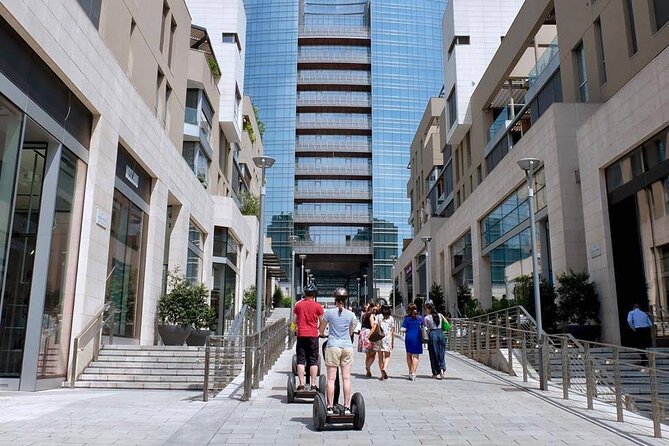
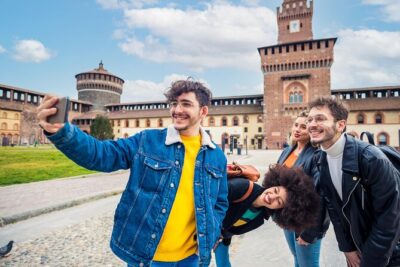
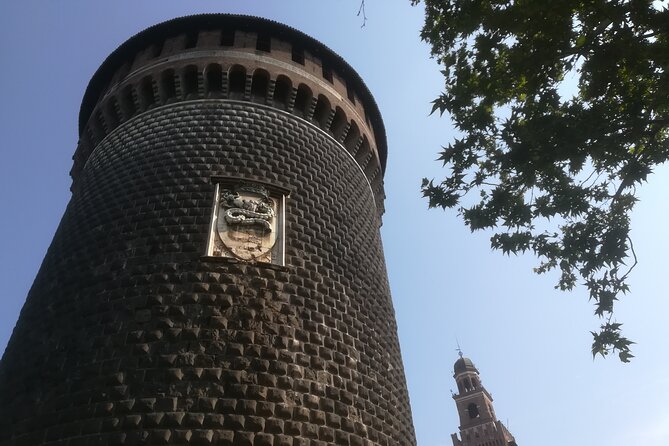
You’ll begin at Castello Sforzesco (Sforza Castle), with a short stop around the fortress area. This is one of Milan’s major symbols and it’s also home to major cultural institutions now, which is part of why it works even on a short visit. If you’re arriving in Milan and feel like everything is a blur, this stop helps you anchor the city in a real landmark that’s easy to find again later.
The stop is about 15 minutes, and the admission is listed as free. That makes it a good first hit: you can take photos and get context without turning this into a ticket hunt before you’ve even settled into the ride.
Why it’s valuable from the saddle: you see the scale quickly, and your guide can tie the castle into Milan’s broader story—who held power, how the city developed around key centers, and why this castle remains such a visual reference point.
Arco della Pace and Parco Sempione: A Peaceful Neoclassical Pause
Next up is Arco della Pace, often linked to Parco Sempione. This is one of Milan’s most notable neoclassical monuments, and it’s a great example of how the city mixes grand statements with public space.
You’ll have around 10 minutes here, and the admission is listed as free. That means you’re not paying to appreciate the shape, proportion, and placement. It’s also a quick way to understand how Milan’s formal monuments relate to its parks and promenades.
A practical tip: with a Segway, you’ll usually move between viewpoints fast. That’s good—just don’t let it rush you. Spend those few minutes looking at the details your guide points out, because you can’t zoom in the way you might on foot.
Arena Civica: A Stadium You’ll Remember
You’ll stop at Arena Civica, a neoclassical stadium dating to the early 19th century. The listed stop time is brief—about 5 minutes—and admission is not included.
So treat it as a “context stop,” not a deep visit. You’ll get the visual and the story: Milan loves a blend of old form and modern use, and the stadium is a clue to that pattern.
If you want to do more here, your guide can likely tell you what’s worth a return visit. But for the tour’s purpose—orientation and big-picture understanding—this short pause is exactly the right length.
You can also read our reviews of more private tours in Milan





Piazza Mercanti: Medieval Administration on a Modern Circuit
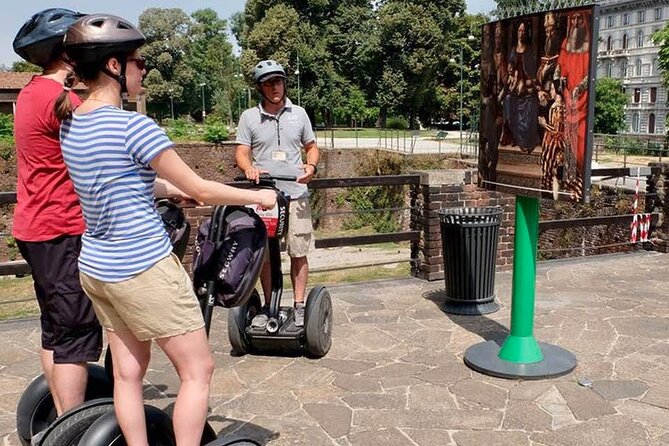
Piazza Mercanti is where you shift gears toward medieval Milan. This plaza was an ancient administrative center, and the charm of this stop is that it’s not just a postcard. You’re seeing the administrative heartbeat of older Milan, which helps explain why certain streets and neighborhoods still “feel” like they connect back to earlier city planning.
You’ll get about 10 minutes, and admission is listed as free. Since this is mostly an outdoor stop, it pairs well with Segway travel—an efficient way to get history without standing in long lines.
The drawback to keep in mind: if you’re hoping for museum-like detail at every stop, you may want to save a few deeper dives for later. This tour gives you the threads; you pull them later.
Duomo di Milano (Exterior View): The Cathedral Still Hits, Even From the Street
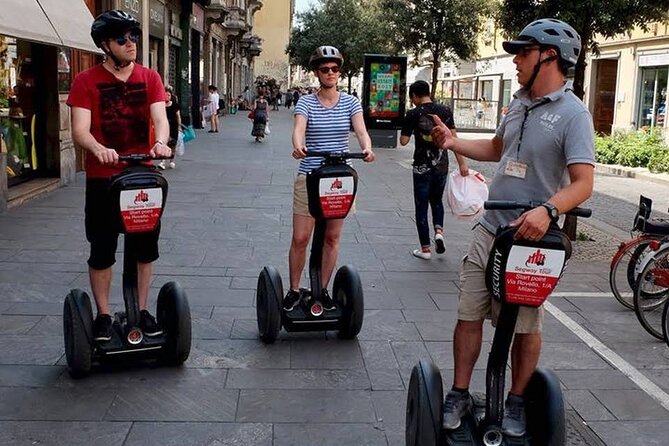
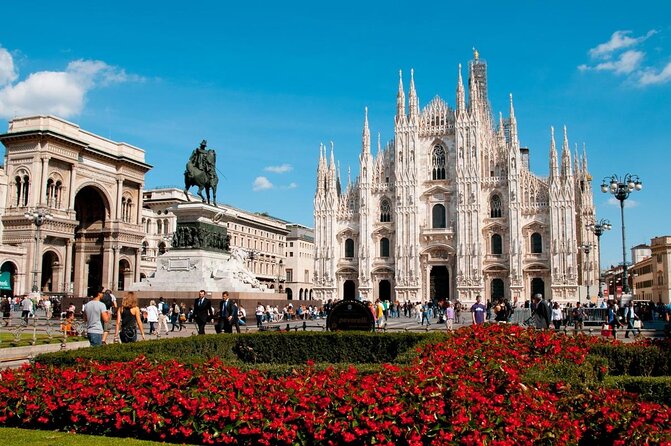
You’ll see the Duomo di Milano outdoors, with about 15 minutes at the stop. Admission is listed as not included, which is your cue that the tour focus is the cathedral as a dominating presence in the city rather than a full inside visit.
This matters for value. Many first-time visitors assume they’ll get “everything” in one day. With this tour, you’re getting the big wow factor and the placement—how the cathedral zone sits at the center of sight lines—then you can decide later whether you want to pay for interior access and optional experiences.
If you’re the type who likes to return to a place and experience it slowly, that’s a perfect match. Seeing the Duomo from the outside during an efficient route helps you plan that second visit with better confidence.
Galleria Vittorio Emanuele II: Shopping Arcade as Architecture
Then it’s on to Galleria Vittorio Emanuele II, a luxury shopping arcade built in the late 19th century. You’ll have around 10 minutes and admission is free.
This stop is useful even if you don’t plan to buy anything. The Galleria is a lesson in how Milan dresses itself—how it presents elegance, circulation, and design as part of everyday life. And because the tour moves you across the city, you get a sense of how quickly the city’s tone can change.
Practical thought: if you love shopping arcades as spaces, spend a little extra care on photos and architectural details here. The ride lets you reach it fast; your time on-site is what makes it stick.
Piazza della Scala: Theater District Without the Long Wait
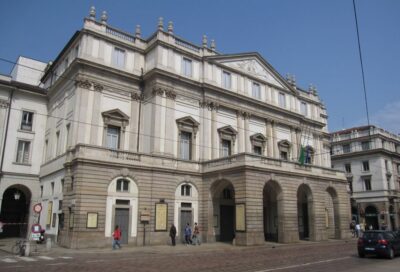
You’ll stop at Piazza della Scala for external views of La Scala theater and Palazzo Marino. The stop is about 10 minutes, and admission is not included.
Why I like this kind of stop: it gives you the location and the visual identity of an area that you’ll likely pass again at night, for dinner, or during shows. Milan theater energy is real, but you don’t need tickets to get the sense of the place.
If you want more—maybe a show or a deeper look—your guide can point you to what to pursue next. But for this ride, the exterior view is the right amount.
Brera District: The Artist Quarter Feeling, Plus Context
Next is the Brera district, including history about the palace of Brera and the artist character of the neighborhood. You’ll get about 15 minutes, and admission is not included.
This is one of the stops that turns the tour from “landmark parade” into “why this neighborhood matters.” Brera can feel artsy in a way that’s hard to explain until someone connects it to the institutions and history that shaped the district.
A small caution: Brera’s charm is also in wandering. With a Segway tour, you won’t do slow wandering. You’ll learn, then you’ll want to walk later. If that’s your style, you’ll love this stop.
Through Via Paolo Sarpi and the Chinese District Passage
The route includes a Chinese district passage along via Paolo Sarpi. Unlike the big memorial landmarks, this segment helps you see Milan as a living city with overlapping communities and modern street life.
There’s no admission listed here, which signals it’s more about the ride-through experience and guide commentary than a ticketed stop. For many visitors, this is where Milan starts to feel less like a checklist and more like a place where people actually live and eat.
If you like food-focused neighborhoods, this is the kind of section that can help you decide where to return for dinner later—without you needing to guess.
Porta Garibaldi and Corso Como: A City Gate With a Present-Day Pulse
You’ll pass Porta Garibaldi and Corso Como, learning about the history of the gate. This is another good example of how the tour blends old and new: city gates aren’t just ruins when they’re paired with modern roads and current energy.
The route time here is flexible, but it’s framed as a teaching moment, not a long stop. That’s smart: gates and corridors are best understood from motion because the surrounding streets explain the original purpose.
Biblioteca degli Alberi: Milan’s New Skyline and Urban Garden Feel
The stop at Biblioteca degli alberi (Tree Library) connects to Milan’s developing skyline and a newer garden area, plus shops, restaurants, and urban panoramas. You’ll have around 15 minutes, and admission is listed as free.
This stop is valuable because it balances the older landmarks. Milan is not only castles and cathedrals; it’s also building new public spaces and updating districts. If you’ve spent the morning in classic sights, this is a refreshing contrast.
Because it includes panoramas and modern district energy, it’s a place where your guide’s storytelling can help you understand why the area feels different—and what direction the city is heading.
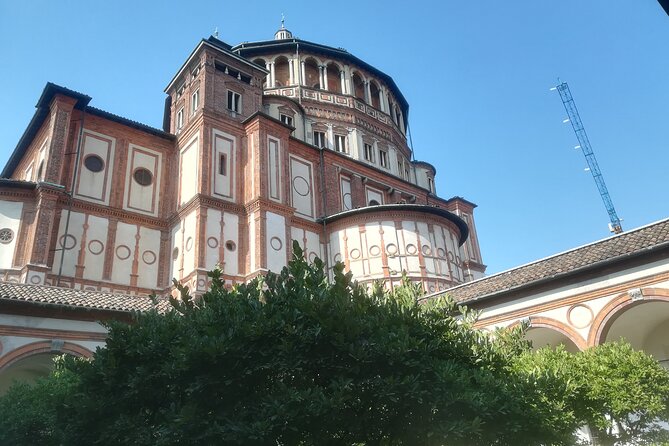
Santa Maria delle Grazie: A Famous Neighbor You Can See Better With Planning
You’ll stop at Santa Maria delle Grazie, next to the room where Leonardo da Vinci’s Last Supper is housed. The listed stop time is about 10 minutes, and admission is not included. The Last Supper is noted as not visible without special pre-booking.
So here’s the honest expectation: you can see the church area and get the historical context, but you won’t get the Last Supper view by default. If that’s your top priority, you’ll want to plan separate access for it.
Still, don’t skip this stop. Being near one of the most famous artworks in the world is powerful, and your guide can connect the church to why this site matters beyond the painting itself.
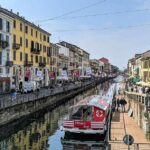
Navigli: Canal-Side Atmosphere for Your Evening Plans
Next is Navigli, known for restaurants and a portion of Milan’s historic waterways. You’ll get about 10 minutes here, and admission is free.
This is one of the best “tour-to-night” transitions. In a short time, you’ll learn where the action clusters and which canal-side vibe feels most “you.” If you like lively dinner neighborhoods, Navigli is often the direction you end up going anyway—so it’s smart to see it during the tour and then decide later.
The Segway angle helps: you cover the area without losing an entire evening to the first-night overwhelm.
Basilica di Sant’Ambrogio: A Patron Saint’s Church With Staying Power
You’ll stop at Basilica di Sant’Ambrogio, Milan’s ancient church of the patron saint. You’ll have about 15 minutes, and admission is free.
This is a great stop for people who want “Milan without the crowds.” Even on a Segway tour, it tends to feel more grounded. It’s the kind of place where you can notice the architecture and imagine how the city’s life has flowed around it for centuries.
If you’re the type who loves churches even when you can’t go inside, the exterior/area context here can still be rewarding.
Traces of Roman Era (2nd Century): Short and Thought-Provoking
The route also includes traces of Roman era from the second century. No admission is listed, and this segment is likely a “look and listen” moment rather than a long excavation visit.
These stops are small in time but big in mindset. They help you understand that Milan’s story didn’t start with famous medieval or Renaissance landmarks. It started earlier, and the city’s current footprint has layered meaning.
If you’re a history fan, you’ll appreciate the continuity. If you’re not, the guide commentary should still help you connect why it’s worth noticing.
Stock Exchange Square and Contemporary Art: Milan’s Two-Speed City
Finally, you’ll reach the Stock Exchange square with a unique contemporary art installation. This is a nice end to the tour because it reminds you Milan still works in the present tense.
The tour keeps this outdoors and quick (there’s no admission listed). In practical terms, it’s also a good “wrap” point—so you’re not stuck far from the day’s final landmarks.
Price and Value: Why This Costs What It Costs
At $108.37 per person, the value depends on what kind of traveler you are.
You’re paying for:
- A private group experience (only your group participates)
- Live local/professional guide time
- Customized route instead of a fixed checklist
- Segway + helmet, which is a real equipment cost and a skill-learning component
If you compare this to hiring a regular guide for half a day, the Segway component often makes it feel more efficient: you cover more ground in the same window. And if you’re a first-timer, the big win is orientation. Once you know how these districts connect, you’ll enjoy your self-guided time more.
If you’re already very comfortable with walking and you only care about one or two specific sights, you might feel this is pricier than pure walking. But for most people planning a first Milan visit, it hits a sweet spot.
Who This Tour Fits Best
This tour is best for:
- First-time visitors who want a city overview fast
- People who like learning while moving, not only while sitting
- Travelers who want to return later to specific places, now that they understand where they are
- Couples and small groups who don’t want to share the pace with strangers
It may not be ideal if:
- You’re hunting for lots of indoor ticketed museum time
- You’re not comfortable standing and riding for several hours
- You’re traveling during a time when weather is often unstable
My Booking Checklist: Decide in One Minute
Before you book, ask yourself:
- Do I want to see many Milan landmarks in one afternoon?
- Am I okay with mostly outdoor views, and a few optional interior tickets?
- Will I be able to ride in good weather?
- Do I want a guide who can answer questions and adjust the pace?
If those answers are yes, this is a strong choice.
Should You Book This Milan Private Segway Tour?
I’d recommend booking this tour if you want a practical first pass through Milan—castle, cathedral zone, shopping arcade, theater area, neighborhoods like Brera and Navigli—without wasting time figuring out where everything is. The private format and the way guides like Emilio are praised for calm coaching and tailoring the route make it feel more personal than a standard sightseeing product.
On the other hand, if your dream Milan day is purely about specific paid interiors (especially the Last Supper, which requires special pre-booking), you’ll get more value by pairing this with separate timed ticket plans. In that case, use this tour for orientation and “what to do next,” not for trying to force every top experience into one ride.
FAQ
How long is the Milan Private Segway Tour?
The tour runs about 2 to 4 hours, depending on the flow of the route and your group’s pace.
How much does it cost?
It’s priced at $108.37 per person.
Is this a private tour?
Yes. It’s private, so only your group participates.
Is the tour in English?
Yes, it’s offered in English.
What’s included in the price?
You get a local guide/professional guide, a helmet, and a customized itinerary.
Are entrance tickets included for major sights like the Duomo or Arena Civica?
Not all entrances are included. For example, Arena Civica, the Duomo di Milano, La Scala, Santa Maria delle Grazie, and the Last Supper area are listed as not included or require special pre-booking, while several stops are marked free.
Do I need to bring food or drinks?
Food and drinks are not included. The tour content is sightseeing, not meals.