REVIEW · MILAN
Milan: Bicycle Tour Live Tourist Guide 3 hours and half
Book on Viator →Operated by City Guided Tour · Bookable on Viator
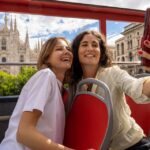
Milan makes more sense on two wheels. This 3.5-hour small-group bicycle tour covers the city’s key landmarks with an English-speaking guide, plus a bike and helmet, so you can see more than a walking loop without feeling rushed.
I particularly love the guides and the way the route is paced. Guides such as Emilio, Katia, and Simon are warm, friendly, and good at turning big sights into stories you can actually use on your next day in town. I also like that you stop briefly at each place—enough time to learn the point, not enough time to drag it out.
One thing to plan around: much of what you see is from the outside, including the Duomo area and the theater zone at Piazza della Scala. If you want to go inside specific sites, you’ll need to add that separately.
In This Review
- Key takeaways before you pedal off
- The Value: $58.87 for Bikes, Helmet, and a Guided Route
- How the Bike Tour Feels in Real Life (Pace, Traffic, Safety)
- Meeting at Via Lecco and Rolling Back to the Same Spot
- Brera District: Palaces, Artists, and Why This Area Matters
- Arco della Pace: A Neoclassical Peace Monument in Motion
- Castello Sforzesco: Milan’s Big Castle Stop (and Its Modern Role)
- Basilica di Sant’Ambrogio and the Roman-Era Traces
- Darsena and the Historic Waterways: A Different Milan Mood
- Piazza Affari and Piazza Mercanti: Business and Medieval Civic Power
- Duomo di Milano Outdoors: Big Views Without Ticket Pressure
- Galleria Vittorio Emanuele II: A 19th-Century Shopping Arcade Moment
- Piazza della Scala: Theater Square Views and a Hint of What’s Inside
- Who Should Book This Bike Tour (and Who Might Want Something Else)
- Should You Book This Milan Bicycle Tour?
- FAQ
- How long is the Milan bicycle tour?
- How much does the tour cost?
- What’s included in the price?
- Are tickets included for the Duomo and La Scala?
- Where does the tour start?
- How big is the group?
- What fitness level do I need?
- What if the weather is bad?
Key takeaways before you pedal off
- Small group (max 8) keeps the ride calmer and easier to manage in traffic-heavy central Milan
- Helmet + bike provided, so you’re not figuring out rental logistics mid-vacation
- Quick, smart stops (often 5–10 minutes) make it ideal as a first introduction to Milan
- Central route with minimal hills (the ride is designed to feel doable for most with moderate fitness)
- Duomo and La Scala are outside only, so you won’t pay for optional entrances on this tour
- A canal-and-business mix shows Milan’s different faces, not just monuments
The Value: $58.87 for Bikes, Helmet, and a Guided Route
For $58.87 per person, the big value is what you get without extra hassle. This tour includes the bicycle, a helmet, and a guide—three things that can eat up time (and money) if you try to build a DIY route.
Most of the stops you’ll pass are free to view or spend a short moment at, which helps keep your total trip costs under control. The two notable exceptions are the Duomo and Piazza della Scala areas, where the tour explicitly keeps things outdoors, and ticketed entries aren’t included.
Also, the timing matters. At about 3 hours 30 minutes, you’re not committing a whole half-day, but you still cover enough neighborhoods and landmarks to understand how Milan is stitched together.
You can also read our reviews of more guided tours in Milan
How the Bike Tour Feels in Real Life (Pace, Traffic, Safety)
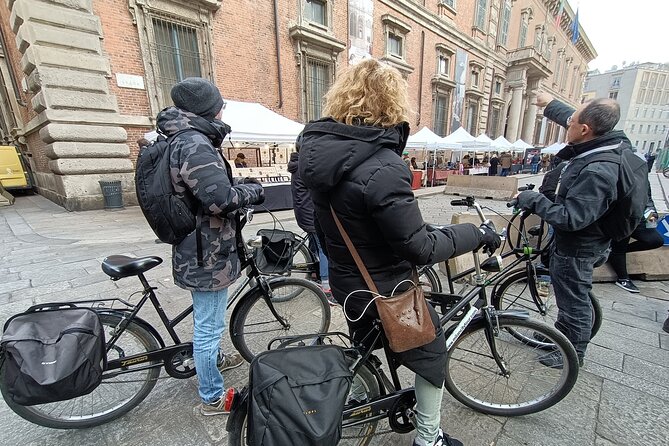
This tour is built for a relaxed-but-engaged ride. You’ll have a guide setting the rhythm, and the stops are short: think 5 minutes at quicker checkpoints and closer to 10 minutes where there’s more to explain. That means you’ll spend more of your vacation time looking at Milan rather than navigating your way between sights.
Bikes are provided, and you’ll wear a helmet. In the reviews, the ride is described as safe and enjoyable, with a pace that works for different cycling levels. If you’re comfortable riding a bicycle on city streets, you should be fine; if you’re a total beginner, I’d still plan to take it slowly at the start and follow the guide’s cues.
One practical note: central Milan can be busy—pedestrians, strollers, and slower walkers can make any group ride feel a little tricky at times. The best move is arriving a few minutes early at the start point so you don’t start the tour stressed.
Meeting at Via Lecco and Rolling Back to the Same Spot
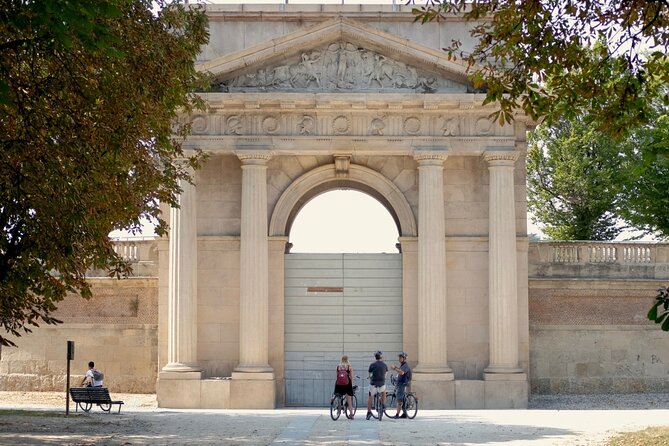
You’ll start at Via Lecco, 18, 20124 Milano MI. The activity ends back at the meeting point, which is handy because you can plan your next meal or gelato stop without guessing how far you’ll be from transit.
The meeting area is described as near public transportation, which is a big plus when you’re not sure how your day in Milan will evolve. If you’re pairing this with other sights, you’ll have more flexibility since you’re not ending across town.
Brera District: Palaces, Artists, and Why This Area Matters
Brera District is a smart first stop because it sets Milan’s “culture” tone quickly. You’ll learn about the palace of Brera and the district of artists—exactly the kind of context that helps you understand why locals and visitors gravitate here beyond just snapping photos.
Even with a short stop (about 5 minutes), you’ll get the gist: this is where Milan’s creative and academic energy shows up in architecture and neighborhood character. The palace connection also helps you later when you notice museums and galleries around the area.
Downside? If your goal is deep museum time, this is not that. This is a quick orientation stop on a moving tour. Treat it like a “place to remember” rather than a “place to finish.”
Arco della Pace: A Neoclassical Peace Monument in Motion
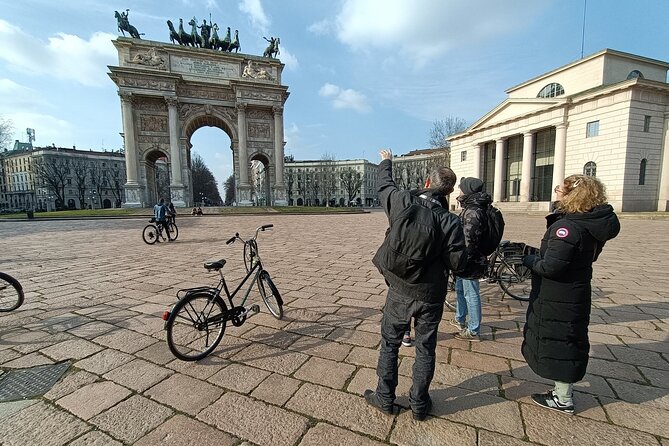
The Arco della Pace is one of those sights you can miss if you’re only on foot. From the bike route, it lands naturally in front of the nearby park area, and it’s easy to see why it feels like a ceremonial gateway.
You’ll spend around 5 minutes here, which works because the value is in what the monument represents: it’s described as one of Milan’s most neoclassical monuments. In a city full of different styles, a clear stop helps you spot the design language and not just the location.
If you’re traveling with limited time, this quick checkpoint is a win. You get meaning without losing momentum.
You can also read our reviews of more tours and experiences in Milan
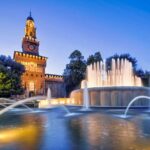
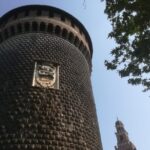

Castello Sforzesco: Milan’s Big Castle Stop (and Its Modern Role)
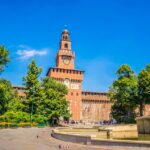
Then comes the big one: Castello Sforzesco. This is one of Milan’s symbols, and it’s also a reminder that city landmarks often morph over time—from fortification to cultural hub.
You’ll have about 10 minutes at the castle area. That’s enough time for a guided explanation of Milan’s story, plus a solid outdoor look at one of Europe’s larger castle complexes. Even if you don’t go inside, the exterior gives you the scale and the “why this matters” lesson.
Consideration: if you’re the kind of traveler who wants to wander rooms for hours, you’ll feel the time squeeze here. But as an introduction stop, it does its job well.
Basilica di Sant’Ambrogio and the Roman-Era Traces
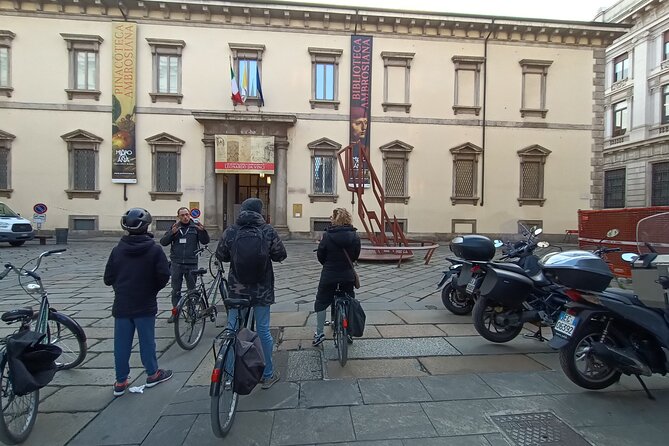
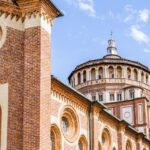
This part of the tour connects two layers of Milan. You’ll visit Basilica di Sant’Ambrogio, an ancient church tied to the city’s patron saint, and then you’ll also see traces of the Roman era dating back to the second century.
The timing is about 10 minutes for Sant’Ambrogio, plus another short segment for the Roman-era traces. That combination works because it shows continuity: Milan didn’t appear out of nowhere. It grew, layered itself, and kept some architectural evidence along the way.
A key benefit for first-timers: it helps you stop treating Milan as only “fashion and the cathedral.” You start seeing it as a long-running city with older roots under the modern surface.
If you want maximum detail at Roman sites, you’ll need a separate walking stop later. For a bike tour, this is a strong snapshot.
Darsena and the Historic Waterways: A Different Milan Mood
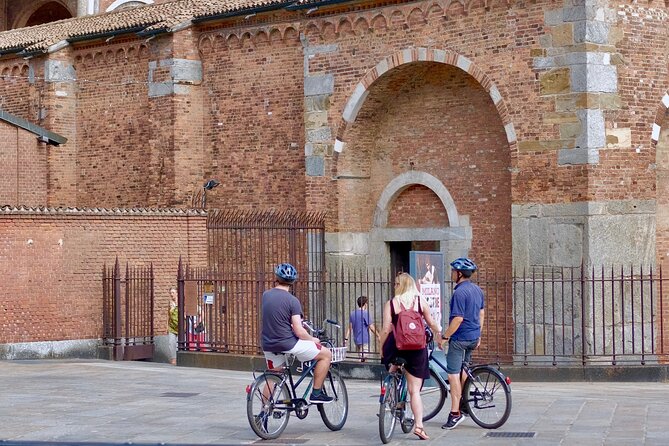
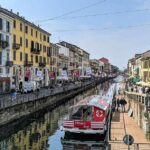
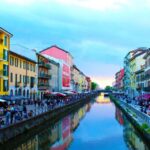
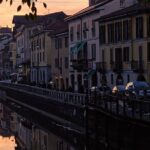
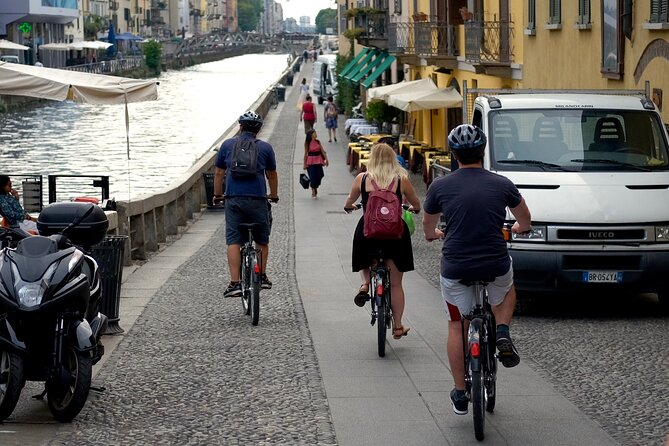
Next you’ll roll into Darsena, described as a restaurant district shaped by historic waterways. This is where the tour shifts from monument focus to atmosphere.
You’ll spend about 10 minutes here, and that’s enough to absorb what makes the place feel distinct: water-adjacent views, a more lively “hang out” vibe, and the sense that Milan has neighborhoods that aren’t only about stone and museums.
If you like ending tours with a place that feels fun and current, Darsena is a smart anchor. It’s also a helpful contrast to the grand squares and major landmarks earlier.
Piazza Affari and Piazza Mercanti: Business and Medieval Civic Power
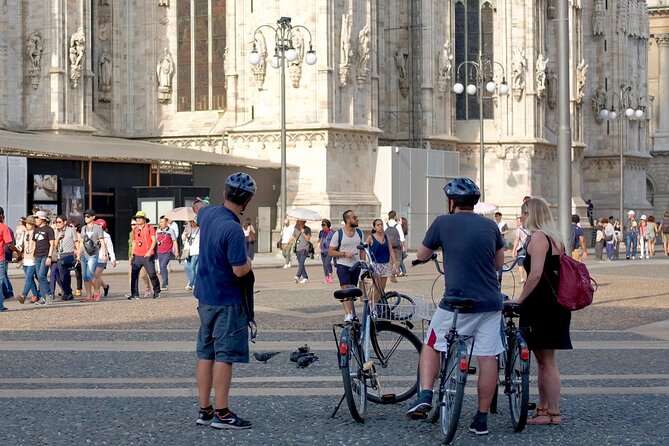
From Darsena, the route moves into squares that explain Milan’s civic and economic identity.
At Piazza Affari, you’ll see the Stock Exchange square and a contemporary art installation in the area. It’s a quick stop (around 5 minutes), but the point is clear: Milan isn’t frozen in the past. Art and modern culture show up even in finance-adjacent spaces.
Then Piazza Mercanti gives you a medieval lens. This square was seat of the ancient municipal administration, again with about a 5-minute learning window. In a short amount of time, you get an A-to-B feeling: city power changes, but the places remain and keep influencing how people experience the city.
Duomo di Milano Outdoors: Big Views Without Ticket Pressure
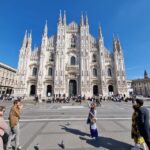
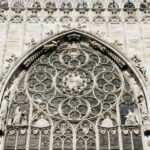
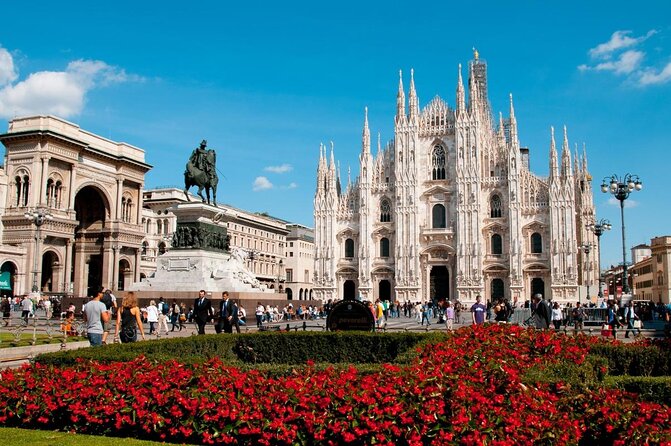
The Duomo di Milano stop is outdoors, and tickets for entry aren’t included. You’ll spend about 10 minutes here, which is enough time to appreciate scale and details from the outside without the ticket hassle.
This matters for two reasons:
- You’re less likely to waste time waiting for entrances during a busy visit.
- The tour stays affordable and predictable.
If you want interior time, that’s a separate plan. For many people, this outdoor stop is the best first step because it helps you decide later whether you want to commit to the cathedral experience at a specific time.
Galleria Vittorio Emanuele II: A 19th-Century Shopping Arcade Moment
At Galleria Vittorio Emanuele II, you’ll get a quick (about 5 minutes) look at one of Milan’s most iconic luxury arcades. It was created in the late 19th century, and you’ll see why it works so well as a “breathing space” between heavier landmarks.
This stop is short, but it adds a modern city texture: Milan’s taste and design don’t only show up in monuments; they show up in everyday passing places.
If you’d like to linger, you can do it after the tour. The big win here is that you’ll know exactly where to aim your walking time.
Piazza della Scala: Theater Square Views and a Hint of What’s Inside
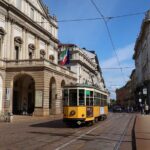
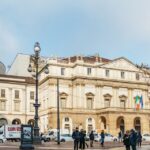
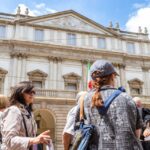
Finally, the tour reaches the area around Piazza della Scala for an external view of the La Scala theater and Palazzo Marino. Tickets aren’t included, and the stop is about 5 minutes.
This is a great wrap-up because it gives you a “Milan finale” feeling. It also helps you understand the city layout: where the major cultural institutions sit relative to the rest of central Milan.
If you’re a theater fan, the outside view can spark motivation to plan a separate visit. If you’re not, you still get a sense of why this area feels important.
Who Should Book This Bike Tour (and Who Might Want Something Else)
This is ideal if:
- You’re visiting Milan for the first time and want a fast map of what matters
- You prefer seeing multiple neighborhoods rather than repeating one sightseeing style
- You like learning stories while moving, not standing in line for every stop
- You want a small group setting (max 8) instead of a crowded bus experience
It’s also a good fit for moderate fitness. The route is described as generally easy, and Milan isn’t hilly in the way some other Italian cities can be. Still, you should be comfortable riding at least moderately in traffic conditions.
I’d consider skipping it or pairing it differently if:
- You want lots of interior time at major monuments. This tour is mainly an outdoor, guided overview.
- You’re sensitive to shared street conditions. Even when the ride is well managed, you may have occasional crowd friction.
Should You Book This Milan Bicycle Tour?
I’d book it if you want a smart first taste of Milan. The price makes sense because you’re getting a bike, helmet, and a real guide for a half-day worth of central sightseeing, with most stops quick and free to view.
The best reason to pick this tour is how it balances learning with momentum. In around 3.5 hours, you’ll connect the dots from Brera’s arts pull, to Castello Sforzesco’s scale, to Roman traces, to the canal-side feel of Darsena—then finish with the Duomo and the La Scala area.
If you’re planning to return for cathedral interior time or a deeper museum day later, this is a strong opener. You’ll walk those streets with context, not just photos.
If you only want one “do everything” attraction ticket day, then you might be happier with a tour that includes timed entries. But for a first pass at Milan’s main geography and story threads, this bike tour is a practical, high-value choice.
FAQ
How long is the Milan bicycle tour?
It runs about 3 hours 30 minutes (approx.).
How much does the tour cost?
The price is $58.87 per person.
What’s included in the price?
You get the bicycle, a helmet, and a tourist guide.
Are tickets included for the Duomo and La Scala?
No. The Duomo di Milano and the exterior view of La Scala are included as outdoor sights, and tickets for those are not included.
Where does the tour start?
The meeting point is Via Lecco, 18, 20124 Milano MI, Italy.
How big is the group?
This activity has a maximum of 8 travelers.
What fitness level do I need?
You should have a moderate physical fitness level.
What if the weather is bad?
This experience requires good weather. If it’s canceled due to poor weather, you’ll be offered a different date or a full refund.