REVIEW · MILAN
Milan Highlights Private 3-Hour Walking Tour
Book on GetYourGuide →Operated by GirandoMilano · Bookable on GetYourGuide
Milan on foot is the fastest way to see it. This private 3-hour highlights walk strings together Duomo splendor and the glamour of the Galleria arcade, so you get both awe and style in one clean route. The payoff is up close views of marble spires, stained glass, and the glass-and-iron canopy you’ll recognize instantly.
I love how the guide keeps the stops focused: you’re not just passing famous facades, you’re getting a sense of why each place matters in Milan’s art, design, finance, and opera-culture story. One thing to plan for: Duomo entry has a dress rule (shoulders and knees covered), and entrance tickets for sights are not included.
In This Review
- Key highlights to look forward to
- 3 hours that actually connect Milan’s big icons
- Entering the Duomo: stained glass, marble spires, and the clothing check
- Galleria Vittorio Emanuele II: walking the glass-ceiling runway
- La Scala and Leonardo da Vinci: opera façade meets city symbolism
- Piazza dei Mercanti: stepping into medieval Milan between modern blocks
- Castello Sforzesco: from fortified citadel to museums you can spend real time in
- Price and value for a private 3-hour walk ($135.94 per person)
- What’s included (and what you’ll handle on your own)
- Timing, route logic, and the value of starting at the Duomo
- Who this tour suits best
- Should you book this Milan Highlights Private 3-Hour Walking Tour?
- FAQ
- How long is the Milan Highlights Private 3-Hour Walking Tour?
- Where do we meet, and where does the tour end?
- Is a guide included?
- Are entrance tickets included for the sights?
- Is this tour private, and what languages are available?
- Are there dress requirements for entering the Duomo?
- What is the cancellation policy?
Key highlights to look forward to
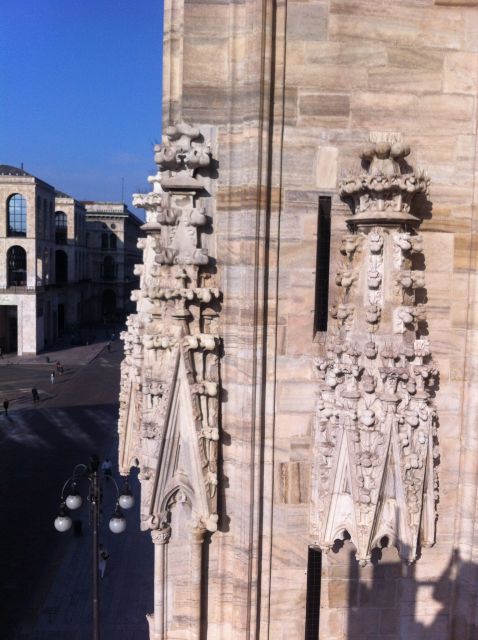
- Duomo at street level: stained glass windows, marble statues, and spires with guidance right at the main entrance
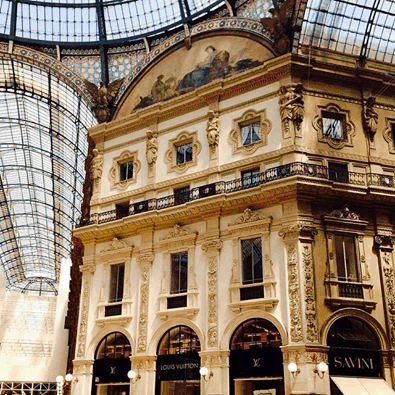
- Galleria under glass: walk beneath the Mengoni iron-and-glass cupola and spot luxury flagship stores
- La Scala landmark views: see the somber opera façade and the Leonardo da Vinci statue looking across City Hall
- Medieval Milan in the middle: pass through Piazza dei Mercanti for porticos, reliefs, and loggias that still show medieval form
- Castello Sforzesco stop: reach the 14th-century fortress complex that’s now restored and home to major museums, including the Museum of Ancient Art
3 hours that actually connect Milan’s big icons
This is a straightforward private walk through Milan city center. In three hours you hit the kind of sights that usually take a full day to piece together yourself: the Duomo’s architecture, the Galleria’s fashion-meets-design attitude, La Scala’s opera presence, and then a pivot into medieval and Renaissance-era Milan around Piazza dei Mercanti and Castello Sforzesco.
Because it’s private, the pacing feels intentional. You start at the Duomo’s main entrance, and the route flows city-block-to-city-block—enough time to take photos, stand back for scale, and still end where you began.
You can also read our reviews of more walking tours in Milan


Entering the Duomo: stained glass, marble spires, and the clothing check
Your tour starts by the main door of the Duomo in Piazza del Duomo. That’s smart, because the Duomo is so much more than a single viewpoint—you’ll want to see it from multiple angles, and starting at the entry zone helps you get those close-up details right away.
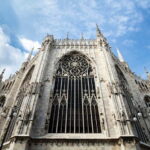
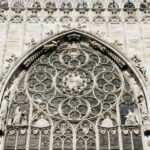
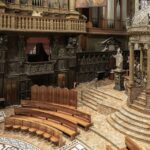
You’ll get guided time for the Duomo’s stained glass windows, Gothic splendor, and marble statues and spires. There’s a practical catch: to enter, knees and shoulders must be covered. If you show up in shorts or a sleeveless top, you’ll have to adjust before you can get inside—so plan your outfit with that rule in mind.
One more time-saver that matters: the tour includes an express security check. That doesn’t magically erase crowds, but it can help you avoid the long, stop-start friction that can drain a short sightseeing window.
Galleria Vittorio Emanuele II: walking the glass-ceiling runway
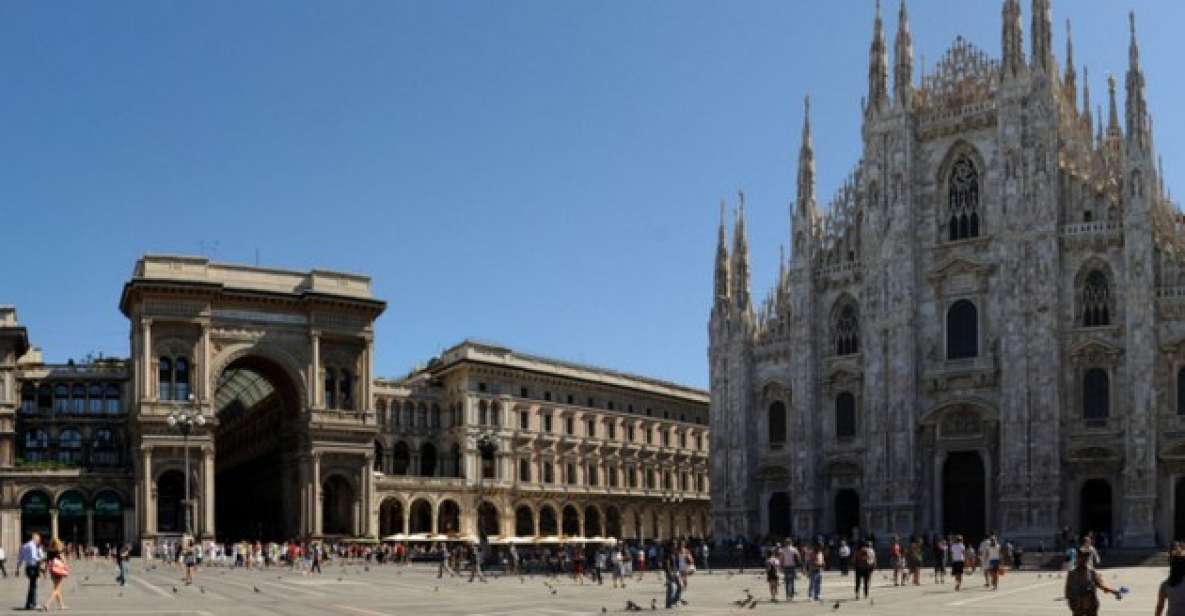
Next comes the Galleria, the famous shopping arcade designed by Giuseppe Mengoni as an iron and glass cupola. If the Duomo is all vertical drama, the Galleria is the opposite: a long, luminous corridor where architecture becomes a frame for fashion and branding.
You’ll stroll under the glass ceiling and see how the space is arranged like a luxury indoor street. The tour also points you toward major flagship names under the canopy—Prada, Gucci, and Armani—so you can connect what you see on screens with the real physical scale of the place.
What I like about this stop is that it’s not just shopping-name recognition. Milan’s reputation for design lives in places like this, where engineering, light, and consumer culture share the same roof. Even if you’re not shopping, you’ll still get a strong sense of Milan’s style language.
La Scala and Leonardo da Vinci: opera façade meets city symbolism
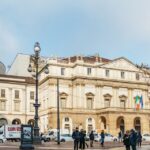
After the Galleria, you head toward La Scala. The opera house façade can feel a bit somber at first glance, but the point is atmosphere: Milan treats La Scala as a cultural anchor, not just a building to pass by.
You’ll take in La Scala’s famous exterior, and then look across at City Hall. Between them sits a 19th-century statue of Leonardo da Vinci surrounded by his pupils—an easy-to-miss detail unless someone points it out. Seeing Leonardo here helps tie the city’s identity together: art and science, Renaissance legacy, and modern institutions in one view line.
For many people, this is where Milan shifts from tourism icons to something more grounded in daily civic pride. Even the spacing—how the square and the statue organize the space around La Scala—gives you that feeling.
Piazza dei Mercanti: stepping into medieval Milan between modern blocks
From La Scala, you take a short cut through Piazza dei Mercanti, and that’s a big deal for anyone who wants Milan beyond the headline attractions. This square still carries medieval structure, with porticos, reliefs, and loggias that remain standing from that period.
The value of stopping here is that it resets your perspective. You’re no longer only looking at big-ticket monuments; you’re seeing traces of how the city functioned in earlier centuries—how streets were shaped for gatherings, commerce, and movement. It’s the kind of place where you can look up and start noticing how buildings relate to the pedestrian experience.
And because the tour keeps it quick, you’re not stuck in an information overload. It’s more like a useful historical punctuation mark before the final fortress-and-museums stop.
You can also read our reviews of more private tours in Milan



Castello Sforzesco: from fortified citadel to museums you can spend real time in
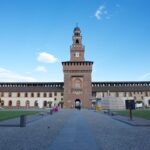
The walking route continues to Castello Sforzesco, originally a large fortified military citadel dating to the 14th century. Today it’s completely restored, and that restoration is why this stop works even if you don’t plan to go deep into museum halls.
The tour frames the castle as a major museum hub, including the Museum of Ancient Art. One highlight inside that museum is Michelangelo’s Rondanini Pietà sculpture. Even if you don’t enter on the day, knowing what the castle houses changes how you read the place—you see it as an ongoing cultural complex rather than a single “castle stop.”
From a practical perspective, Castello Sforzesco also helps the tour feel balanced. After ornate religious architecture, luxury arcade design, and opera-culture symbolism, you finish with something that’s more about civic legacy and heritage continuity.
Price and value for a private 3-hour walk ($135.94 per person)
At $135.94 per person for three hours, this isn’t a bargain-basement deal. But it also isn’t just a slow stroll with no substance. You’re paying for a live guide included in the price, plus the advantage of an express security check at the Duomo—exactly the kind of friction that can eat time on a tight schedule.
The trade-off: entrance tickets are not included. So if you want to enter the Duomo and spend extra time inside other attractions, you’ll likely need to budget separately for tickets as needed. The good news is that the tour still provides meaningful guided viewing even if you treat entry as optional.
Because it’s private, the value can improve a lot depending on who’s in your group. Families, couples, or small friend groups often get more out of a private format than a large group tour simply because you can move at a sensible pace and keep questions relevant.
What’s included (and what you’ll handle on your own)
Here’s the practical split: you get a guide, and you get express security check support. You’ll also have a live multilingual guide (Italian, French, English, Spanish), which is a major plus if you want your explanations in your own language instead of “best effort” translation.
What you provide yourself is simple:
- Entrance tickets where needed
- The right clothing for Duomo entry (knees and shoulders covered)
- Comfortable shoes for a city-center walking pace
That “no tickets included” piece is the main thing that can surprise people, so it’s worth planning your day with either ticket purchases or realistic expectations about which interiors you’ll prioritize.
Timing, route logic, and the value of starting at the Duomo
The tour runs for three hours, with starting times depending on availability. The meet-up is by the main door of the Duomo at Piazza del Duomo, and the tour ends back at the meeting point, which keeps navigation easy.
Starting at the Duomo also helps with energy management. By the time you reach the Galleria and La Scala area, you’re already oriented in the city center. You’re not crisscrossing Milan trying to stitch together distant landmarks.
The route itself has a nice rhythm:
- Duomo for big visual impact and close architectural detail
- Galleria for light, design, and indoor walking convenience
- La Scala for culture and civic symbolism with the Leonardo statue
- Piazza dei Mercanti for medieval traces that add depth
- Castello Sforzesco to close on heritage and major museum significance
Who this tour suits best
This works best if you want Milan highlights without spending hours figuring out logistics. It’s a good fit for:
- First-time visitors who want a confident “greatest hits” route
- Anyone who cares about architecture and design as much as famous names
- People who want a private guide to explain connections between spots
- Short-schedule travelers who still want a mix of religious grandeur, fashion design, and medieval-to-renaissance context
If you prefer doing things completely independently and lingering for long museum hours, you might add museum time before or after. But as a highlights orientation and a guided way to see the city’s core landmarks, this is well matched.
Should you book this Milan Highlights Private 3-Hour Walking Tour?
I think you should book it if you value a guide-led route that hits the Duomo, Galleria, La Scala, and then adds medieval and Renaissance context with Piazza dei Mercanti and Castello Sforzesco. The express security check at the Duomo and the private format make it a smart choice for a limited time window.
I’d hesitate if you’re hoping for a ticket-included sightseeing package where everything is already handled. Entrance tickets aren’t included, and Duomo entry depends on covering knees and shoulders. If you’re fine planning for those two points, this tour gives you a strong Milan overview with real architectural variety instead of a simple photo stop crawl.
FAQ
How long is the Milan Highlights Private 3-Hour Walking Tour?
It lasts 3 hours. Starting times depend on availability.
Where do we meet, and where does the tour end?
You meet your guide by the main door of the Duomo in Piazza del Duomo, Milan. The tour ends back at the meeting point.
Is a guide included?
Yes. A live tour guide is included.
Are entrance tickets included for the sights?
No. Entrance tickets where needed are not included.
Is this tour private, and what languages are available?
Yes, it’s a private group. The guide is available in Italian, French, English, and Spanish.
Are there dress requirements for entering the Duomo?
Yes. Knees and shoulders must be covered to enter the Duomo.
What is the cancellation policy?
You can cancel up to 24 hours in advance for a full refund.