REVIEW · MILAN
2 hour Vintage Fiat 500 Central City Tour in Milan
Book on Viator →Bookable on Viator
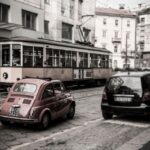
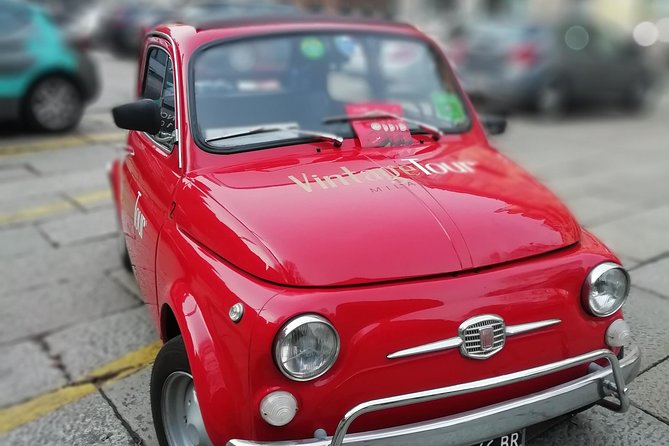
Milan feels tiny in a Fiat 500. In about two hours, I like how this vintage Fiat 500 tour lets you glide through central streets while a pro driver-guide handles traffic and gives live commentary in English. You also get to choose two stops along the route, so the time actually fits your interests.
Two things I really like: first, you’re not stuck in a big bus maze—you’re close enough to notice façades, street life, and design details as you go. Second, the tour’s storytelling has a strong Leonardo thread, linking palaces, churches, and the world of Renaissance engineering and art. One drawback to plan for: the car is extremely small and there’s no air-conditioning, so warm days can feel warm fast.
In This Review
- Quick reasons this Fiat 500 tour works (even with limited time)
- The vibe: Milan streets from a classic car seat
- Price and value: what you’re really paying for
- Comfort check: no AC, tiny car, and smart-casual reality
- Pickup and the two-stop choice: how to get the most out of 2 hours
- Art + power + Leonardo: the Milan you can picture in your mind
- The art and design district stop: why Milan looks the way it does
- Duke Ludovico Sforza’s residence and the Sala delle Asse fresco ceiling
- Santa Maria delle Grazie: the Gothic masterpiece and The Last Supper link
- San Maurizio al Monastero Maggiore: why people compare it to the Sistine Chapel
- Roman ruins to modern banks: Milan’s layers on one road loop
- Pinacoteca and the Codex Atlanticus: Leonardo’s drawings beyond paintings
- The Duomo area from via Larga: big scale, messy history, clear storyline
- Food, shopping, and getting your bearings fast
- Timing, traffic, and route changes you should expect
- Who should book this and who should pass
- Should you book the 2-hour Vintage Fiat 500 Central City Tour?
- FAQ
- How long is the Vintage Fiat 500 Central City Tour in Milan?
- How many people can ride in the Fiat 500?
- Is hotel pickup included?
- What’s included in the tour price?
- Does the Fiat 500 have air-conditioning or seat belts?
- Where does the tour start and end?
Quick reasons this Fiat 500 tour works (even with limited time)
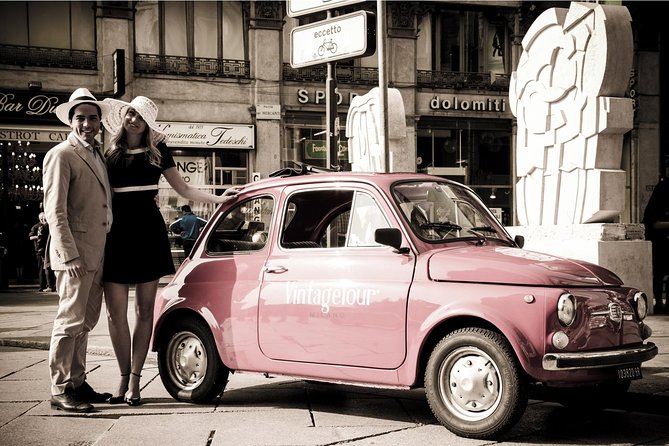
- Private by design: you’re in one car, up to 3 people, instead of being blended into a larger group rhythm.
- Two-stop flexibility: you choose where you want to step out and look more closely along the route.
- Milan’s layers in one loop: Renaissance power, Gothic churches, Roman leftovers, and early-20th-century architecture all show up.
- Leonardo context, not just landmarks: you hear how engineering and symbolism connect across sites.
- Easy city orientation: you leave with a map in your head for where to walk next.
- Classic-car energy: the vintage Fiat is part of the fun, and it draws attention as you roll past landmarks.
The vibe: Milan streets from a classic car seat
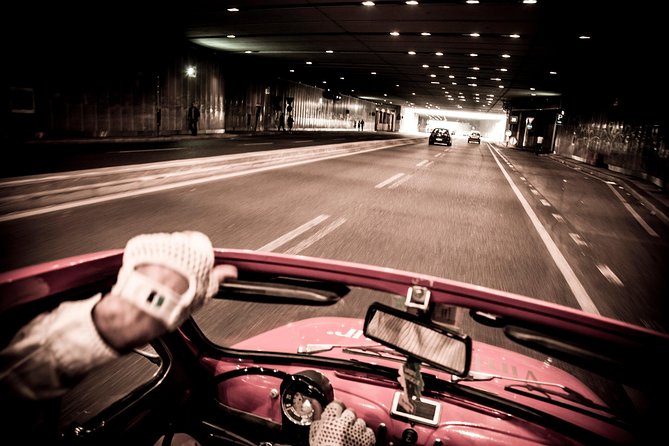
There’s something satisfying about seeing a city from “inside” the traffic, not from the curb. This tour’s tiny vintage Fiat 500 format changes your pace: you slow down your attention and let the guide point out details you’d miss if you were just walking or staring at your phone.
Because the driver is the one navigating, you can focus on what matters—architecture, street layout, and the stories behind key buildings. It also helps that your tour is short. Two hours is long enough to get oriented, but short enough that you won’t burn your entire day sitting in transit.
One more thing: the car is part of the show. Expect people to notice the Fiat as it threads through central Milan streets. It’s playful, not chaotic—just enough extra energy to make the ride feel special.
You can also read our reviews of more city tours in Milan

Price and value: what you’re really paying for
The price is $362.95 per group for up to 3 people, for about 2 hours. That means the true cost per person depends on your group size:
- If you book for 3: it’s about $121 per person
- If you book for 2: it’s about $181 per person
You’re paying for a few specific advantages:
- Private transportation in a classic car (not a fleet experience)
- Live guide commentary during the drive
- Two chosen stops for quick walking/photo moments
- Hotel pickup in Zone 1 only (selected hotels)
Is it expensive compared to a group tour? Yes. But if you’re visiting Milan for the first time and want a fast “connect-the-dots” overview, this is the kind of spend that can save you time later—especially when you then know where you want to walk in depth.
Comfort check: no AC, tiny car, and smart-casual reality
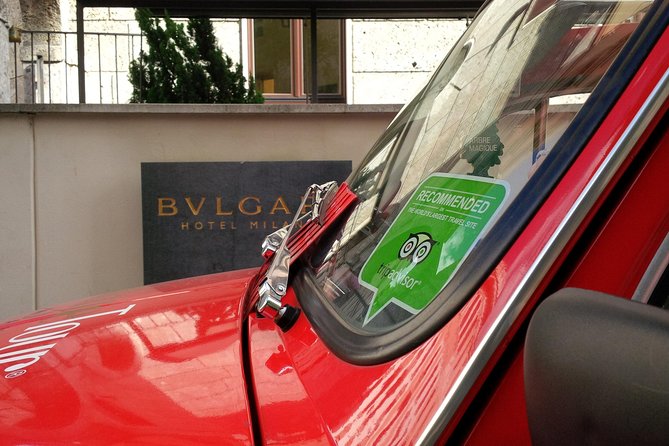
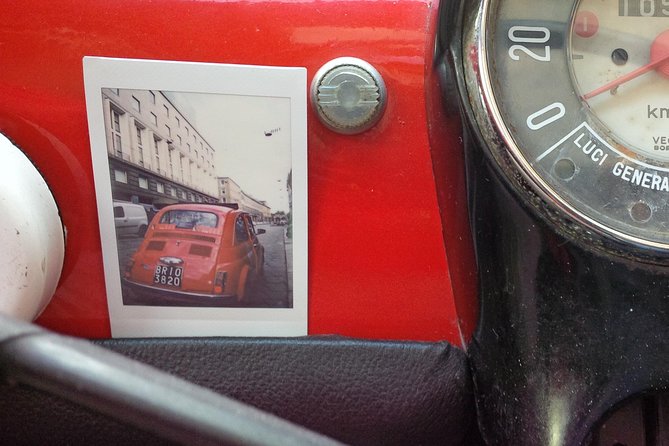
Here’s the part you should take seriously: the Fiat 500 doesn’t have air-conditioning and it doesn’t list seat belts or air bags. That doesn’t automatically mean it’s unsafe for operation—this is just the reality of a vintage vehicle you’re choosing for the experience.
So plan on comfort being “period-correct,” not modern. You’ll want to dress smart casual and think about temperature. On a hot Milan day, wear lighter layers because you can’t rely on cooling.
Also, it’s a maximum of 3 people per car, which means space is tight. If you’re tall, consider that seating in a small classic car can get awkward fast, especially in the back area. If comfort is your top priority, you might prefer a standard-size private car. If the classic experience is the point, this one delivers.
Pickup and the two-stop choice: how to get the most out of 2 hours
You can start from Via Palestro, 16, 20121 Milan, and your tour ends back at the meeting point. If you’re staying in Zone 1, hotel pickup is included for selected hotels.
The itinerary is built as a route with many key sites along the way, but you get to make the experience yours with two stops of your choice. In practice, that means:
- The drive carries most of the story and sights you’ll see from the road
- Your stop time is where you can slow down for photos, viewpoints, and short walking moments
How should you choose your two stops? If you want the “Milan greatest hits” feel, I’d pick one Renaissance-era site (like the Duke Ludovico Sforza area or San Maurizio) and one big icon (like the Duomo area). If you’re more design-and-history focused, choose stops that match the art/design thread, then use the Duomo moment mostly for views.
Art + power + Leonardo: the Milan you can picture in your mind
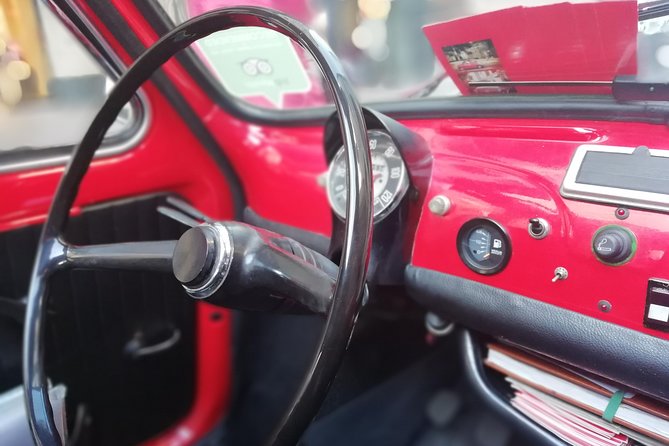
This tour leans into Milan’s role as an engine of Renaissance power. You’ll pass through areas tied to artists, architects, and ducal rule—then the guide pulls the thread so it makes sense, not like a random checklist.
You can also read our reviews of more tours and experiences in Milan

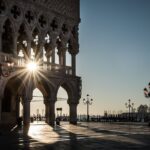
The art and design district stop: why Milan looks the way it does
One of your route stops is in the art and the design district. Even when you’re just stepping out for a short look, this matters. Milan isn’t only about one landmark. It’s a city where design and business share the same urban DNA, and a short stop helps you “see the vibe” before you start exploring on your own.
If you’re the type who likes to understand how a city’s industries shape its streets, this stop gives you an anchor.
Duke Ludovico Sforza’s residence and the Sala delle Asse fresco ceiling
You’ll also hit an area linked to Ludovico Sforza, where Leonardo worked first as a military and civil engineer before becoming known primarily as an artist. That shift is the heart of the storytelling here.
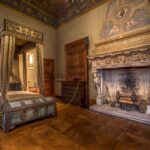
The tour connects Leonardo to the frescoed ceiling of the Sala delle Asse, where the ceiling blends naturalistic depiction with strong symbolism. Even if you don’t go in for a long visit, the guide’s explanation helps the space feel intentional—not decorative.
Consideration: with only about two hours total and two chosen stop moments, time for deep museum-style viewing isn’t the goal. You’re there for the “why it matters” context that makes later visits click.
Santa Maria delle Grazie: the Gothic masterpiece and The Last Supper link
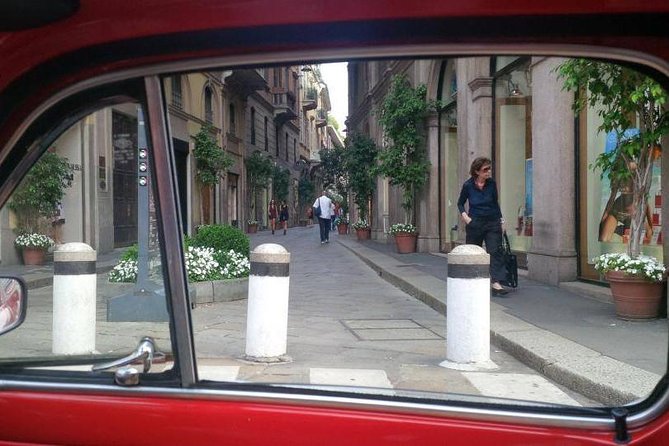
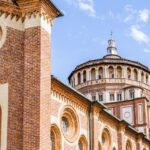
Another key stop is Santa Maria delle Grazie, described as one of Milan’s most beautiful churches and a prime example of late Gothic architecture. You’ll hear that it was built by the Dominicans from 1463 to 1482.
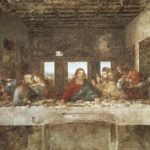
Then the guide brings Leonardo back into the story: between 1495 and 1498, Leonardo da Vinci painted The Last Supper in the monks’ refectory.
This pairing is powerful because it gives you the full arc: architecture first, then the artwork inside the monastic world that produced one of the most famous images in Europe.
Practical tip: if you care most about The Last Supper itself, plan your stop so you’re ready for the rules and timing at that location on the day. The tour is set up to provide context and quick access to the area, not guarantee long time inside.
San Maurizio al Monastero Maggiore: why people compare it to the Sistine Chapel
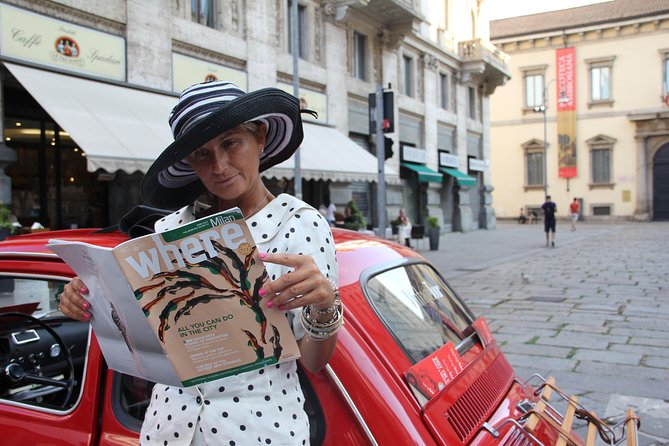
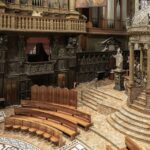
If you want a church experience that feels different from the big-screen-famous sites, look closely at San Maurizio al Monastero Maggiore. It’s described as a spectacular Renaissance church erected in 1503 based on a project by Giovanni Giacomo Dolcebuono.
You’ll hear that it hosts several frescoes and pictures, which is why it’s been called the Sistine Chapel of Milan. The nickname can sound like marketing, but it’s a clue to what you’ll feel: intense, close-range visual storytelling.
What I like about including this stop in a short tour: it broadens your Milan beyond the Duomo-and-Museum rhythm. You get a different kind of beauty—one tied to devotion, patronage, and painted space.
Roman ruins to modern banks: Milan’s layers on one road loop
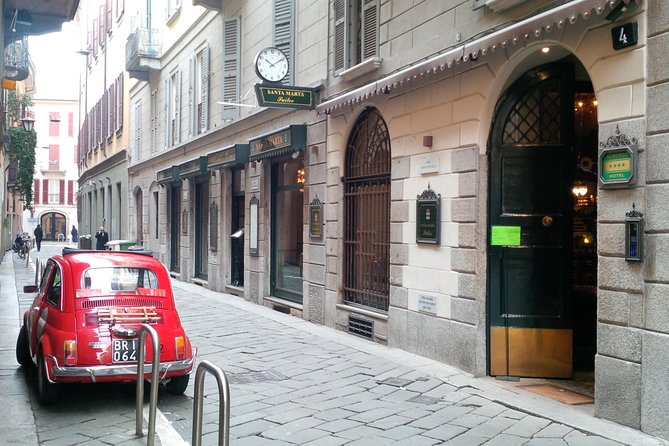
One of the fun parts of riding through the city like this is that time stacks up. You’ll pass the ruins of the Roman Imperial Palace in Milan, where Emperor Maximian resided around 286 A.D. The tour places this behind the Marchesi 1824 pastry shop on Corso Magenta.
Then you’ll transition into early-20th-century power architecture. The Banca d’Italia palace, built in 1907, was designed by Luigi Broggi and Cesare Nava, taking inspiration from the architecture of Rome’s Vittoriano. That contrast—Roman authority to modern finance—helps you see Milan as a city that reinvents its status symbols over and over.
This is also where a good guide helps. The driver’s narration turns random blocks into a timeline you can understand. Without that, you’d just see impressive buildings. With it, you start noticing patterns.
Pinacoteca and the Codex Atlanticus: Leonardo’s drawings beyond paintings
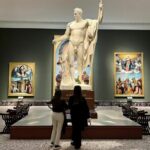
The route also includes a pass by the Pinacoteca, tied to an exhibition featuring drawings from the Codex Atlanticus, described as the biggest collection of Leonardo’s drawings.
This is one of those details that changes how you think about Leonardo. Many people only associate him with paintings. But drawings and engineering sketches were his working language. Seeing that connection—at least through the guide’s explanation—can make your later museum time feel more focused.
Consideration: a short car tour isn’t a substitute for a full museum visit. But as an orientation tool, this stop helps you decide what you want to hunt down later.
The Duomo area from via Larga: big scale, messy history, clear storyline
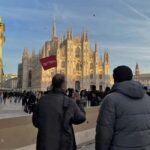
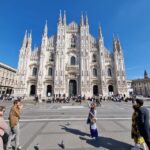
Your route includes views of the Duomo di Milano from via Larga. The tour description gives the size in memorable terms: 515 feet (157 meters) long and 302 feet (92 meters) wide. It’s one of the largest Catholic churches in the world.
Then the guide gives the deeper “how it got here” context. The site originally held older churches: the Basilica of Sant’Ambrogio, and later the Basilica of Santa Tecla founded in 838. A major fire in 1075 devastated both buildings, and centuries later the Duomo was established there. Construction began in 1386.
This kind of history matters because it explains the Duomo’s scale. It’s not a single design decision. It’s a result of centuries of rebuilds, ambitions, and politics.
If you’re only in Milan briefly, this stop can do double duty. You get the exterior scale plus the story that makes the cathedral feel like an outcome of time, not just a photo spot.
Food, shopping, and getting your bearings fast
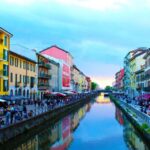
The route also includes a stop described as an affordable shopping street. The name isn’t specified, but the purpose is clear: you’ll get a taste of Milan’s everyday commercial feel, not only the museum grid.
In a city like Milan, that matters. If you only visit icons, you can leave feeling like you saw postcards. If you also understand where people actually shop and walk, you start planning real time outdoors.
You’ll also pass through a pastry-shop landmark tied to the Roman ruins stop, which gives you a natural “grab a snack later” target. I like having one or two specific places in mind when I land in a new city—it makes spontaneous wandering easier.
Timing, traffic, and route changes you should expect
The tour routes may vary depending on traffic, accidents, or city council recommendations. For you, that means:
- Don’t treat the exact street sequence like a locked script
- Be ready for your guide to adjust while still covering the planned highlights
Multiple departure times are offered, and the first tour is listed at 10 am. Because you’re in a compact car, timing can be sensitive. If you have a tight schedule elsewhere that day, give yourself a buffer around the two-hour window.
Who should book this and who should pass
This tour is a great fit if:
- You want a fast first overview of central Milan
- You like history tied to real places, not just facts on paper
- You want the flexibility of two chosen stops for short walking/photo breaks
- You’re traveling as a couple or small group (up to 3) and prefer private time
You might want to choose something else if:
- You need modern car comfort like AC or you’re very sensitive to tight seating
- You’re expecting a long, museum-style walkthrough at multiple sites
- You require safety features like seat belts and air bags as non-negotiables (this car doesn’t list them)
One more note from the experience details: it’s offered with hotel pickup only in Zone 1, and it’s built around a small meeting point at Via Palestro.
Should you book the 2-hour Vintage Fiat 500 Central City Tour?
I’d book it if you want Milan in motion and you value context. The combination of a private vintage Fiat 500 ride, live English commentary, and two customizable stop moments is a smart use of limited time. It’s also a strong choice as a first-day activity because it helps you build a route for the rest of your trip.
I’d hesitate if you’re traveling when it’s hot, you’re tall and space-sensitive, or you really want comfort-level car features. In those cases, the tiny format can be a deal-breaker, even if the sightseeing is excellent.
If you’re on the fence, I’d decide this way: do you want a short city orientation with strong storytelling? Book it. Do you want maximum comfort and lots of interior time? Pick a different style of tour.
FAQ
How long is the Vintage Fiat 500 Central City Tour in Milan?
It’s listed as about 2 hours.
How many people can ride in the Fiat 500?
The tour is limited to a maximum of 3 people per booking/car.
Is hotel pickup included?
Yes, hotel pickup is included for selected hotels in Zone 1 only.
What’s included in the tour price?
Included features are live commentary on board, a professional tour leader/driver, one classic Fiat 500 for up to 3 people (no fleet), and hotel pickup for selected Zone 1 hotels.
Does the Fiat 500 have air-conditioning or seat belts?
No air-conditioning is provided, and the vehicle does not list seat belts or air bags.
Where does the tour start and end?
The tour starts at Via Palestro, 16, 20121 Milano MI, Italy and ends back at the same meeting point.