REVIEW · MILAN
Milano Walking Tour with Audio and Written Guide by a Local
Book on Viator →Operated by Walking Cap · Bookable on Viator
Milan in four hours feels possible. This walk-style experience strings together the big hitters with audio narration and a digital written guide, and I love how the route keeps you moving without turning into a frantic scavenger hunt. The one catch: the Duomo ticket is not included, and seeing Leonardo’s Last Supper requires separate advance booking.
If you like history you can actually follow, you’ll appreciate the local notes and practical monument tips built into the audio/text. I do recommend you do one quick check before you go: you’ll need a smartphone with internet to activate the guide, so don’t rely on airport-offline luck.
In This Review
- Key highlights worth knowing
- Why This Milan Walk Works When Your Time Is Tight
- Cost, timing, and what you really get for $7.83
- Setting up the digital audio and written guide on your phone
- Stop 1: Castello Sforzesco to get your bearings
- Stop 2: Santa Maria delle Grazie and Leonardo’s Last Supper
- Stop 3: Basilica di Sant’Ambrogio for Romanesque comfort
- Stop 4: San Maurizio al Monastero Maggiore, the Sistine of Milan
- Stop 5: Duomo di Milano for 90 minutes of real orientation
- Stop 6: Santuario di San Bernardino alle Ossa for a very strange moment
- Stop 7 and 8: Galleria Vittorio Emanuele II and Piazza della Scala
- Local restaurant advice you can use immediately
- Who this tour suits best
- Should you book this Milan walking experience?
- FAQ
- How long is the Milan Walking Tour with Audio and Written Guide?
- Is this tour offered in English?
- Where does the tour start and where does it end?
- How much does it cost?
- Is the Duomo ticket included?
- Do I need a ticket to visit Santa Maria delle Grazie and see the Last Supper?
- What do I need to access the digital guide?
- Can I listen through speakers or headphones?
- What’s the maximum group size?
- Is there free cancellation?
Key highlights worth knowing
- A route that links Sforzesco to La Scala: the walk naturally funnels you toward the Duomo area by the end.
- Audio plus written guide in multiple languages: English is offered, with additional options (Esp, Ita, De, Fr).
- Most stops are ticket-free: you spend money only where it matters most, like the Duomo.
- Local restaurant advice at the end: handy when you’re hungry and deciding where to eat.
- Big pacing for a short time window: about 4–5 hours covers 8 major stops without dragging.
Why This Milan Walk Works When Your Time Is Tight
This is one of those Milan experiences that’s built for real schedules. You’re not trying to read your way through stone after stone. Instead, you follow a set route and let the audio and written guide keep the city organized in your head.
That matters in Milan because the sights are impressive, but they’re also spread out enough that you can burn time just figuring out where to go next. Here, the route is designed to keep your attention on the monuments, not on your map app.
The price also plays in your favor. At about $7.83, you’re paying for the structure and guidance—not for expensive attractions. It’s a smart move when you want the core Milan hits but don’t want to overbuy entry tickets.
You can also read our reviews of more walking tours in Milan


Cost, timing, and what you really get for $7.83

At the headline level, you’re getting:
- audio + text guidance (multiple languages, including English)
- a digital written guide you can use on your own
- monument context, curiosities, and personal anecdotes
- local restaurant suggestions for after your walk
Most stops along the way are listed as admission free, which can keep your total spend lower than it would be with a ticket-heavy day. The big paid item that can change your budget is the Duomo.
Timing-wise, plan on about 4 to 5 hours. That’s long enough to feel like you visited Milan, but short enough to still have energy for dinner and maybe one last glance at the Duomo at night.
One more practical note: the experience is offered with group size up to 99 travelers. That usually means a lively pace. If you’re the type who likes quiet photo stops, give yourself permission to pause briefly between narration segments.
Setting up the digital audio and written guide on your phone
This experience is very smartphone-dependent, so treat it like part of the tour.
You’ll need:
- a smartphone with an internet connection
- the activation details provided in your voucher
The good news is you’re not expected to find some office or desk on arrival. If something goes wrong, the support process is described as fast and online, and access details are sent through mail + WhatsApp + your voucher. One reply signed by Matteo also emphasized that you don’t need to visit an information desk to access the guide.
Audio delivery is flexible: you can hear it using your speakers or, if you have them, through headphones. That’s useful in crowded areas where your voice and the street noise can make everything else harder.
Pro tip: before you leave, save a screenshot of your voucher instructions. If your signal is weak near the Duomo, you’ll thank yourself.
Stop 1: Castello Sforzesco to get your bearings
Your walk starts at Sforzesco Castle in Piazza Castello. This is a good opening choice because it’s a Milan anchor point. Even if you don’t go deep inside during this time window, you get oriented fast.
The castle is described as one of Milan’s most iconic historic landmarks, with centuries of construction, destruction, and renovation. That’s exactly the kind of context that helps you later when the city starts repeating architectural ideas you can recognize.
You’ll have about 25 minutes here, and it’s listed as ticket-free. Expect more of a guided orientation than a full museum day. If you’re a castle person, you’ll probably want more time later, but as a start, it does its job well.
Potential drawback: a time-boxed first stop can feel like you’re sprinting if you like to linger. Use this 25 minutes to learn the story and set your mental map.
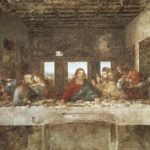
Stop 2: Santa Maria delle Grazie and Leonardo’s Last Supper
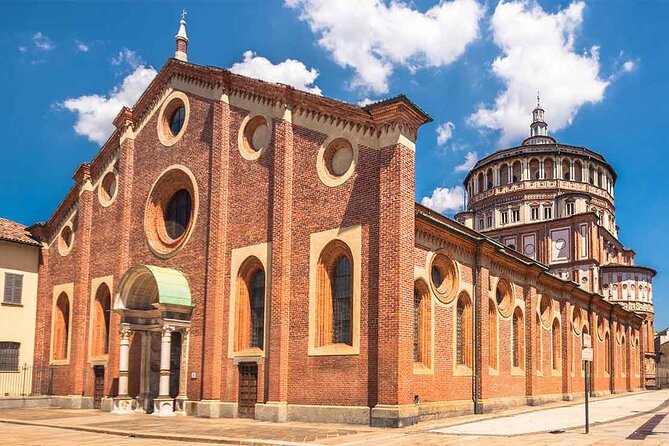
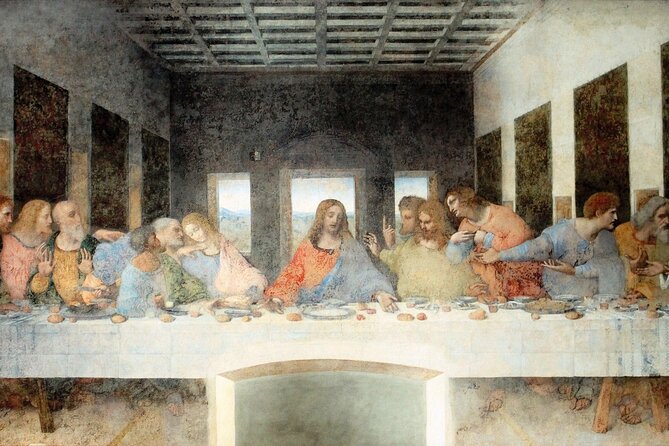
Next is Santa Maria delle Grazie, described as Gothic-Renaissance in style and strongly linked to Leonardo da Vinci. The highlight is the refectory’s connection to the Last Supper.
Here’s the key planning reality: to see the Last Supper, you need to book about a week in advance. The church visit time is listed as about 25 minutes and ticket-free, but the narration is built around the big masterpiece—so if you haven’t booked separately, you may only get the context.
That’s still valuable. Even when you can’t enter for the painting, learning what you’re looking at and why it matters changes the way you experience the space.
Potential drawback: if your priority is seeing the Last Supper itself, don’t let the walk schedule lull you into assuming entry is included. Make the separate booking part of your trip planning.
You can also read our reviews of more guided tours in Milan


Stop 3: Basilica di Sant’Ambrogio for Romanesque comfort
Basilica di Sant’Ambrogio is the next stop, dedicated to St. Ambrose and called an archetypal example of Romanesque style. If the previous stop leaned toward Leonardo’s legend, this one shifts you into a different architectural rhythm.
You’ll have about 25 minutes and it’s listed as ticket-free. In a city where a lot of major sights can feel crowded, Romanesque spaces often give you a calmer, sturdier feeling. That makes this stop a nice breather.
Potential drawback: if you’re chasing only the flashiest photo moments, a Romanesque basilica can feel less dramatic. But the guidance here is likely to help you notice the details that make it historically important.
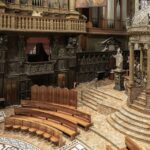
Stop 4: San Maurizio al Monastero Maggiore, the Sistine of Milan
This stop is one of the more fun names on the route: Chiesa di San Maurizio al Monastero Maggiore. It’s often compared to the Sistine Chapel of Milan because of the decorative cycle and the architectural setup.
The narration also points out influences described as coming from the Leonardo school. That connection matters if you’re tracking themes between stops—Leonardo’s presence isn’t limited to one painting. You’ll likely feel the thread of artistic influence move through the day.
Your time here is about 20 minutes, and it’s listed as ticket-free. If you love interior decoration and painted detail, this is the kind of stop that can steal the show even when you’re moving quickly.
Potential drawback: 20 minutes is tight. If you want to study every panel, arrive ready to focus and pick a few areas to look closely rather than trying to see everything at once.
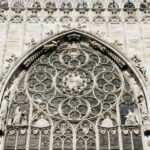
Stop 5: Duomo di Milano for 90 minutes of real orientation
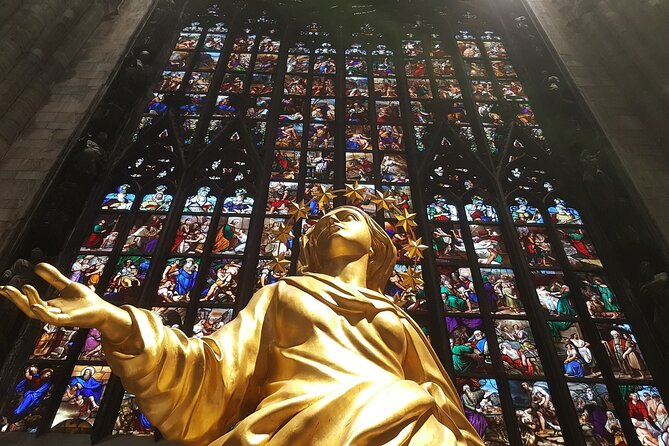
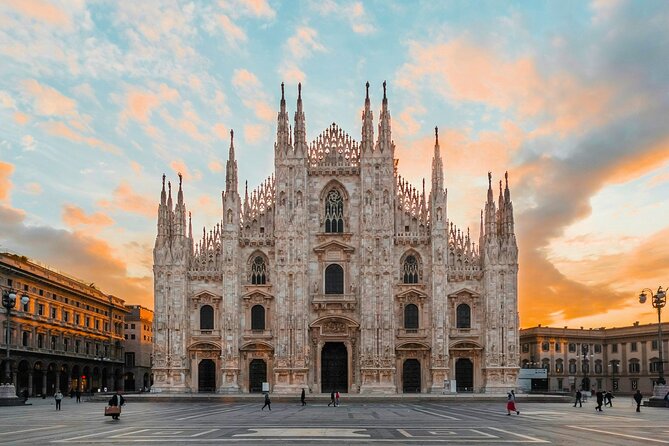
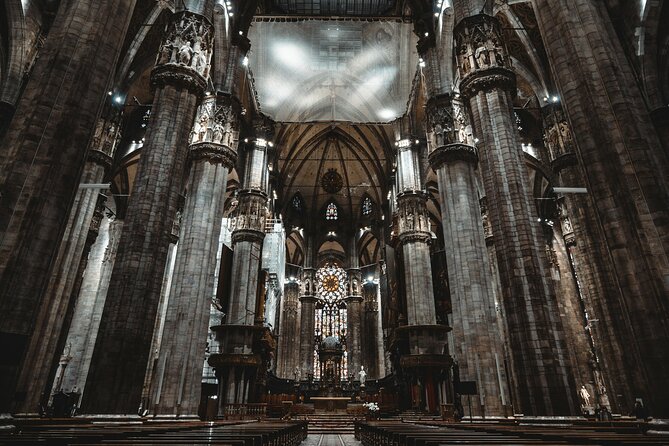
Then comes Duomo di Milano, the big one. Your time here is about 1 hour 30 minutes—longer than any other stop. That’s a strong clue this is where the day’s payoff lives.
Admission to the Duomo is not included. The listing notes ticket prices can range from 6€ to 30€, and it describes the Duomo as Milan’s timeless symbol.
You’ll learn a core timeline: construction began in 1386 under Gian Galeazzo Visconti, and the cathedral was built over five centuries with modifications and modernizations along the way. That’s useful because the Duomo isn’t one single style moment. It’s a long project that evolved.
Practical takeaway: plan your Duomo time based on your ticket choice. If you buy a ticket, expect that your 90 minutes will feel different depending on whether you’re going inside, going to areas with views, or just staying grounded.
Potential drawback: if you’re not budgeting for the Duomo ticket, your day can end up feeling like the tour started to deliver—then you have to pause and pay to continue enjoying the full experience.
Stop 6: Santuario di San Bernardino alle Ossa for a very strange moment
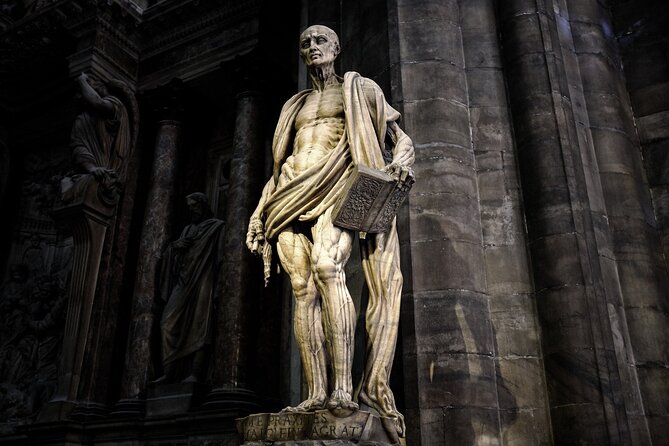
A short walk from the Duomo brings you to Santuario di San Bernardino alle Ossa, described as one of the strangest churches many people have seen. It’s also framed with a simple warning: it’s worth it, but only if you’re not too impressionable.
This is the stop that adds personality to the route. Milan can be grand, elegant, and serious. This place is… different. And the narration is exactly the right kind of prep: you’re told what to expect so you’re not shocked mid-step.
Time here is about 20 minutes, listed as ticket-free. If you like experiences that break the usual tourist mold, this is where you’ll feel it.
Potential drawback: if you’d rather skip the bone-themed imagery, you might find this stop uncomfortable. The rest of the day still works without it—you’re close to the Duomo complex, and you’ll keep moving toward the shopping gallery and square.
Stop 7 and 8: Galleria Vittorio Emanuele II and Piazza della Scala
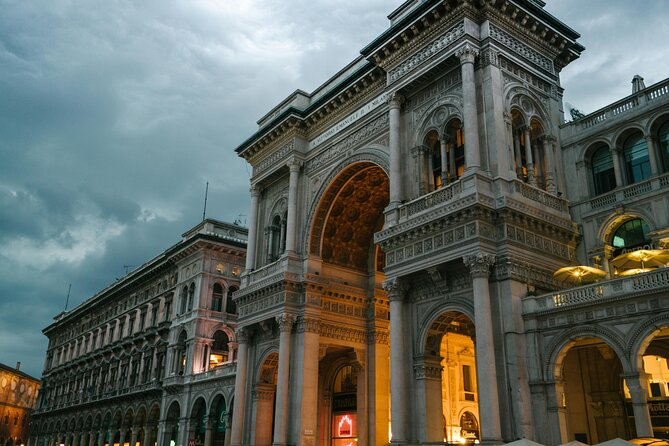
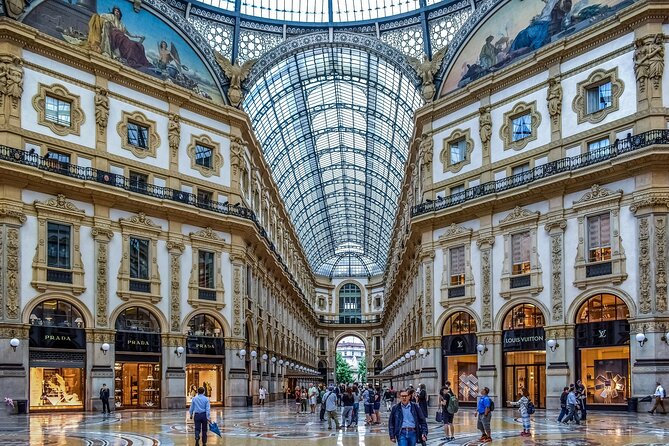
From the church you move into Galleria Vittorio Emanuele II, described as the oldest active shopping gallery in Italy. It’s also a practical connector: the pedestrian passage links Piazza del Duomo with Piazza della Scala.
This is one of those Milan moments that feels both historic and everyday. You’re not escaping into a museum. You’re walking through a living city corridor where people actually go about their day.
You’ll spend about 15 minutes here, ticket-free. If you want photos, it helps to do them quickly, because shopping spaces tend to get crowded.
Then you finish at Piazza della Scala, a square tied directly to the La Scala theater. The walk notes it was built to add a square to the famous theater, making it more functional and welcoming. Time here is about 15 minutes.
Potential drawback: if you’re expecting a long sit-down theater moment, this is more of a square-and-stroll finish. The tour is set up to end near the Duomo area so you can keep exploring or eat right away.
Local restaurant advice you can use immediately
The end of the route is built for one practical thing: getting you to a good meal without guesswork.
The experience includes best advice for local restaurants with authentic food, plus tips tied to monuments and personal anecdotes throughout. That means you’re not just learning about Milan—you’re also getting help turning your day into something tasty.
When the tour ends near Piazza della Scala, you’ll be close to major streets and options, but the guidance should help you narrow down what’s worth your time.
If you only have one evening in Milan, this kind of recommendation can save you from the classic trap: picking a convenient place that’s heavy on tourist gloss and light on local flavor.
Who this tour suits best
I think this experience is a great fit if:
- you have 4–5 hours and want a structured route
- you want English audio plus optional other languages
- you like the idea of guidance that helps you connect architecture and art themes
- you’re trying to keep costs down by relying mostly on free admissions
- you want a built-in plan ending near excellent walking territory
It’s less ideal if:
- your top priority is only one ticketed attraction, and you haven’t booked it yet
- you hate smartphone-based setup and prefer printed-only guidance
- you’re the kind of traveler who needs unlimited time inside each site
The format also works nicely for independent travelers who want the confidence of a plan. It gives you narrative structure, but it doesn’t trap you in a rigid schedule for the whole day.
Should you book this Milan walking experience?
Book it if you want an efficient, low-cost way to hit major Milan landmarks with audio and written support, and you’re okay handling the two big planning pieces: the Duomo ticket (not included) and the Last Supper advance booking requirement.
Skip it or look at alternatives if you’re determined to see the Last Supper without doing that separate booking. In that case, you’d be better off planning the ticketed visit first and then building the rest of the day around it.
For everyone else, the value is strong. For a modest price, you’re getting a guided route that connects historic sites, gives you the kind of context that makes monuments easier to understand, and ends with practical food advice so your day doesn’t stall out at the finish line.
FAQ
How long is the Milan Walking Tour with Audio and Written Guide?
It’s listed as approximately 4 to 5 hours.
Is this tour offered in English?
Yes. It’s offered in English, and the audio/text is also available in other languages (Esp, Ita, De, Fr).
Where does the tour start and where does it end?
It starts at Castello Sforzesco, Piazza Castello, 20121 Milano MI, Italy and ends at Piazza della Scala, 20121 Milano MI, Italy.
How much does it cost?
The price listed is $7.83 per person.
Is the Duomo ticket included?
No. The Duomo ticket is not included and is listed as optional, with prices from 6€ to 30€.
Do I need a ticket to visit Santa Maria delle Grazie and see the Last Supper?
The stop is listed as ticket-free, but to see Leonardo da Vinci’s Last Supper you need to book about a week in advance.
What do I need to access the digital guide?
You’ll need a smartphone with an internet connection. The details to activate the digital guide are provided in your voucher.
Can I listen through speakers or headphones?
Yes. You can hear the audio through your speakers or, if you have them, through headphones.
What’s the maximum group size?
The tour/activity has a maximum of 99 travelers.
Is there free cancellation?
Yes. Free cancellation is available, and you can cancel up to 24 hours in advance for a full refund.