REVIEW · MILAN
Milan | In the Crypt of time, holographic tour
Book on GetYourGuide →Operated by Veneranda Biblioteca Ambrosiana · Bookable on GetYourGuide
The Crypt of San Sepolcro turns history into something you see. This mixed-reality chronovisor experience lets you walk the story of Milan in a hybrid world of past and present.
I like that it’s built around a meaningful starting point—the crypt of San Sepolcro, described as the city’s true center—so the narrative feels anchored, not random. I also love the pacing: a 20-minute tour means you get a complete experience without eating your whole day.
Two big strengths for me are the tech and the storytelling. You wear technological glasses (the chronovisor) and see holograms projected into the surrounding space, so the past doesn’t just get explained. And it uses guided methods that make the history feel connected to where you are, rather than like a lecture you sit through.
One consideration: this is not a long, slow museum visit. It moves quickly, and the experience isn’t suitable for kids under 9 or for people with mobility impairments, plus there are restrictions on what you can bring (no strollers or large bags).
In This Review
- Key things to know before you go
- What the Chronovisor Tour in the Crypt of San Sepolcro Actually Is
- Finding the Entrance: Pinacoteca Ambrosiana Meeting Point Tips
- Step-by-Step Flow: What Happens Before and During the 20 Minutes
- The Crypt of San Sepolcro as the Story’s Starting Point
- Mixed Reality Without Needing a Technology Degree
- Audio Guide Languages: How to Choose Your Comfort Zone
- Price and Value: Is $17 Worth a 20-Minute Experience?
- Best for Teens, Curious Adults, and First-Time Milan Layers
- Practical Tips to Avoid Friction on Arrival
- Should You Book the In the Crypt of Time: Milan Chronovisor Tour?
Key things to know before you go
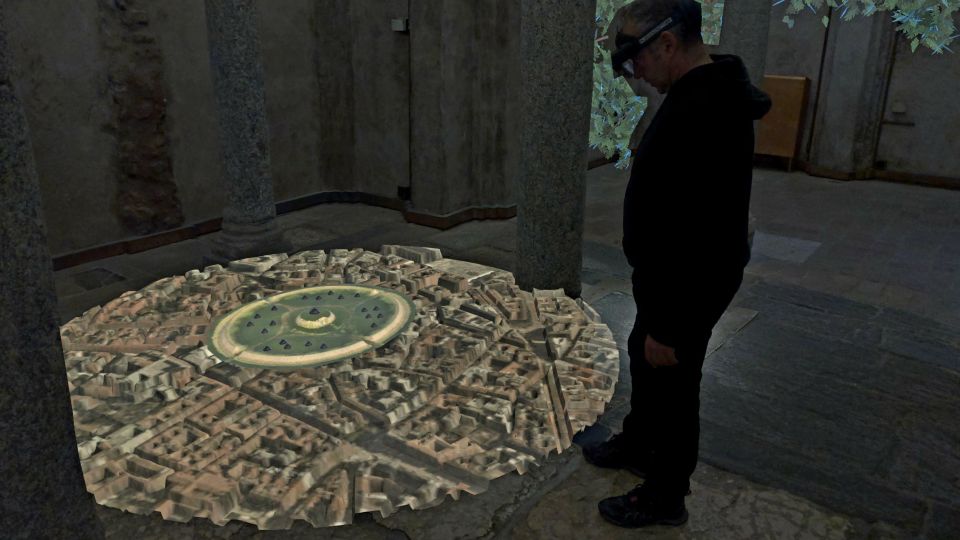
- Chronovisor mixed reality: you use technological glasses to see past scenes in the real setting.
- True-center starting point: the tour begins at the Crypt of San Sepolcro.
- Short and focused: it runs about 20 minutes, so it works well between bigger sights.
- Audio guide coverage: Italian, English, French, and Spanish are supported.
- Easy re-visit loop: it ends back at the starting meeting point.
- Watch for the exact meeting spot: the entrance is inside the Pinacoteca Ambrosiana exit courtyard near a staircase landmark.
What the Chronovisor Tour in the Crypt of San Sepolcro Actually Is
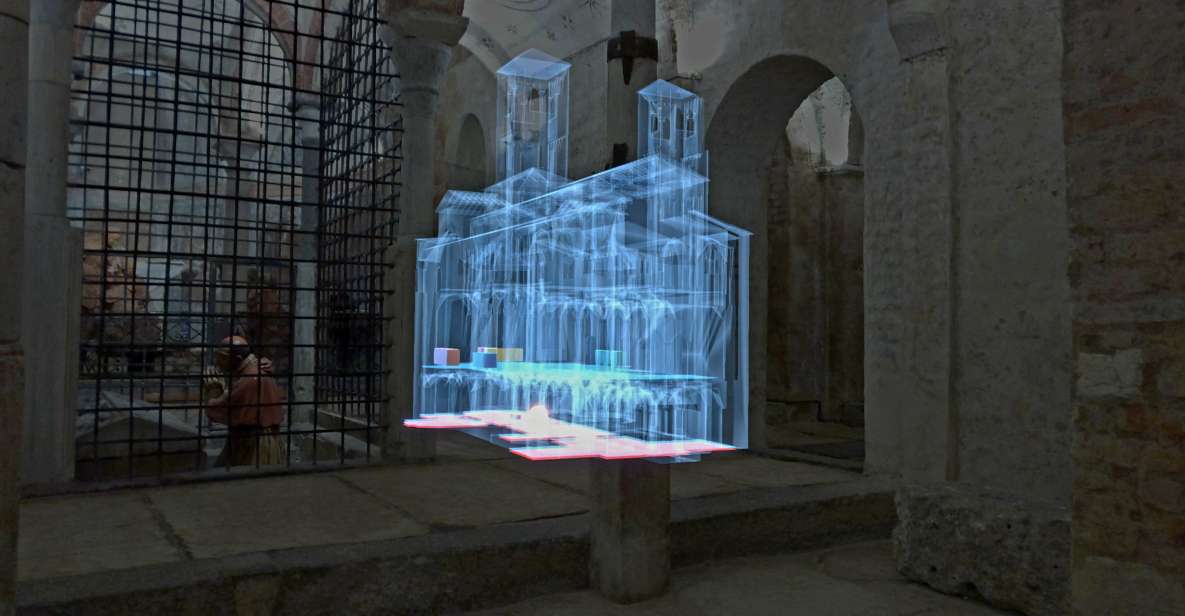
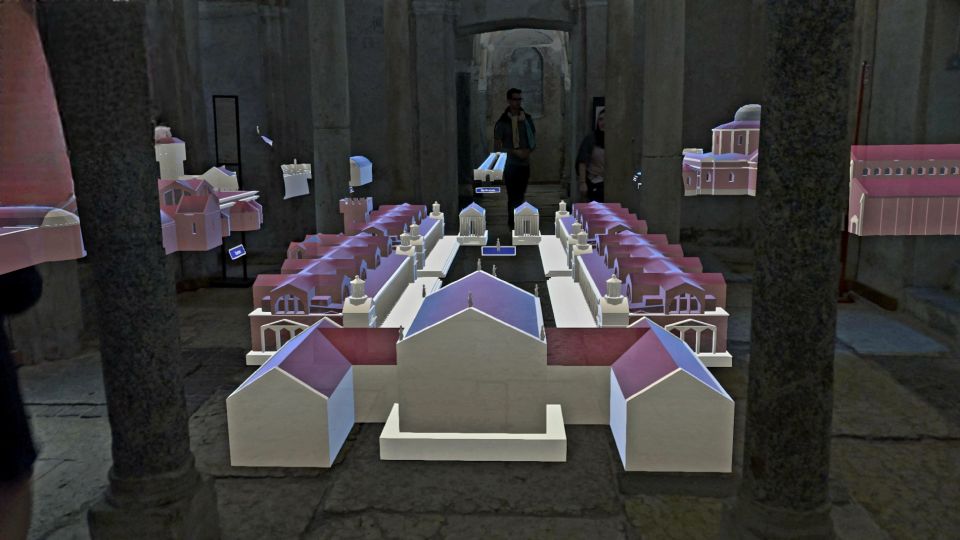
This is a Milan cultural experience with a tech twist. You’ll put on a chronovisor—basically technological glasses designed to let you see into earlier time periods through holographic projections. The idea is simple and clever: you stand in a real historic place, then the guided story overlays a past version of the space around you.
I especially like the concept of mixed reality being used for culture, not just entertainment. You’re not chasing screens at a distance. Instead, the holograms appear in the environment so your brain can match story details to what your feet are standing on.
There’s also something quietly comforting about the structure. The experience is designed as a compact guided run—enough time to feel satisfied, not enough time to get restless.
You can also read our reviews of more tours and experiences in Milan.



Finding the Entrance: Pinacoteca Ambrosiana Meeting Point Tips
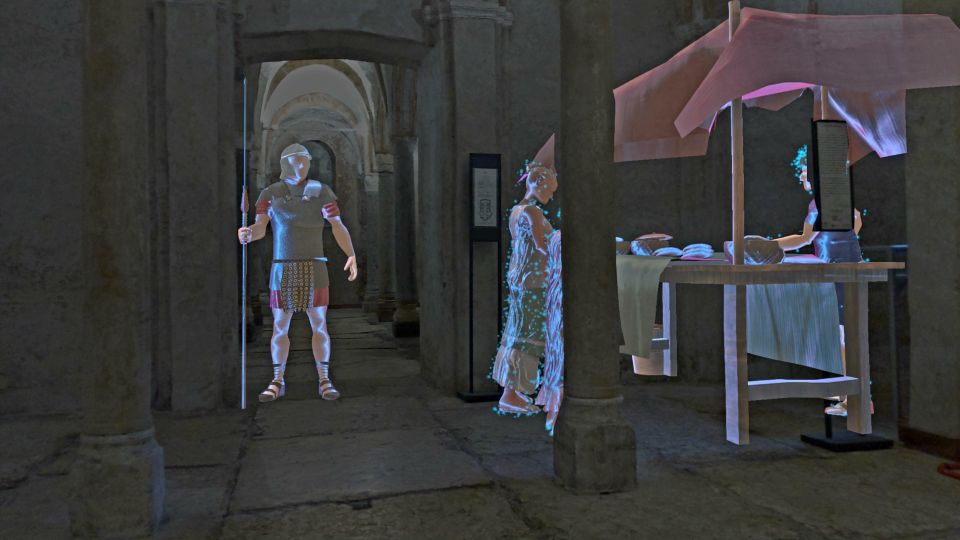
Your start point is specific, and that matters. The entrance is inside the exit courtyard of the Pinacoteca Ambrosiana. Look for the staircase on the right of the statue of Cardinal Federico Borromeo.
If you arrive late or start wandering, you’ll waste the one thing you can’t buy back: the time you’re already booked for. I recommend showing up 10 minutes early and getting your bearings fast at the courtyard. It’s the easiest way to avoid confusion, especially if you’re matching landmarks in a busy area.
Also plan your bag situation. No strollers and no luggage or large bags are allowed. Wear something practical and keep it simple.
Step-by-Step Flow: What Happens Before and During the 20 Minutes
The tour is short, so it’s helpful to know what the “shape” of it feels like in real life.
First, you gather at the meeting point inside the Pinacoteca Ambrosiana exit courtyard, by that right-side staircase near Cardinal Federico Borromeo’s statue. Then you’re guided into the area connected to the Crypt of San Sepolcro, which is the heart of the experience.
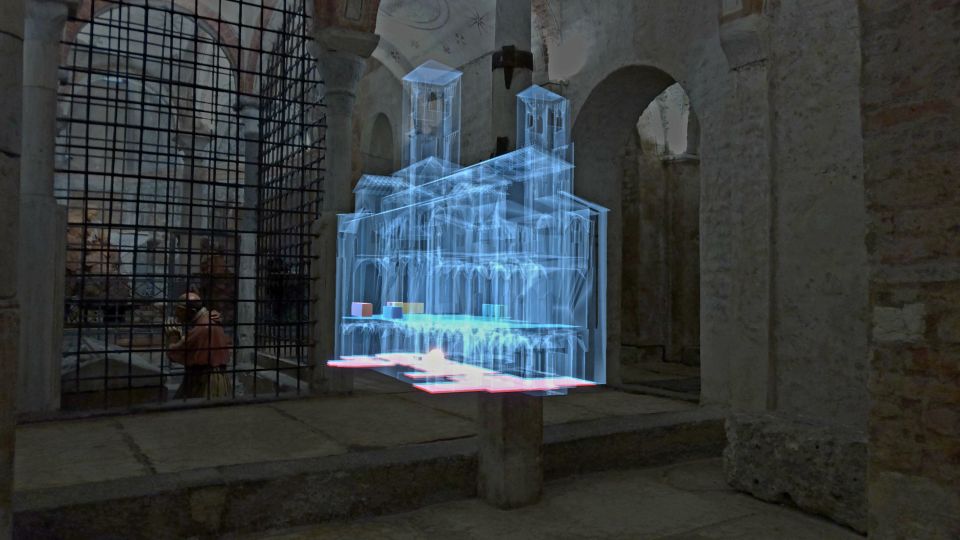
Once you’re in place, the chronovisor comes out. You’ll put on the technological glasses and use the mixed reality system to see holographic reconstructions projected into your surroundings. The guide uses audio support in multiple languages, and the story is built around Milan’s history starting from that crypt setting.
The big thing here is attention. Because the experience is only about 20 minutes, you’ll want to stay focused on what the guide is pointing out. Think of it like a guided “guided vision” rather than a slow walk-through.
The Crypt of San Sepolcro as the Story’s Starting Point
The tour doesn’t begin with a generic overview of Milan. It starts in the Crypt of San Sepolcro, described as the city’s true center. That choice changes the feeling of the experience.
When history starts from a real place like this, it’s easier to connect the facts you hear to a physical sense of place. You’re not just learning dates. You’re standing in a location the experience frames as meaningful in Milan’s story, and the holograms help show how the past can relate to what you see now.
I also appreciate the “time jump” approach. You’re asked to experience Milan’s past in a new dimension, which keeps your attention on the visual story. Even if you’re not a hardcore history person, it’s the kind of concept that makes the city feel more three-dimensional.
Mixed Reality Without Needing a Technology Degree
Let’s be honest: some people worry that tech tours are mostly gadgets. Here’s what makes this one feel more grounded.
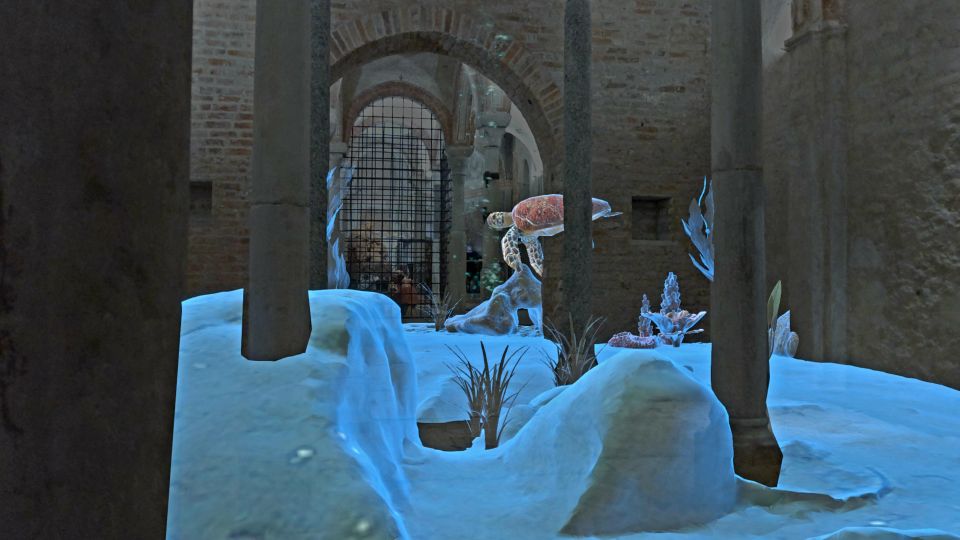
The chronovisor is meant to show the past through holograms projected into the environment. That means the visuals are tied to where you are, instead of you watching something detached from real space. It’s closer to a guided “time lens” than a digital show you watch from the side.
I like that the experience is presented as one of the early cultural applications of mixed reality. That background matters, because it suggests the experience was designed for storytelling and history education, not just for novelty.
One caution: you can’t treat it like a wander-at-your-own-pace stop. This is a structured guided moment. You’ll get the best results if you stay with the group and listen when the guide cues what to look for.


Audio Guide Languages: How to Choose Your Comfort Zone
Good audio support is a big deal for any Milan experience, and this one includes languages directly. The audio guide is available in Italian, English, French, and Spanish.
So if you’re traveling with mixed-language needs, you’re covered. You can also choose the language you’ll actually understand at speed, which is important for a short 20-minute experience. If you struggle with the guide language, you’ll miss the timing of what’s projected around you.
Price and Value: Is $17 Worth a 20-Minute Experience?
At $17 per person, this is not a budget-buster. It’s also not just a ticket to a room you walk through. You’re paying for three things at once: a guided story, a special location (Crypt of San Sepolcro), and the chronovisor mixed reality tech.
The value logic is basically time and impact. Twenty minutes can sound brief until you remember what you get: a single, concentrated experience where the “big wow” factor is built in. You’re not committing to a half-day plan, and you can fit it around museums and iconic sights.
If you’re the type who loves architecture, city layers, and quick, high-impact experiences, the price-to-time ratio makes sense. If you prefer long-form museum exploration, this may feel like a “taste” rather than a full meal.
Best for Teens, Curious Adults, and First-Time Milan Layers
From what you can take as practical guidance, this is a strong match for people who enjoy being guided through a concept quickly. One highlight is that it can be fun even for teenagers, which I read as a clue that the pacing and visuals aren’t only aimed at adults.
It also suits travelers who like getting context for the city. Starting at the Crypt of San Sepolcro can help you understand why Milan feels layered, especially if you’re also planning to visit major sites like the Pinacoteca area.
On the flip side, it’s not suitable for children under 9 and isn’t recommended for people with mobility impairments. If either of those applies, you’ll want to look for other history-based options in Milan that match your needs.
Practical Tips to Avoid Friction on Arrival
This experience is designed for a clean, guided flow, so tiny mistakes matter. Here are the best “do this, not that” ideas based on how it’s described and set up:
- Arrive early and go straight to the landmark: the staircase on the right of Cardinal Federico Borromeo’s statue.
- Travel light: no strollers, and no luggage or large bags.
- Expect a quick pace: it’s about 20 minutes, so don’t plan a long detour right before.
- Use the audio language you’ll understand fully: speed is part of the format.
And if you’re the type who hates uncertainty, treat this as one of your “arrive early” stops. A mixed reality experience lives or dies on being ready on time.
Should You Book the In the Crypt of Time: Milan Chronovisor Tour?
I’d book it if you want a short Milan experience that blends real place + tech storytelling. It’s a smart fit for a day packed with sights because it doesn’t demand hours, and it gives you a memorable “Milan in layers” moment starting in the Crypt of San Sepolcro.
Skip or reconsider if you need long exploration time, if you’re bringing a young child under 9, if mobility is an issue, or if you strongly prefer traditional museums where you can move slowly and at your own pace.
If you can handle a quick, guided, headset-style moment in a historic setting, this is one of the better ways to make Milan’s past feel visible.