REVIEW · MILAN
Milan: Private or Shared Essential Walking Tour
Book on GetYourGuide →Operated by MILAN IN TOUR · Bookable on GetYourGuide
Milan can feel like a maze at first. This short walking tour helps you get your bearings fast with clear stories and major sights packed into 2 hours, starting at the Duomo area. I especially love how the guide connects Duomo di Milano to its 5 centuries of history, and how the route threads from grand religious buildings to everyday city life around the Victor Emmanuel II Arcade. One thing to consider: most of what you see are exteriors, so if you’re hoping for interior access, you’ll need extra tickets and timed visits.
Guides make or break a walking tour, and the strong point here is the human touch. I’ve seen standout guides like Laura, Alexia, Cristina, and Fiamma described as organized and good at steering the group while keeping the energy up. The only real drawback is the walking time and the fact that the tour notes it’s not suited for people with motion sickness or pre-existing medical conditions.
In This Review
- Key things to know before you go
- Why this 2-hour Milan walk is a smart first-timer move
- Starting near the Duomo: the story behind Milan’s signature landmark
- Royal Palace area: how to connect the dots between power and faith
- Victor Emmanuel II Arcade: luxury shopping and a lesson in design
- La Scala (from the outside): the theatre you hear about everywhere
- Sforza Castle: meeting the dukes and seeing the skyline anchor
- What you actually do during the walk (and how it feels)
- Price and value: when $317.20 makes sense
- Tour stops you can plan around (and what’s extra)
- Who this tour suits best
- Should you book this Milan private or shared essential walking tour?
- FAQ
- How long is the Milan walking tour?
- What’s included in the price?
- Do I need to buy tickets for Duomo, La Scala, or the castle?
- Is the tour wheelchair accessible?
- What languages are available?
- What should I bring or avoid during the walk?
Key things to know before you go
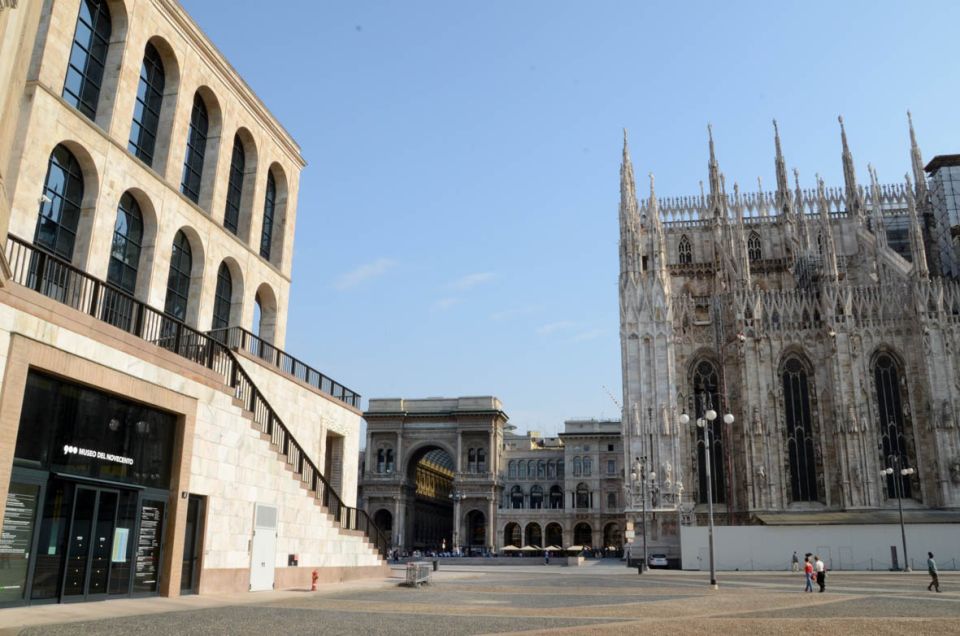
- Duomo-focused start: you begin with the cathedral and learn its long arc of history.
- Arcade stop is more than photo time: the Victor Emmanuel II Galleria is framed as a lifestyle hub, not just a building.
- You’ll mostly see exteriors: palaces, La Scala, and Sforza Castle are presented from the outside.
- Tickets are extra: La Scala admission, Sforza Castle admission, and Duomo basic entry cost extra.
- Headphones can be required: available at €2.50 per person, and they’re compulsory starting from the 5th person.
- Your guide choice matters: strong guides like Laura, Alexia, Cristina, and Fiamma are praised for balance and flexibility.
Why this 2-hour Milan walk is a smart first-timer move
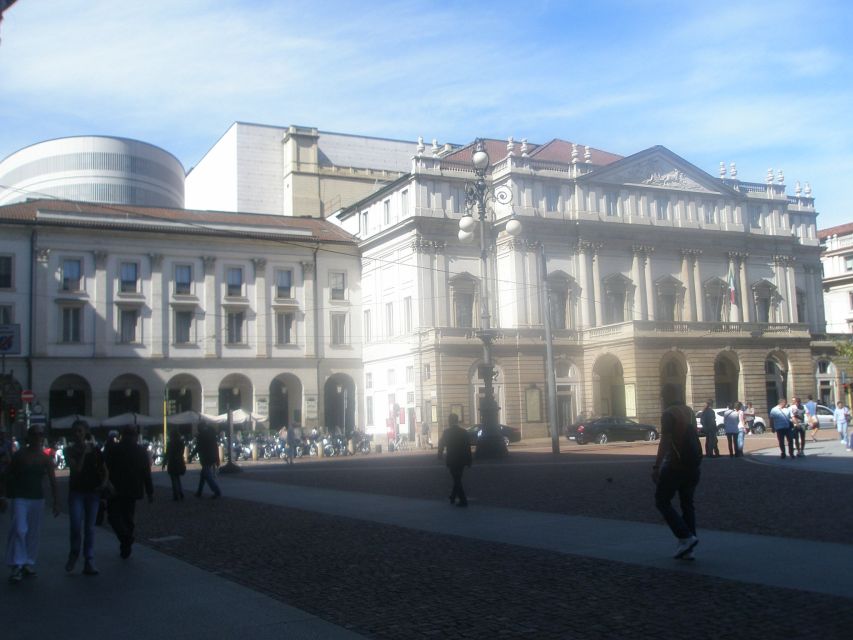
If it’s your first day in Milan, you need two things: orientation and context. This tour is built for both. In a compact 2-hour stroll, you get placed in the city’s layout—what’s near what, and why these spots matter—so the rest of your trip feels less like wandering and more like exploring with a plan.
The pacing also works well for shorter attention spans. It’s not a multi-hour slog, and the tour is designed around seeing the essentials: art and religious architecture, major public buildings, and the classic “see-it-once” stops that shape Milan’s image.
Finally, it’s a good value if you treat it like an introduction. You’ll still likely buy individual attraction tickets later, but a guided “map in your head” can save you time when you plan those bigger visits.
You can also read our reviews of more walking tours in Milan


Starting near the Duomo: the story behind Milan’s signature landmark
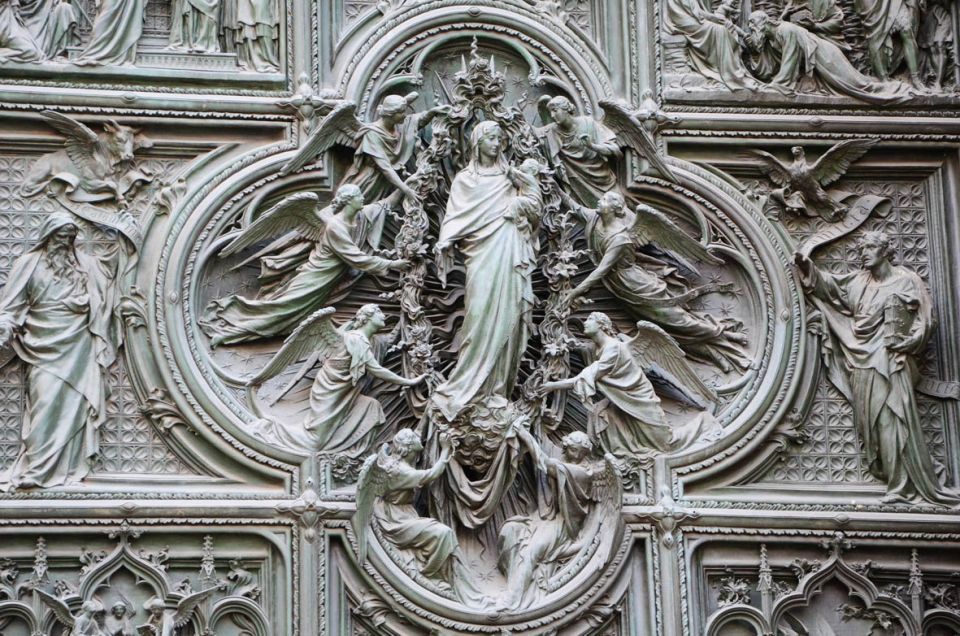
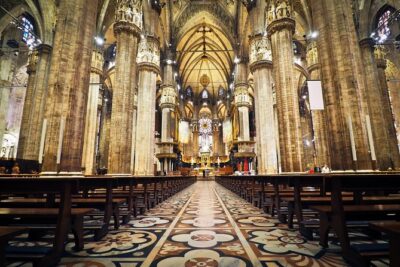
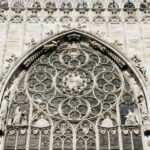
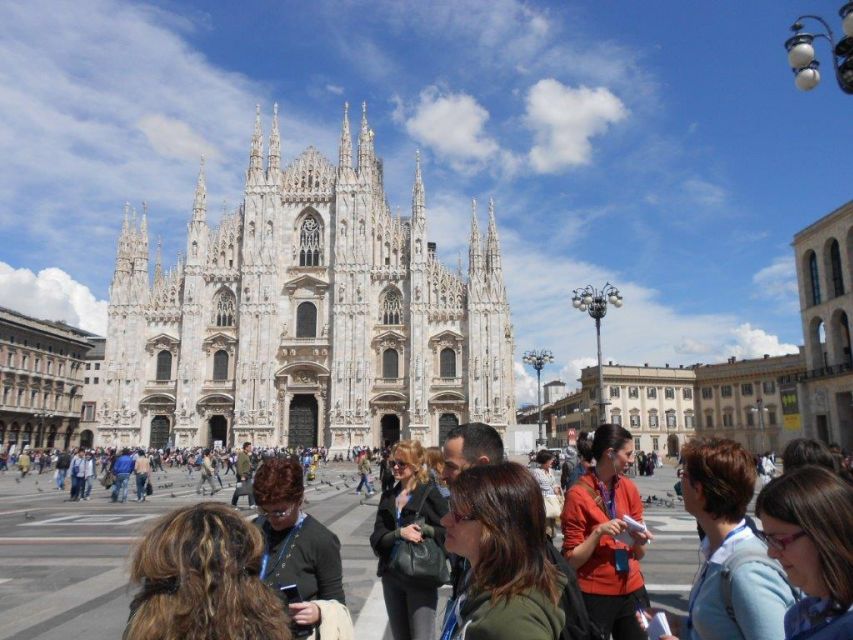
The tour kicks off near Duomo di Milano, and that opening is not random. This is the city’s main visual anchor, and the guide uses the first stop to explain the cathedral’s five centuries of history—exactly the kind of background that makes the building feel less like a postcard and more like a real monument with layers.
What I like about starting here is the way it sets your expectations for the whole route. Duomo isn’t just “a big church.” Your guide frames it within Milan’s cultural and social life, so you start seeing the city as a place where religion, art, and power have been in conversation for a long time.
Royal Palace area: how to connect the dots between power and faith
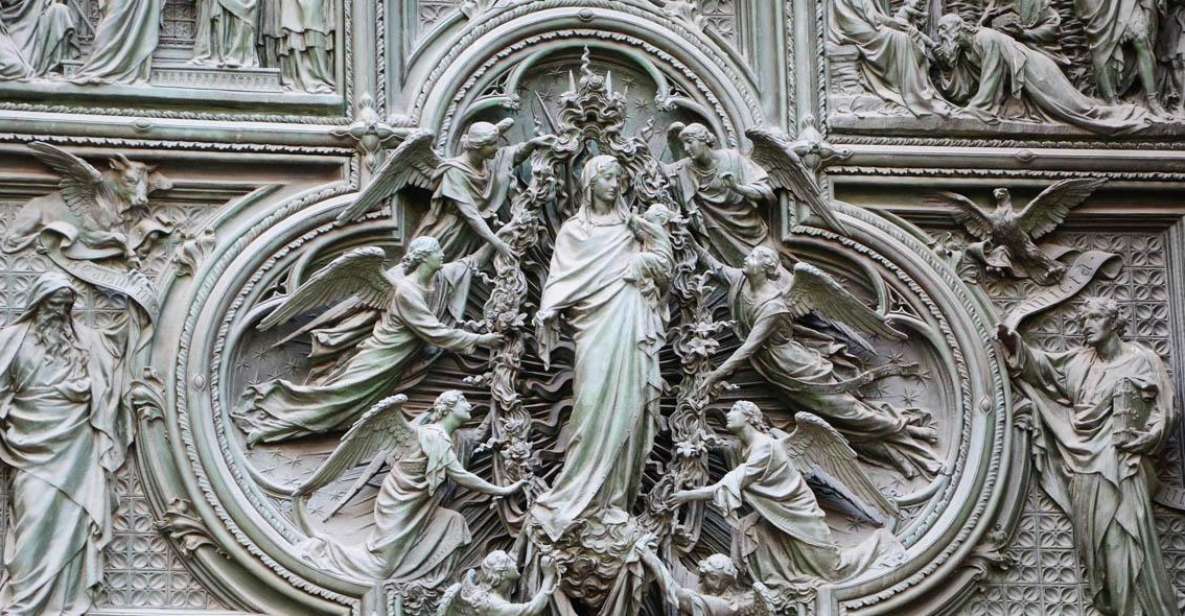
After the Duomo, your route moves through the heart-of-the-city scene where multiple major buildings sit close enough to connect in one walk. You’ll see the Royal Palace, the Archbishop’s Palace, and the Arengario Palace (from the outside).
Even without interior access, these stops can click quickly if you know what you’re looking at. Your guide explains why these buildings mattered—who used them, what they represented, and how they shaped the civic identity of Milan. This is one of those “stand and learn” sections where you’ll get more out of it if you ask questions. The tour format supports that kind of interaction, and guides with a knack for group control (like those praised in past experiences) tend to keep the group focused on what’s in front of them, not just what’s being said.
Victor Emmanuel II Arcade: luxury shopping and a lesson in design
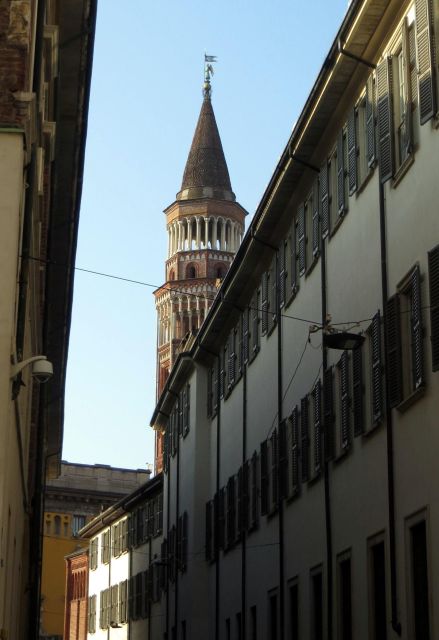
Next comes one of Milan’s most enjoyable walking breaks: the Victor Emmanuel II Arcade. This is described as the first covered shopping mall in Europe, and it’s still used as a luxury shopping site today.
Here’s why this stop is more than a stretch of storefronts. A covered arcade changes how a city moves. It’s weather-friendly, slower than a street, and designed for lingering—so it tells you something about Milan’s pace and priorities. Even if you’re not buying anything, you’ll get a sense of how architecture shapes behavior.
Also, it’s a natural rhythm change from exterior palaces and monumental facades. It gives you a place to look up, notice materials and spacing, and then move on without your feet feeling punished.
La Scala (from the outside): the theatre you hear about everywhere
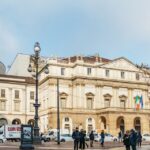
The tour includes La Scala and the guide talks about its importance and history, but you’re viewing it externally. This is useful for most visitors because it lets you grasp why La Scala has such cultural weight, without forcing everyone into a timed ticket plan during the walk.
One practical note: the La Scala Museum is closed on Mondays. If your schedule lands on a Monday and you were hoping for an interior add-on, plan your tickets for another day.
If you do want the deeper experience later, this tour can function like a trailer. You’ll know what to look for when you step inside—assuming you book admission separately.
You can also read our reviews of more private tours in Milan





Sforza Castle: meeting the dukes and seeing the skyline anchor
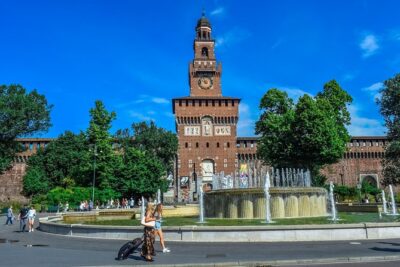
A major highlight on this route is Sforza Castle, presented with exterior views and explanations about its dukes. You won’t be inside during the walking tour itself, but you will get the background that helps the fortress-looking walls make sense.
Castles can feel like generic “big stone” until someone connects them to the people who shaped the era. The guide does that by focusing on the ruling story—how the ducal power worked and why the castle mattered. For a short tour, it’s a smart way to cover the essentials without spending your entire day in one attraction line.
If you want interior time, you’ll need the castle admission ticket (listed as €5 per person). This is common in these walking tours: the guide gives the context, and you choose how much time you want to spend deeper at the sites.
What you actually do during the walk (and how it feels)
This is a live guided walking experience with a knowledgeable guide. The tour also supports multiple languages, and it’s conducted in English. With advanced notice, it can be conducted in other languages such as Spanish, French, German, Italian, Portuguese, Russian, and Japanese.
The fact it’s described as wheelchair accessible means the route is planned with general mobility needs in mind. That said, the activity notes it isn’t suitable for people with pre-existing medical conditions or for those who get motion sickness. If either of those applies to you, it’s worth checking the operator’s suitability notes before booking.
The group size can matter for your experience. It’s set up for groups and can accommodate up to 25 people, and the pricing is stated as per group up to 6. If you’re booking a private group option, you may have fewer people around you—but if your departure has more participants, you’ll want the headphones to hear the guide clearly. Headphones are available at €2.50 per person and become compulsory starting from the 5th person.
Bring comfortable shoes. That sounds obvious, but in Milan the distance is rarely “just a little.” This walk is short, yet it’s still a walking tour where foot comfort makes a big difference in how much you enjoy the sights.
Price and value: when $317.20 makes sense
The stated price is $317.20 per group up to 6 for a 2-hour walking tour. On paper, that’s not the cheapest option in Milan, but it can be very good value if you split it across a full group.
At maximum group size (6 people), that’s roughly $53 per person for the guided experience. The key is that attraction entry tickets are not included. You’ll pay extra if you want them:
- La Scala admission: €9 per person
- Castle admission: €5 per person
- Duomo admission: €5 per person for basic entry
So the smartest way to judge value is this: treat the walking tour as your paid orientation and storytelling engine, then decide which interiors you want to pay for based on your time and interests.
If you’re traveling solo or as a couple, the tour can still be worthwhile, especially on a first day. But if you already know you want to visit only one interior attraction, you may feel the cost more strongly. For families and small groups, it often feels easier to justify because you’re buying shared time with a good guide rather than just paying to see buildings.
Tour stops you can plan around (and what’s extra)
Because the tour focuses on exterior views for several landmarks, your planning becomes simple: you can use the guided walk to decide what you want to see up close later.
Here’s the practical split:
- Included: the guided walking tour
- Not included: entrance tickets and any museum entries (La Scala, Sforza Castle, Duomo basic entry)
So if Duomo is the big must-do, you can do the basic entry visit separately, using what you learn on the walk to know where to focus. If you only care about one or two interiors, you won’t feel like you’re paying extra for a bunch of things you don’t actually plan to do.
Who this tour suits best
This works especially well if:
- you’re in Milan for the first time and want a fast overview
- you like architecture and want to understand what you’re looking at
- you’d rather spend a short window walking with context than standing in long explanations later
It can also fit school or youth travel in some cases, but the tour-length matters. One guide review feedback highlighted that leading teenagers works better when the guide speaks less and uses more practical, interactive elements. This tour is 2 hours (not longer), which helps. If you’re traveling with teens, ask the operator or guide in advance whether they can adjust delivery for younger participants.
Should you book this Milan private or shared essential walking tour?
I’d book it if you want a guided orientation that ties Milan’s big monuments to stories you’ll remember. The strongest reason is the guide impact: named guides like Laura, Alexia, Cristina, and Fiamma are credited with strong organization, flexibility, and keeping attention on the actual objects you’re seeing.
Skip it or think twice if you already have a tight schedule of paid interior visits and you mainly need museum entry tickets included. Since most stops are exterior views and tickets are separate, the tour works best as your foundation, not as your only Milan plan.
If you’re trying to get the most mileage from limited time, this is a solid way to start. It won’t replace museum tickets—but it will make those tickets feel smarter once you use them.
FAQ
How long is the Milan walking tour?
The tour lasts 2 hours.
What’s included in the price?
The price includes the tour and the guide. It does not include admission tickets or meals and drinks.
Do I need to buy tickets for Duomo, La Scala, or the castle?
Yes. La Scala admission (€9 per person), Sforza Castle admission (€5 per person), and Duomo admission (€5 per person for basic entry) are not included.
Is the tour wheelchair accessible?
Yes, it’s listed as wheelchair accessible.
What languages are available?
The tour is conducted in English. With advanced notice, it can be conducted in other languages including Spanish, French, German, Italian, Portuguese, Russian, and Japanese.
What should I bring or avoid during the walk?
Wear comfortable shoes. Luggage or large bags are not allowed.