REVIEW · MILAN
Leonardo3 The World of Leonardo: Tickets for the Interactive Exhibition
Book on Viator →Operated by World of Leonardo da Vinci · Bookable on Viator
Leonardo3 turns Leonardo da Vinci into a hands-on, tech-forward experience in Milan. I like the working machine models and the digital restorations that make his ideas feel tangible, not just historical. One thing to consider: the space can be small and warm, so going at a calmer time and giving yourself real reading time helps.
This is a ticket you can use right away, with instant confirmation and skip-the-line access. Plan on about 1 to 2 hours, though if you love reading and tinkering with the displays, it can stretch a bit.
In This Review
- Key things to know before you go
- Leonardo3 in Milan: what this ticket actually delivers
- Entering Museo Leonardo3: the exhibition flow
- Working machine models: where Leonardo’s genius becomes practical
- Digital restorations and reconstructions: seeing art like a detective
- The Last Supper, in digital restoration form: how to get real value
- Audio guide choices: save time or learn more
- How long to plan: 1–2 hours, plus a sensible buffer
- Price and skip-the-line value around Duomo
- Location tips: finding it near public transport
- Who Leonardo3 suits best (and who may find it less satisfying)
- Should you book Leonardo3 The World of Leonardo?
- FAQ
- How long does the Leonardo3 interactive exhibition take?
- Does the ticket include skip-the-line access?
- Is an audio guide included with the ticket?
- Where is Leonardo3 located and is it easy to reach?
- Are children allowed?
- When is it open?
Key things to know before you go
- Skip-the-line access with instant confirmation, so you waste less time waiting.
- Digital restorations and reconstructions show famous works in a new, explained way.
- The Last Supper appears in digital restoration form, not as the original fresco.
- Hands-on machine models help you understand how Leonardo thought and built.
- Audio guide is optional and offered in 8 languages: Chinese, English, French, German, Italian, Portuguese, Russian, Spanish.
- The venue is compact, so you should arrive with a plan and expect some crowding.
Leonardo3 in Milan: what this ticket actually delivers
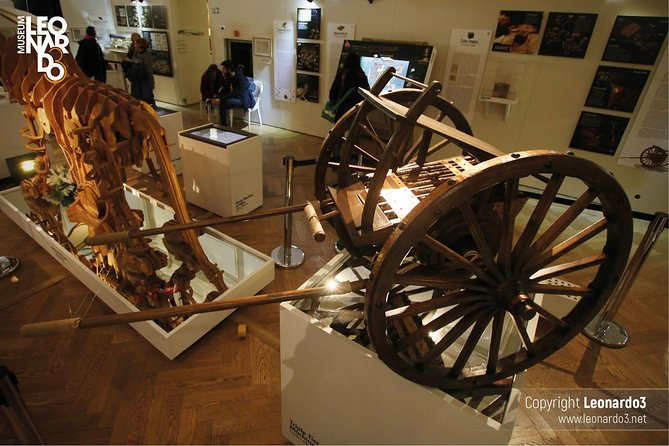
If your idea of a great museum day is part learning and part visual problem-solving, Leonardo3 is built for you. This interactive exhibition at Museo Leonardo3 – Il Mondo Di Leonardo focuses on Leonardo da Vinci as an inventor and thinker, not only as a painter. The big payoff is how the displays translate old sketches into models you can understand quickly, even if you are not a lifelong art-history person.
You also get the kind of experience that travels well in your mind afterward. The museum doesn’t just point at famous works. It explains the why: how Leonardo approached design, how restorations can reveal what’s underneath, and how reconstructions can help you imagine scale and method.
The last practical win: the ticket comes with skip-the-line access. At a busy city-center site, that matters more than people think. Even a short line can eat your morning, and you end up feeling rushed through the best rooms.
You can also read our reviews of more tours and experiences in Milan


Entering Museo Leonardo3: the exhibition flow
The experience is organized around a single main stop inside the museum, so you’re not running across town trying to stitch together multiple attractions. Expect a logical path that starts with Leonardo’s world, moves through inventions and restored art, then lands on major set pieces like the digital Last Supper restoration.
Because the space is compact, you’ll notice two things right away:
- You’ll be close to displays, which makes it easier to read labels.
- You’ll also feel the momentum of the crowd. If you want to read carefully, you’ll need to slow down on purpose.
A useful mindset: treat it less like a traditional gallery and more like a series of short learning stations. Some are visual-heavy, some are explanation-heavy. If you like switching gears often, this works well.
Working machine models: where Leonardo’s genius becomes practical
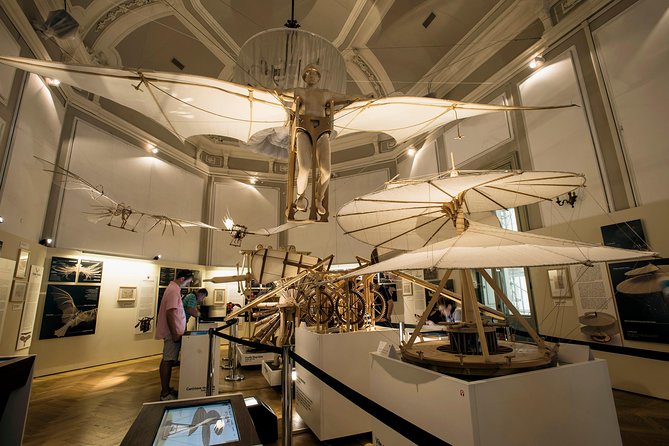
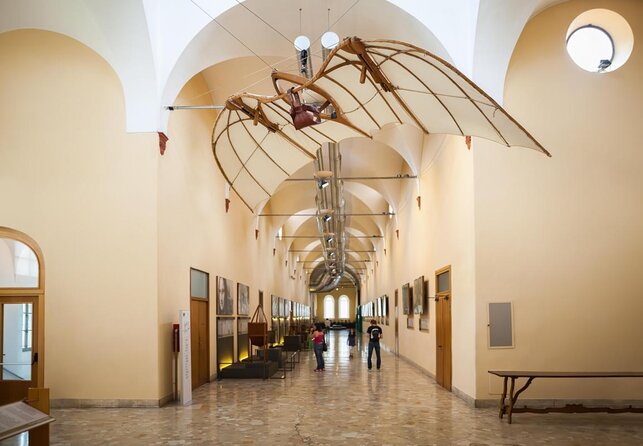
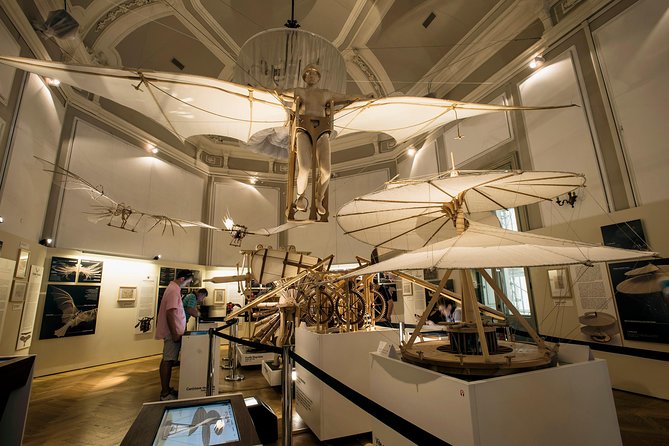
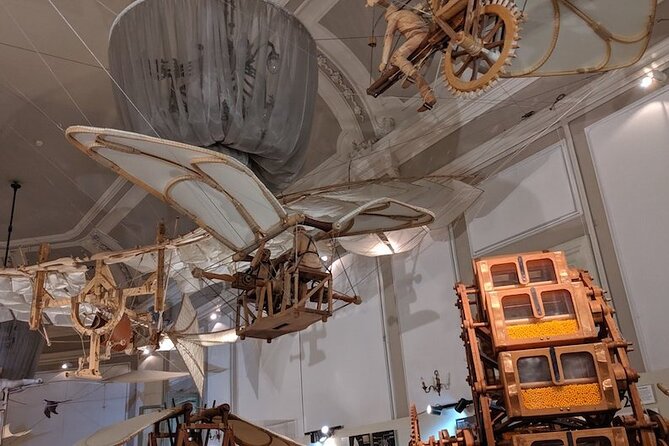
This is where Leonardo3 feels most alive. The exhibition includes working models of Leonardo’s machines, presented as inventions he designed for real-world purposes. That matters because Leonardo’s drawings can be hard to decode. When you see a mechanism functioning, you instantly get the logic of the idea.
From a value standpoint, this is smart curation. You are paying for interactive comprehension, not just “look at a picture” learning. And if you’ve ever wondered why Leonardo is so famous beyond painting, the machine section is often the fastest route to understanding his range.
What you should do when you’re there:
- Spend a little time watching any model that has moving parts, even if you think you get it.
- Pause at labels and written explanations long enough to connect the parts to the concept.
- If you travel with kids, this is likely the most engaging zone. Still, the exhibit is small, so younger attention spans may move on quickly.
There are also displays that can feel surprisingly “modern,” with digital tools layered over Leonardo’s concepts. This combo keeps the exhibition from feeling stuck in the past.
Digital restorations and reconstructions: seeing art like a detective
One of Leonardo3’s core promises is digitalized restorations and reconstructions. In regular museums, restorations are usually explained after the fact. Here, the exhibit tries to walk you through what’s happening and why restoration is more than fixing damage.
This is especially relevant if you care about how we interpret the past. A digital restoration can communicate missing context, clarify layers, and show how an original might have looked. You still need to keep your expectations grounded, because it’s a reconstruction, not the original object. But as an educational tool, it’s a great way to see how restoration thinking works.
You’ll also notice the exhibition’s emphasis on Leonardo’s drawings and notebooks. The experience uses technology to help you feel the bridge between codex pages and real-life structures. If you like the idea that his ideas weren’t just art sketches, but engineering thoughts, this is where the story clicks.
A caution: translations can vary in density. One review noted that English translations next to exhibits were kind of sparse. If you’re an avid label reader, plan to lean on the audio guide or bring extra patience for short text.
The Last Supper, in digital restoration form: how to get real value
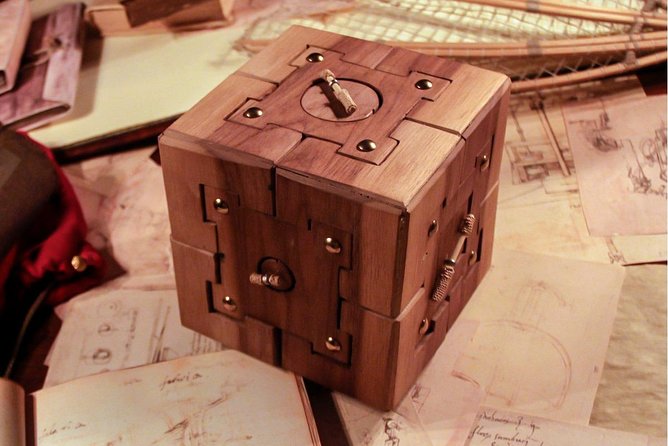
The star highlight is a digital restoration of The Last Supper, along with an explanation of the fresco. This is not a replacement for seeing the original work in person. But it can still be extremely useful.
Here’s why: the original fresco is famous partly because it’s famous. The digital restoration can help you understand what you’re actually looking at. You get a second chance to slow down and process details that are hard to absorb when you’re surrounded by ticket lines and time limits.
So my practical advice is simple:
- If you plan to see the real Last Supper in Milan, consider doing Leonardo3 first.
- Use Leonardo3 to build a mental map of themes, figures, and overall structure.
- Then when you stand in front of the original, you’ll have more context for what matters.
If you are short on time and cannot do the real Last Supper, Leonardo3 is a good “high-tech substitute” focused on restoration and invention rather than copying the original experience exactly. One review called out this point directly: it’s a fine option when you can’t view the actual painting, and the pricing can make it feel like a smart buy.
One more detail to factor in: there are mentions of photography restrictions. If being able to take pictures is important to you, don’t count on it. I’d go in planning to experience it with your eyes and notes, not a camera binge.
You can also read our reviews of more museum experiences in Milan




Audio guide choices: save time or learn more
An audio guide is available to purchase in 8 languages: Chinese, English, French, German, Italian, Portuguese, Russian, and Spanish. There’s no audio guide included in the basic ticket, so you’ll need to decide if it fits your style.
This is how I’d choose:
- If you want faster, clearer explanations and you’re not fluent in the language on the walls, grab the audio guide.
- If you love reading labels and prefer a quiet self-paced visit, you might skip it.
Reviews also mention that using the audio guide can be especially valuable. One comment basically says the audio tour is very informative. Even if you are a casual museum visitor, audio can turn small displays into bigger stories.
If you do buy it, use it like a tool, not a background track. When you see a display related to what you just heard, stop and compare. That’s when it turns from passive listening into real understanding.
How long to plan: 1–2 hours, plus a sensible buffer
The duration is listed as about 1 to 2 hours. That’s a fair baseline for a focused visit where you hit the main sections without lingering too long.
But the exhibition is also described as small and packed with content. That combination often means you can “finish” faster than you expect, then wish you had time to re-read the parts you rushed. One review even suggested planning for several hours.
So I’d plan like this:
- 1 to 2 hours if you want a complete, efficient circuit.
- Add extra time if you enjoy interactive stations, want to read carefully, or are especially interested in machines and restorations.
Also consider comfort. There’s a review mentioning it can get hot and that there was no AC at all. You might not feel it the same way every day, but you should bring water and dress for warmth.
Price and skip-the-line value around Duomo
The ticket price is $19.22 per person. On its face, that might sound like a “small museum” price. In practice, it’s competing with the cost of time in a busy city.
The skip-the-line access and instant confirmation help you get more out of the visit. If you’re building a Milan day that also includes bigger timed attractions, those minutes matter. A calm visit is usually more valuable than squeezing in one more sight.
That said, there’s a fair consideration from one review: some people noted that you can sometimes walk in and pay a normal entrance fee that’s less than the tour price. I can’t confirm day-to-day pricing differences beyond what’s provided here, but the key takeaway is this: if you’re traveling flexibly, compare options when you book. If you want the certainty and time savings of skip-the-line, the extra cost can still be worth it.
For your money, here’s what you’re paying for:
- Interactive and working models rather than only static displays
- Digital restoration and reconstruction, including the Last Supper set piece
- A compact route that’s easy to fit into a city-center itinerary
Location tips: finding it near public transport
You’re in central Milan, and the museum is noted as being near public transportation. One review described it as being in city center near Duomo Cathedral, and advised walking through the Galleria from Duomo toward the next small piazza. It also noted it appears right after a City information store front on the left.
That’s helpful because Leonardo3 isn’t a huge “walk miles to reach me” kind of stop. You’ll likely find it best after you’ve already oriented yourself around Duomo.
Practical tip: give yourself a few minutes to locate it before your chosen entry time, especially if you’re traveling in peak hours. A small place plus crowd energy can make you feel like you’re lost even when you’re just moving slowly.
Who Leonardo3 suits best (and who may find it less satisfying)
Leonardo3 fits best if you:
- Like Leonardo da Vinci beyond the basics
- Want to see inventions through models, not just drawings
- Enjoy interactive science/art concepts
- Are excited by digital restoration as a learning tool
It can also work well for families, but with one caveat. The exhibition is compact, and one review said kids may lose interest quickly. If you bring children, aim for the invention sections and interactive parts first, then decide if you want the slower restoration rooms.
If you only want the one, specific experience of seeing the Last Supper fresco, Leonardo3 won’t fully replace that. But it can be a strong step in preparation.
Should you book Leonardo3 The World of Leonardo?
I’d book Leonardo3 if you want a high-impact, low-stress Milan stop that teaches you how Leonardo thought, built, and restored—not just what he produced. The working models, the digital reconstructions, and the skip-the-line access make it feel like a ticket you use, not a souvenir you regret.
Skip it if you:
- Are allergic to crowds in small spaces
- Want only traditional museum objects and zero tech interpretation
- Need guaranteed time for a very slow, detailed gallery-style visit
My final decision shortcut: if your day already includes major Milan icons and you need one smart, self-contained add-on that feels different, Leonardo3 is a solid pick. If you’re trying to keep your budget tight, double-check whether buying for skip-the-line certainty is the value you actually want.
FAQ
How long does the Leonardo3 interactive exhibition take?
The experience is listed at about 1 to 2 hours. If you read slowly or spend extra time at the interactive stations, you may want to plan a bit more.
Does the ticket include skip-the-line access?
Yes. This ticket includes skip-the-line access and provides instant confirmation.
Is an audio guide included with the ticket?
No, the audio guide is not included. You can purchase it in 8 languages: Chinese, English, French, German, Italian, Portuguese, Russian, and Spanish.
Where is Leonardo3 located and is it easy to reach?
It is in Milan, Italy, and it is noted as being near public transportation.
Are children allowed?
Yes, most travelers can participate, and children must be accompanied by an adult.
When is it open?
Opening hours vary by date range:
- 11/18/2025 to 12/15/2025: Monday to Sunday, 9:30 AM to 8:00 PM
- 12/16/2025: Tuesday, 2:00 PM to 8:00 PM
- 12/17/2025 to 12/23/2025: Monday to Sunday, 9:30 AM to 8:00 PM