REVIEW · MILAN
Milan: Bernina and Glacier Train Tickets & Sankt Moritz Tour
Book on GetYourGuide →Operated by Z V SRL · Bookable on GetYourGuide
One train. Two Swiss icons in one day. From Milan, this tour strings together the Bernina Red train and some of the most dramatic Alpine rail engineering you’ll ever see, all paired with a real chunk of time in St. Moritz. The route also follows UNESCO-listed railway sections of the Bernina and Albula lines, so you’re not just sightseeing from a bus window.
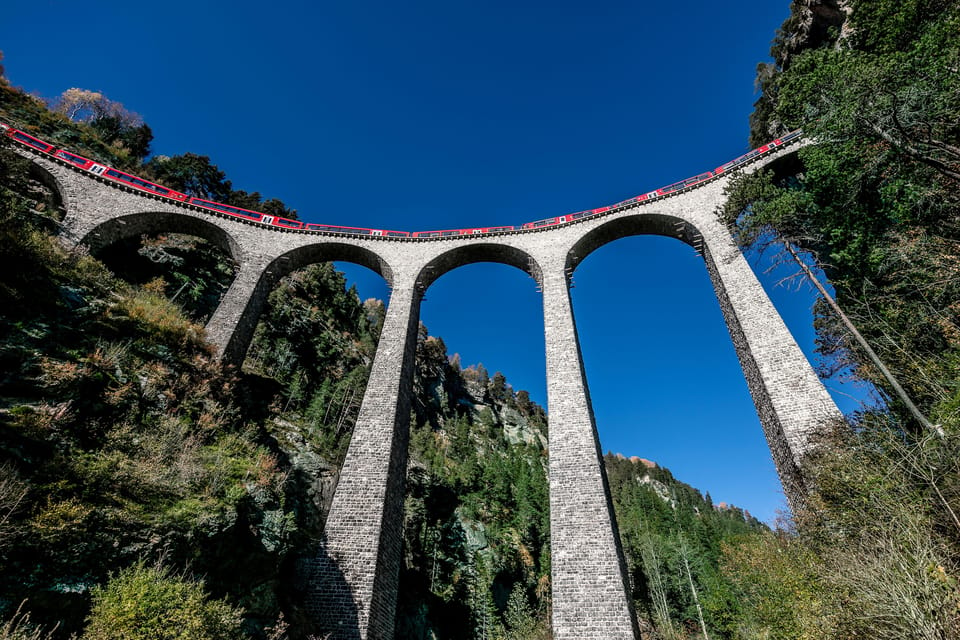
Two things I especially like: the Sankt Moritz free time (you get to walk the town, not just rush through it), and the long stretch of rail time over the Landwasser area, including the viaduct crossing over a deep gorge. If your timing hits a winter departure, you may even get a coach break near frozen lakes—exactly the kind of “only in this season” moment you can’t plan on your own.
One possible drawback: it’s a long day because of the 3.5-hour coach transfers on each end. And your timing can be tight, so if you’re hoping for a very specific order or a specific final stop, know the day can end at Chur or Thusis depending on the run.
In This Review
- Quick hits for Milan’s Bernina and Glacier-route day
- The big idea: rail days that feel like Switzerland, not a checklist
- Price and value: what you’re actually paying for
- Coach transfer from Milan: the rhythm of the day
- St. Moritz (2 hours): what you can do with real town time
- Bernina Red train: the part where the Alps show off
- A practical note on where to be ready
- Albula line and the Landwasser Viaduct: why that bridge deserves its reputation
- Bergün and Preda: small villages and the high-point feeling
- Chur or Thusis: a quick break and a gentle landing back to reality
- Guides, driving, and the small things that make the day run
- Who should book this Milan day trip (and who should skip it)
- My decision guide: should you book this?
- FAQ
- How long is the Milan to Bernina and Glacier-route tour?
- What stops and free time are included during the day?
- Does the tour include the Bernina Red train and the Glacier-route scenery?
- Where does the day end before returning to Milan?
- What language is the live guide?
- Can I cancel for a full refund?
Quick hits for Milan’s Bernina and Glacier-route day
- St. Moritz time that actually feels like time: about 2 hours for walking and photos in the Engadin Valley
- Bernina Red train ride: big Alpine views from one of Switzerland’s most famous trains
- Landwasser Viaduct crossing: a dramatic, curved viaduct moment that takes up real time
- Albula line highlights: stops that include traditional village scenery like Bergün, plus the high point at Preda
- Human touch with a live guide: English or Spanish narration, and you may get guides like Angelo, with drivers such as Marcello on some departures
The big idea: rail days that feel like Switzerland, not a checklist
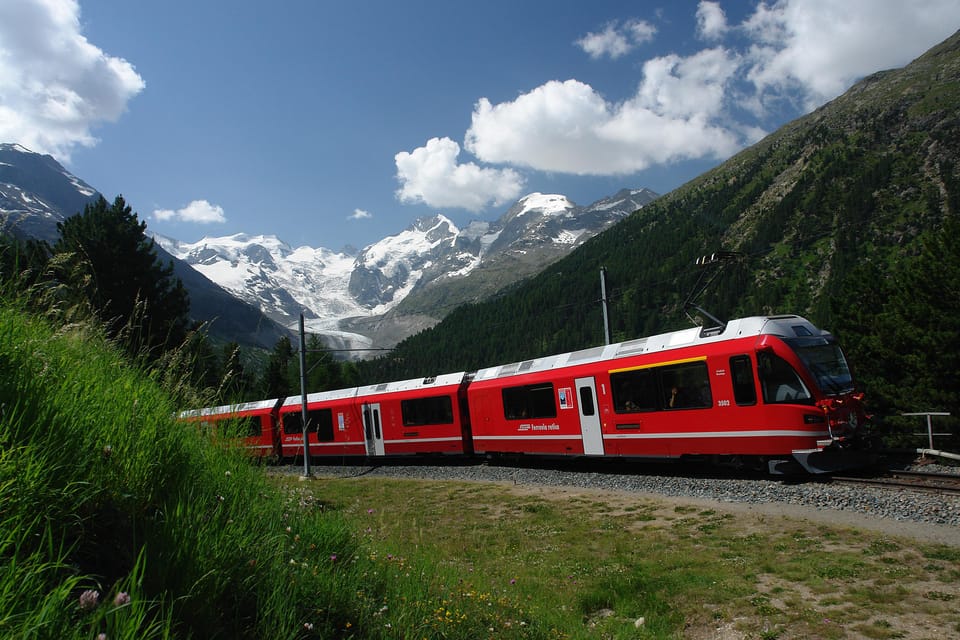
This is the kind of trip that makes you understand why so many people don’t just like Switzerland—they get attached to it. You’re seeing the Alps by train, which means fewer road jolts, no traffic drama, and more uninterrupted time looking out the window at steep valleys and mountain passes.
The day is built around two “wow” rail moments. First is the Bernina Red train out of St. Moritz. Then you ride the next major stage connected to the Albula line, which is also part of the wider Glacier-route story. In between, you get enough time on the ground to feel like you did more than ride through.
You can also read our reviews of more tours and experiences in Milan
Price and value: what you’re actually paying for
There’s no number here to compare, so I’ll talk value in plain terms. You’re paying for a bundled day: coach transport from Milan, a live guide (English or Spanish), and organized rail segments on the Bernina/Albula/Glacier-route network. That bundle is worth it if you don’t want to plan connections, worry about which station you should be at, or translate rail jargon for ticket changes.
The trade-off is flexibility. You can’t “linger” wherever you like, and the schedule is built for a full day: 12–13 hours total with timed free time and set rail segments. If you’re the kind of traveler who likes to wander freely and decide on the fly, this format will feel a bit structured.
Coach transfer from Milan: the rhythm of the day
You start with a coach ride of about 3.5 hours to St. Moritz. That’s long enough that you’ll want to treat it like part of the trip, not something to endure without thinking. Bring snacks and water, and plan to use the early part of the day for settling in and getting ready for the train windows later.
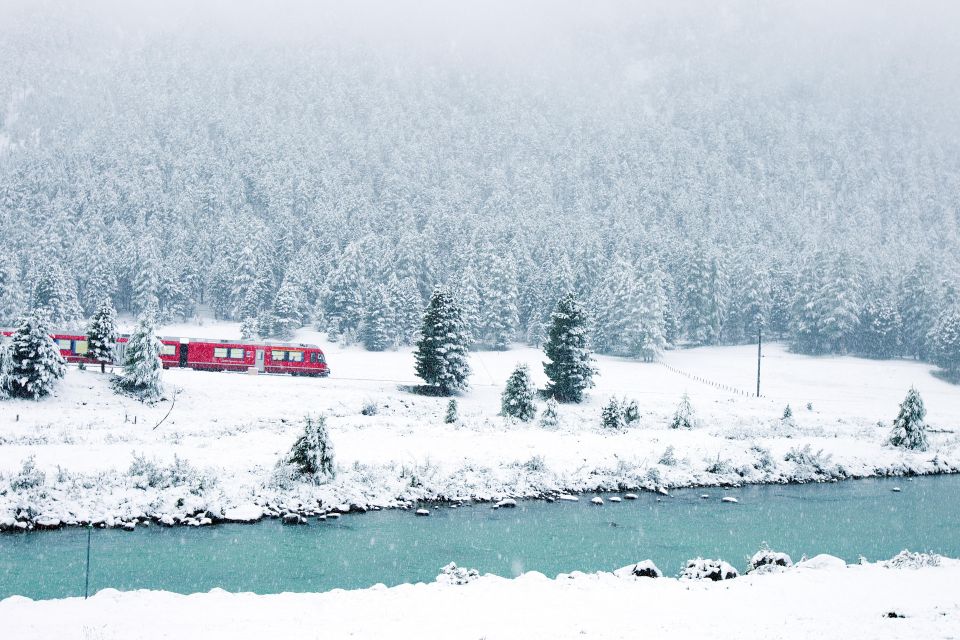
One detail that stood out in real-world experience: there can be a coach stop near a lake, and in winter those lakes may be frozen. That kind of short pause can break up the long drive and give you a quick “Swiss season” photo moment.
When you’re done with the rail day, the tour returns you to Milan by coach again, after finishing in Chur or Thusis. So the day ends with another drive, and you’ll feel it if you’re not used to long transit.
St. Moritz (2 hours): what you can do with real town time
After the drive, you get about 2 hours in St. Moritz. This is not a drive-by stop. St. Moritz sits in the Engadin Valley, surrounded by peaks and lakes, and it’s known as the Top of the World—more for the vibe than for one single landmark.
With 2 hours, you can do a practical mini-plan:
- Walk part of the town center at an easy pace and soak up the resort feel
- Aim for viewpoints and photogenic corners (you’ll see plenty just by strolling)
- Reset before the train, especially if the weather is cold
This is also a smart moment for people who want a balance. If you’re going just for the trains, town time might feel like a bonus. But for many travelers, St. Moritz is what keeps the day from being only a series of train windows.
Bernina Red train: the part where the Alps show off
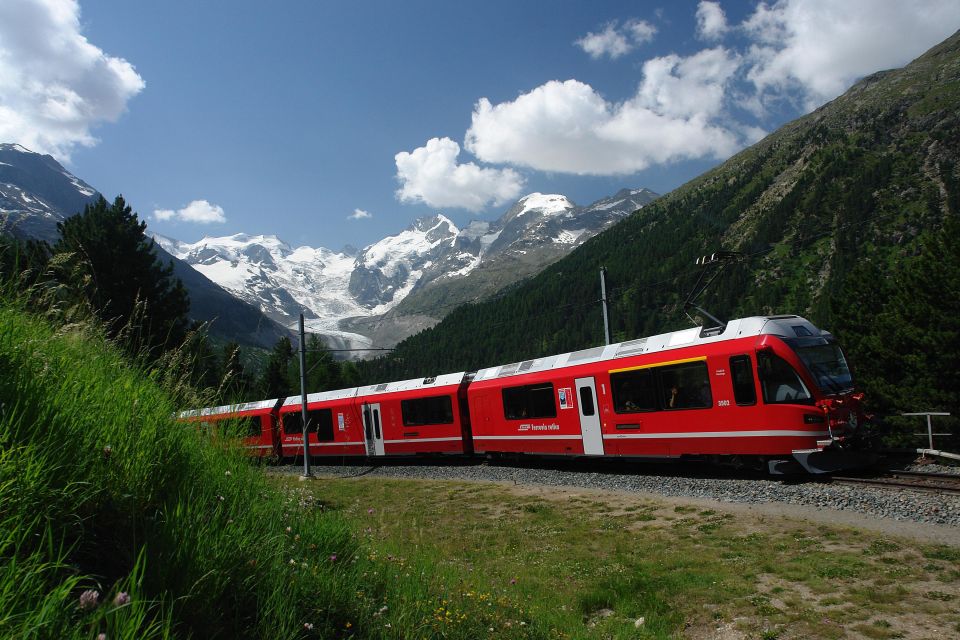
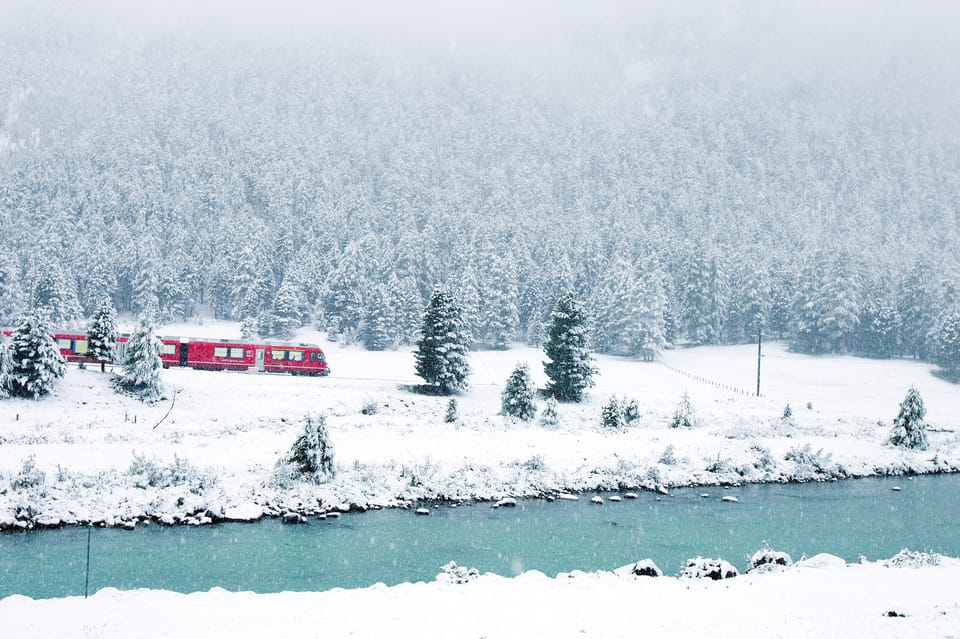
Once you’ve visited the town, you board the legendary Bernina Red train. This is the segment most people picture when they think of Switzerland by rail: a classic red train threading through mountain country with nonstop view potential.
What makes the Bernina ride special is the way the scenery changes as the train climbs and curves through the Alps. Even without a detailed itinerary in front of you, you can feel the topography shifting—valleys tightening, ridges getting sharper, and the sense of altitude building.
Also, having a live guide in English or Spanish helps a lot here. You don’t just watch scenery; you get context that makes the engineering feel less like random magic and more like a planned feat. If your guide is someone like Angelo, the narrative can make the windows feel like they’re part of a story, not just sightseeing.

A practical note on where to be ready
Even though the rail stations are part of the experience, the road transfer can be tiring. One caution from real scheduling feedback is that if you’re expecting the smoothest possible flow, you should arrive focused and on time—because you won’t have hours of buffer if the coach runs late.
Albula line and the Landwasser Viaduct: why that bridge deserves its reputation
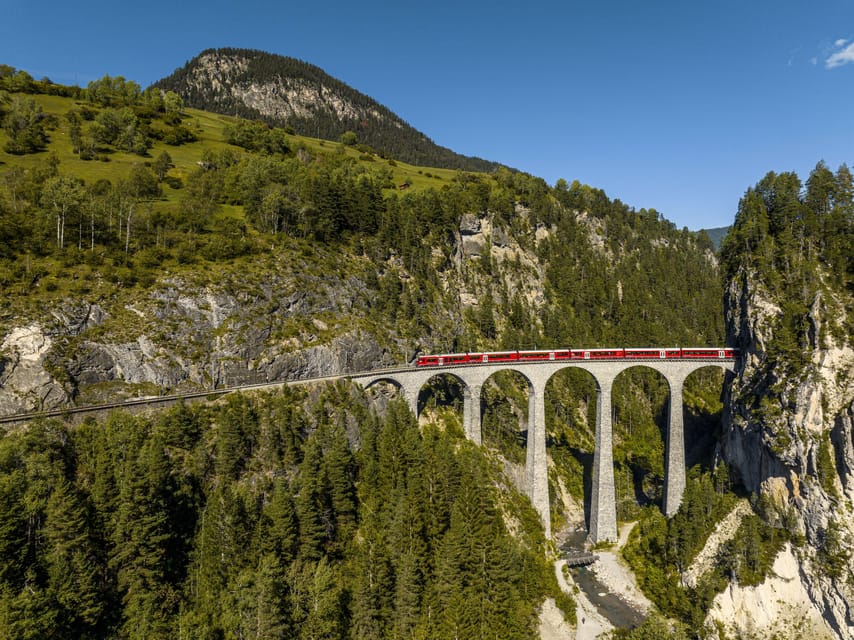
After the Bernina ride, the day shifts into the Albula railway stage. The Albula route is UNESCO-listed and is also the first leg of the famous Glacier line story. That UNESCO label matters because it’s not just pretty scenery—it’s a place where Switzerland’s rail engineers solved big problems with clever design.
The star, for most people, is the Landwasser Viaduct. Your tour includes a panoramic train ride around 2 hours tied to this area. The viaduct crossing is an architectural marvel: a curve spanning a deep gorge, giving you that moment where the train feels both tiny and perfectly at home in a wild place.
What I like about this portion is that it’s not rushed. You have time to notice how the track follows the land. You can watch how the bridge and viaduct sections frame the valley depth—then feel how the train carries you right through it.
Bergün and Preda: small villages and the high-point feeling
As the Albula/Glacier-route segment continues, you pass the village of Bergün. This is one of those places that works well in a day tour because you don’t need a long stop to appreciate it. The value is in the visual character: traditional Swiss architecture and an alpine setting that feels like it belongs in old postcards—but with an active, lived-in feel.
Then the route reaches Preda, described as the highest point on the line. Even if you can’t measure elevation in your head, you can feel what “highest point” does to a landscape. The air feels sharper, the views get broader, and the rail experience turns from scenic to almost dramatic.
After that, the train begins its scenic descent, which is often when the day starts to feel like it’s moving fast again. You’ll want to stay alert for the changing scenery, because this is where the rail story flips from climb to reveal.
Chur or Thusis: a quick break and a gentle landing back to reality
The trip concludes in Chur or Thusis, followed by the coach back to Milan. There’s also a 15-minute break time in Thusis, which gives you a small window to stretch your legs and reset.
If you end up near Chur, you’ll be close to Switzerland’s oldest city—at least in the tour’s framing. Even with only a short connection time, the appeal of Chur is that it feels old and grounded compared to the mountain rail drama. It’s a nice psychological landing after all that altitude.
Just keep expectations realistic: this part isn’t about a long city tour. It’s about wrapping the day smoothly so you can get back to Milan without turning the trip into another multi-hour scramble.
Guides, driving, and the small things that make the day run
You travel with a live guide and a driver, and these roles matter more than people think on long days. When a day is timed tightly—coach, free time, train boarding—small coordination issues become big frustrations.
One encouraging detail from real departures: guides like Angelo and drivers like Marcello were specifically praised for making the day feel smooth. Even if you don’t get the same team, that’s a sign the provider takes coordination seriously.
Also, the guide language options (English and Spanish) mean you’re not stuck only with seat-back announcements. For rail itineraries, being able to ask a question or understand where you are in the route makes the views more meaningful.
Who should book this Milan day trip (and who should skip it)
This tour fits you best if:
- You want the Bernina and Albula/Glacier-route experience without planning rail connections yourself
- You like train travel enough that you’re okay with long scenic rides
- You’ll appreciate a balance: St. Moritz town time plus major rail segments
- You prefer guided context in English or Spanish
Consider skipping or swapping plans if:
- You hate long road travel. The 3.5-hour coach ride each way will dominate your day
- You’re the type who needs lots of free, unscheduled time on the ground
- You’re very particular about where the day ends (it can be Chur or Thusis)
My decision guide: should you book this?
If you want a Swiss Alps day that’s built around train windows and famous engineering, I’d book it. The biggest reason is simple: you’re not just buying “views.” You’re buying a structured rail route that includes St. Moritz and the Landwasser Viaduct moment, with enough guidance and time to actually enjoy both town and track.
But be honest about your stamina. This is a long transit day, and your comfort with coach time matters as much as your excitement for the trains. If you can handle that, you’ll likely come away with that rare mix—classic scenery, landmark rail engineering, and a real taste of alpine resort life.
FAQ
How long is the Milan to Bernina and Glacier-route tour?
The total duration is about 12 to 13 hours.
What stops and free time are included during the day?
You’ll have about 2 hours in St. Moritz, plus a train journey that includes the Landwasser Viaduct area, and a short break time of about 15 minutes in Thusis.
Does the tour include the Bernina Red train and the Glacier-route scenery?
Yes. You ride the Bernina Red train, and the route also covers the Albula line, described as the first leg of the Glacier line experience.
Where does the day end before returning to Milan?
The tour concludes in Chur or Thusis, and then you return to Milan by coach.
What language is the live guide?
The live tour guide is available in English and Spanish.
Can I cancel for a full refund?
Yes. Free cancellation is offered up to 24 hours in advance for a full refund.