REVIEW · MILAN
From Milan: Lake Como and Bernina Train Day Trip
Book on GetYourGuide →Operated by TAOTRAVEL · Bookable on GetYourGuide
Lake Como by day, the Bernina red train by afternoon is a great switch-up. I like how this trip blends Italian lake-town wandering with big alpine train views, and you get real English guidance without having to plan every segment. I also like that you’re riding in comfort by coach first, then enjoying a timed stretch on the famous Bernina line with big window photo chances.
You’ll start in Milan and head toward Lecco for a guided stop plus free time. Then you’ll move up into Switzerland toward St. Moritz, with a quick pass-by at Maloja along the way, before the train ride from St. Moritz to Tirano. The main trade-off is schedule density: it’s a one-day itinerary with several long transit blocks, and free time in St. Moritz isn’t guaranteed.
In This Review
- Key points worth your attention
- Milan to Lake Como’s shores: getting oriented fast
- Lecco stop: guided walking, lake views, and one hour to breathe
- Maloja pass-by and the climb toward St. Moritz
- St. Moritz break: how to use 20 minutes (plus the reality check)
- The Bernina red train from St. Moritz to Tirano: the main event
- Bernina Pass, Poschiavo, and Tirano: scenic sightings and a short recharge
- Comfort, pacing, and photo strategy that actually works
- Price and value: is $203 reasonable for this route?
- Who this day trip fits best (and who should think twice)
- Quick FAQ before you go
- FAQ
- How long is this Lake Como and Bernina Train day trip?
- Where do I meet the tour in Milan?
- What part of the Bernina Train is included?
- Can I open windows on the train for photos?
- Is there free time in St. Moritz?
- What do I need to bring, and what is not allowed?
- Should you book this tour?
Key points worth your attention
- Bernina red train photo strategy: you can open the windows for glare-free shots.
- Lecco on a human scale: guided walking time plus about an hour of free time by the water.
- Coach-to-train rhythm: comfortable travel with English commentary to keep the day moving.
- Pass-by viewpoints: you’ll see Maloja, Bernina Pass, and Poschiavo from the road rather than stops.
- Practical timing: short breaks at St. Moritz and Tirano, but the rail time is the star.
- Value for a big route: $203 includes round-trip transfers and the train segment with an explanation.
Milan to Lake Como’s shores: getting oriented fast
This is built as a smooth one-day corridor from Milan into the Lake Como region and then onward to the Bernina line. The meeting point is right by the Excelsior Hotel Gallia area in central Milan, at the bus stop next to the hotel on Piazza quattro Novembre corner with Piazza Duca d’Aosta, so you can meet up without hauling your luggage across town.
From there, you’ll take a coach for about an hour before you hit Lecco. That matters because it sets the tone: instead of starting your day with multiple connections, you begin with a guided ride and a plan. You’ll also get your first look at the lake area visually, even before your guided time begins.
Dress like you’re going to be outside on and off all day. Bring warm layers; in the mountains, it can feel cooler even if Milan is warmer.
You can also read our reviews of more tours and experiences in Milan
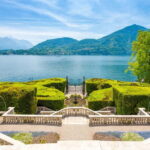
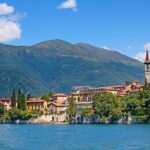
Lecco stop: guided walking, lake views, and one hour to breathe
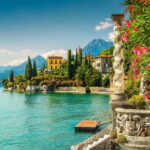
Lecco is a town built around the water, and this stop is timed so you can actually experience it. You’ll have break time, a photo stop, a guided tour, and then about an hour of free time on your own. That sequence is smart: the guide helps you understand what you’re looking at, then you get freedom to wander and pick your own pace.
What I like about this Lecco block is how it balances structure and breathing room. A guided segment keeps you from guessing where the best views are, and the hour of free time gives you a chance to slow down, sit near the lake, and take more photos without feeling rushed.
Practical note: wear comfortable shoes. Even with a scheduled tour, you’ll be on your feet enough that comfort matters more than fashion.
Also, the itinerary doesn’t say you’re getting a meal included here, so plan to buy snacks or skip until later. Bring water so you’re not trying to find it mid-walk.
Maloja pass-by and the climb toward St. Moritz
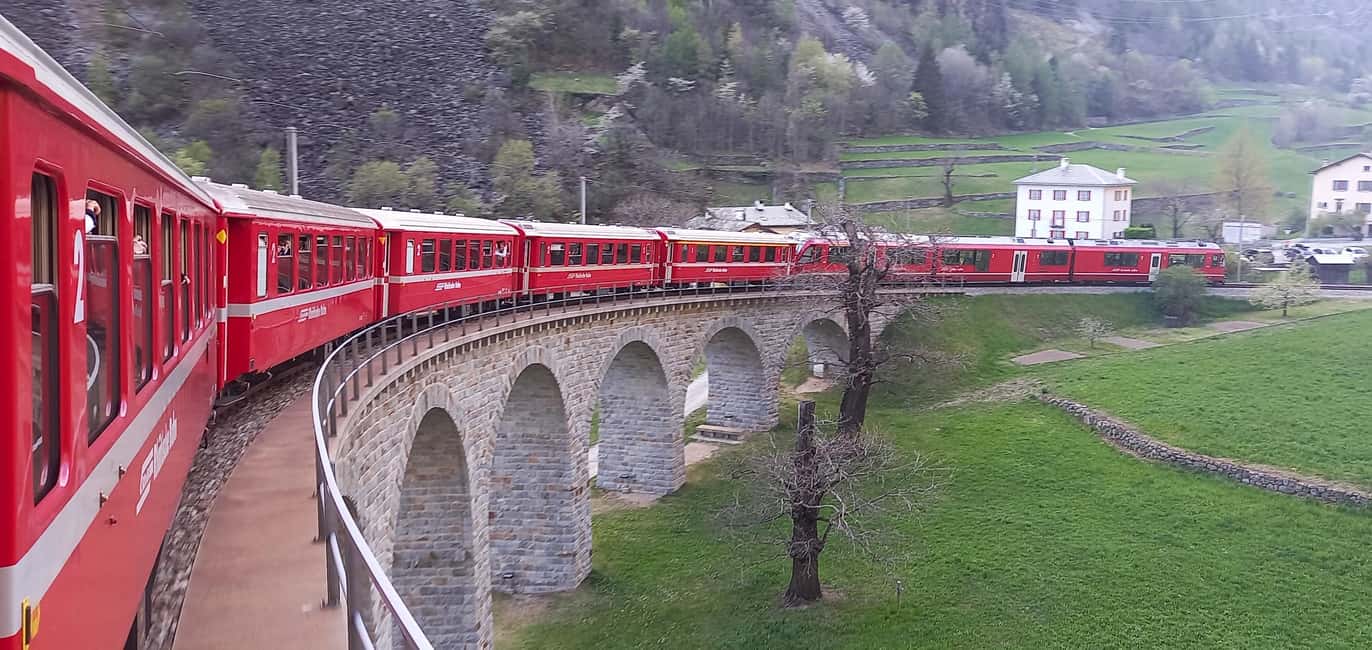
After Lecco, the day shifts from lake-town time to mountain transit. You’ll pass by Maloja from the coach—no stop is listed there, so think of it as a scenery moment rather than an extra attraction. You’re still moving through terrain that changes character fast, and the pass-by helps break up the mental load of a long travel day.
Then you’ll ride for about 2 hours and 40 minutes (listed as 2.58 hours) before reaching St. Moritz. You get a short break of 20 minutes there. That’s not long enough for a full independent explore, so treat St. Moritz as a quick reset point—more like a photo and leg-stretch stop than a deep town visit.
The key here is expectations: the stop is brief by design because the real payoff comes next on the train.
St. Moritz break: how to use 20 minutes (plus the reality check)
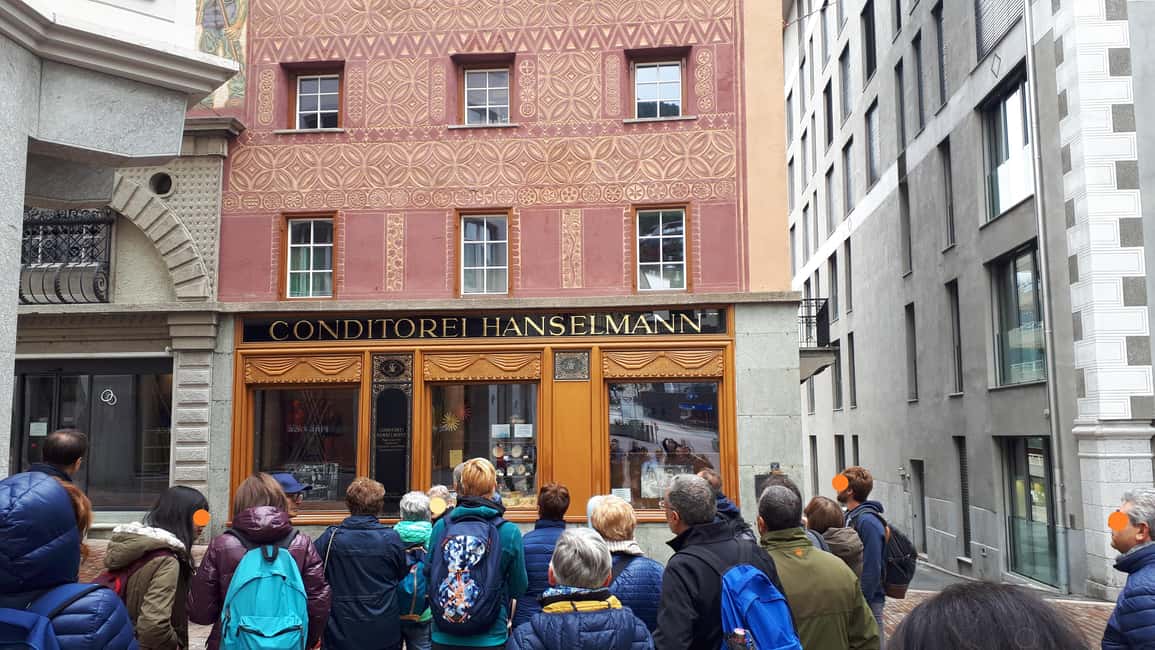
St. Moritz can feel like a postcard, but this tour doesn’t give you postcard-length time. You’ll have a 20-minute break, and there’s also a note that free time isn’t guaranteed. That means you should plan your mindset around quick stops, not a leisurely café afternoon.
In practical terms, this is what you can do with limited minutes:
- Use it to re-check the weather on your phone and add layers if needed.
- Keep your camera ready; you’re heading into one of the most scenic rail stretches of the day.
- If you need the restroom, prioritize it here rather than later.
If you’re the kind of person who loves strolling just to feel a place, St. Moritz may leave you wanting more. But the tour is honest about the trade: it buys you the Bernina segment with English explanations and the chance to open windows for photos.
The Bernina red train from St. Moritz to Tirano: the main event
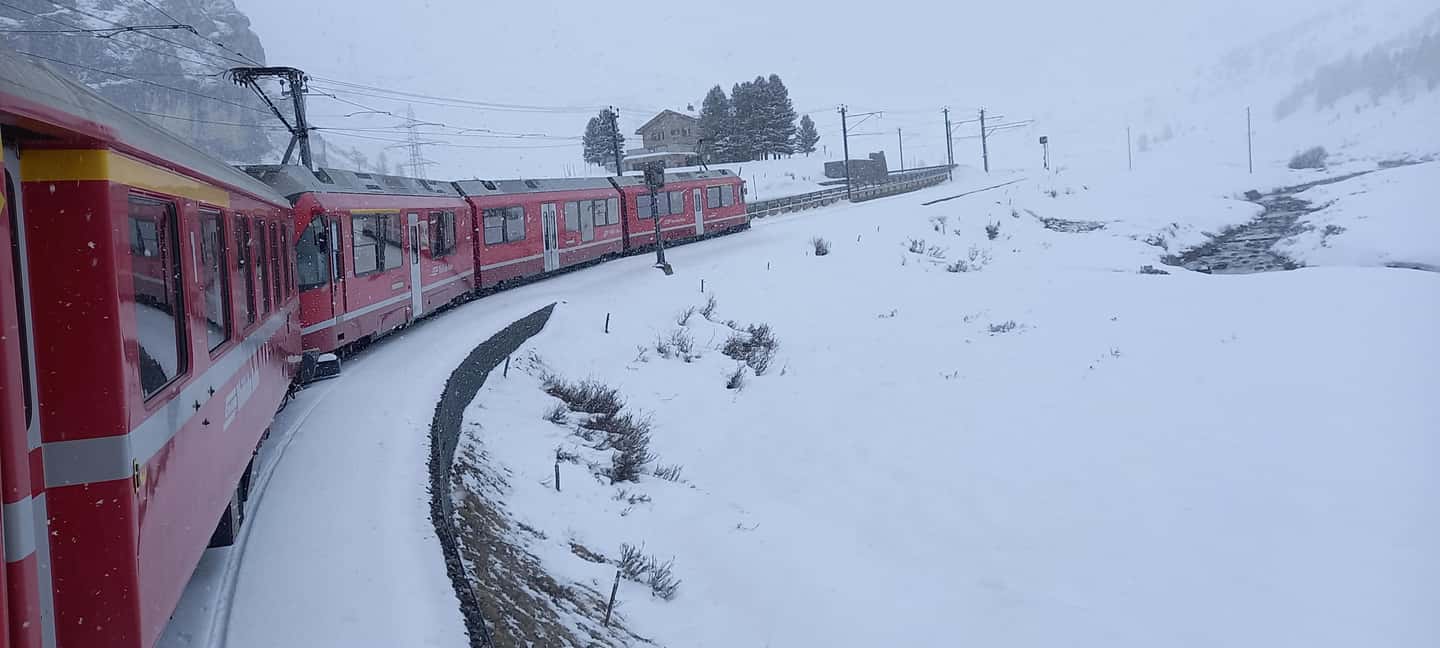
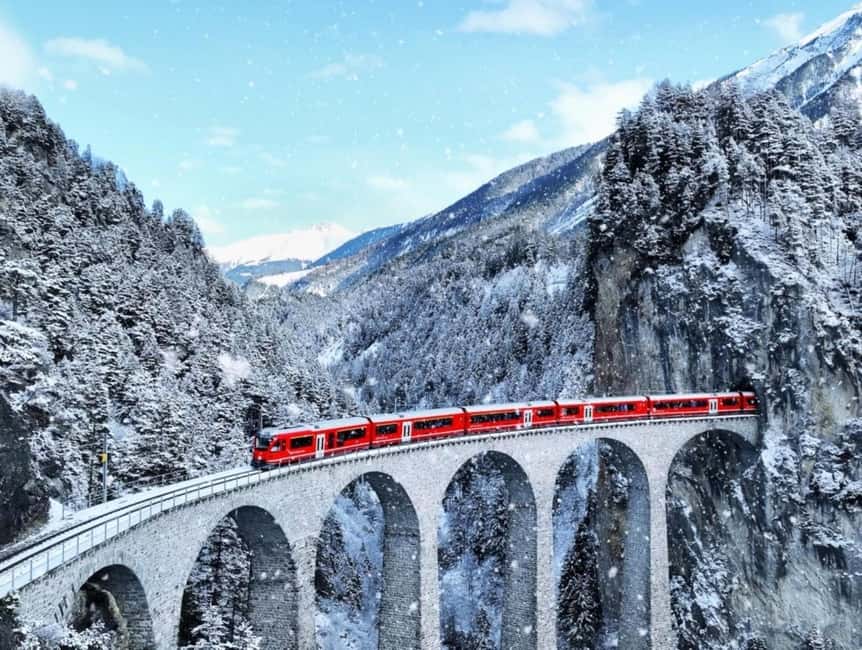
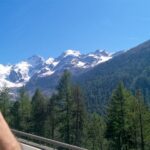
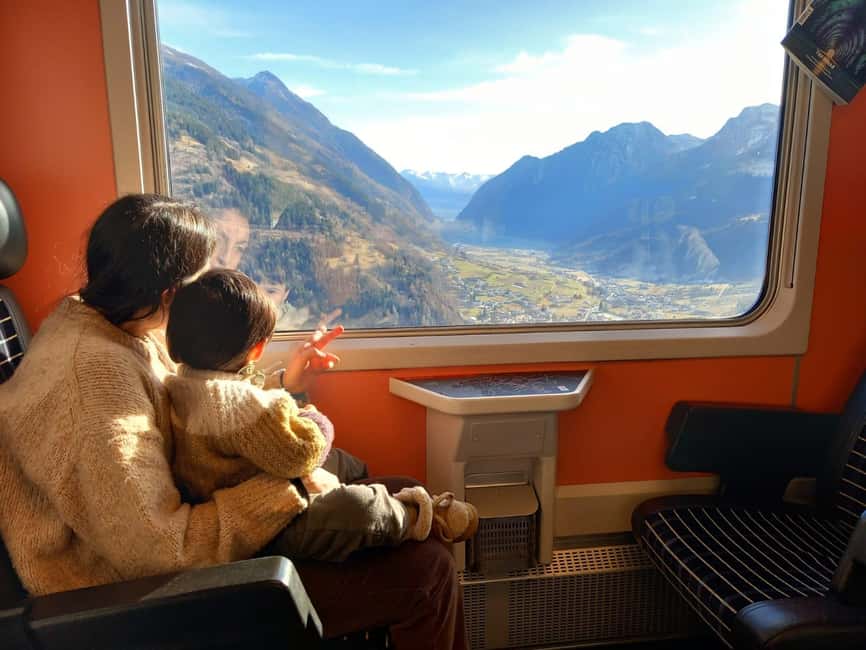
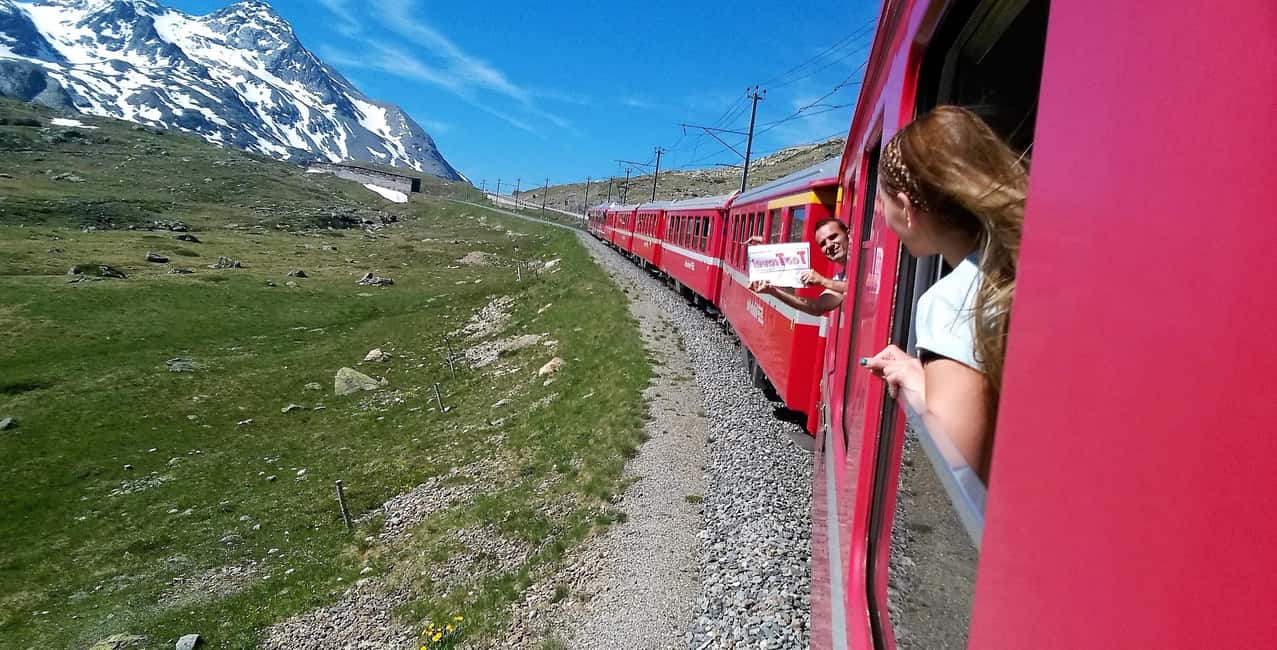
This is the part you book for. The Bernina train ride runs from St. Moritz toward Tirano, with a second class ticket and English explanation on the train. The listing also emphasizes opening windows, so you can reduce glare and get better shots than you would with sealed glass.
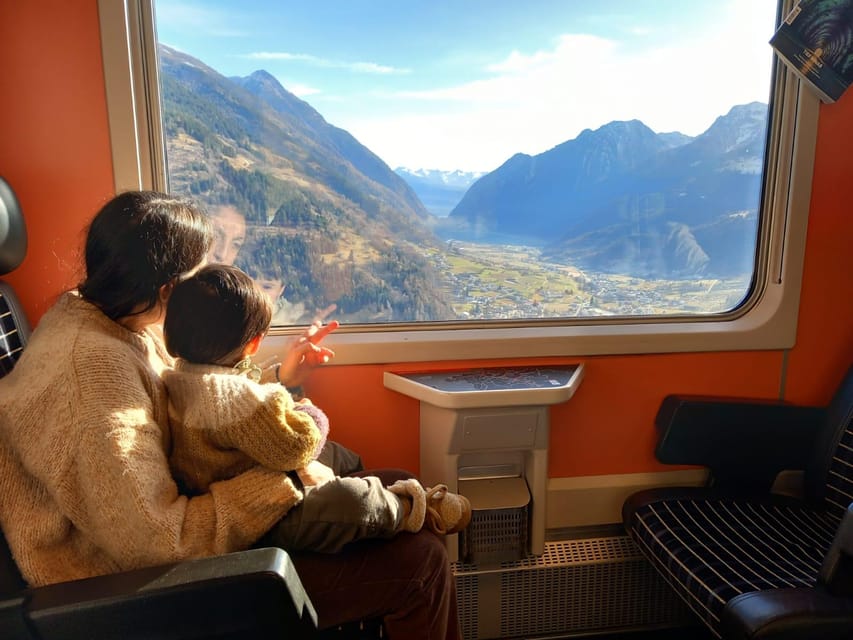
I like this design because it keeps the experience low-effort and high-reward. You don’t have to navigate stations or figure out timing; you just settle in, listen to the live guide explanations on board, and watch the alpine scenery roll by.
Your ride time is listed around 2 hours 20 minutes, and the itinerary notes roughly 2.33 hours. Either way, you’re in the sweet spot: long enough to get a proper view of the mountains changing across the route, but not so long that you get bored.
Window tip: keep your camera close and your strap adjusted before you move into position. Opening windows helps with photos, but it also means you’ll be physically leaning in a bit—so dress for it. Warm layers will make this section far more comfortable.
Also, there’s a note that the train has an English explanation, and this matters more than you’d think. When you understand what you’re seeing—valleys, high points, and the shifting terrain—you come away with a more meaningful memory, not just a stack of photos.
Bernina Pass, Poschiavo, and Tirano: scenic sightings and a short recharge
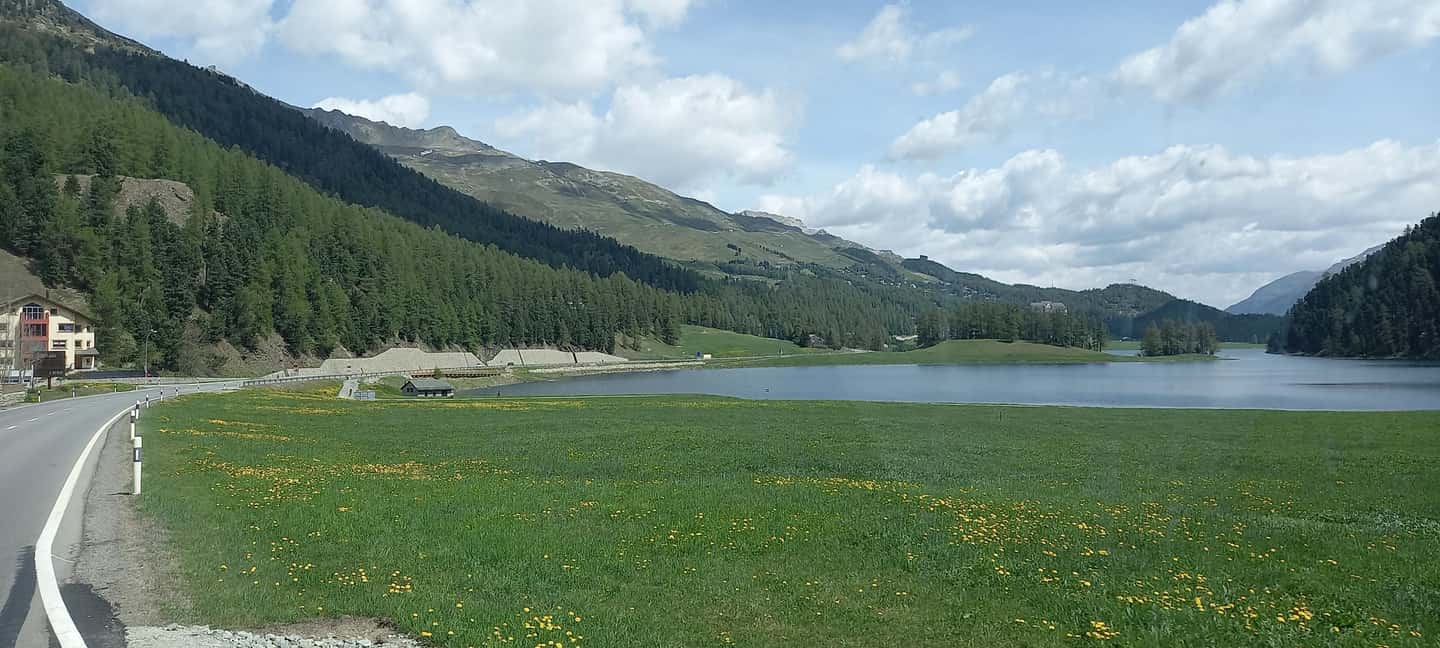
Not every scenic point is a stop where you get out and stretch. The itinerary lists pass-by segments for Bernina Pass and Poschiavo, which means you’ll see them from the coach or through the broader rail experience rather than doing an on-the-ground visit.
That approach is actually efficient for a one-day schedule. You still get the dramatic names and mountain moments, but you don’t lose time to unloading, walking, and regrouping.
After the main train ride, you’ll have a short break in Tirano—listed as 10 minutes. That’s a quick recharge window, likely best used for a restroom, a final photo, and a snack if you need one. Don’t plan on a full meal stop here.
Then the coach ride brings you back to Milan, taking about 2 hours and 30 minutes. As with all transfers, timing is approximate and depends on traffic and the time of day, so you should expect the day to be tightly planned but not perfectly to the minute.
Comfort, pacing, and photo strategy that actually works
One reason this trip feels manageable is the split travel model: coach for the long connections, train for the scenic centerpiece. The coach ride gives you time to relax and listen, and the train ride gives you time to focus on the views. You’re not bouncing between transfers every hour, which helps on a day that can otherwise feel exhausting.
Here’s how to make the day easier in real life:
- Bring warm clothing even if you start the day in mild weather.
- Wear shoes you can walk in for the Lecco guided section.
- Keep water handy; meals and drinks aren’t included.
- Bring your passport, since a current valid passport is required on the day of travel.
For photos, the biggest practical win is the ability to open windows on the train for glare-free images. Still, plan for changing light. Mountain scenery can flip from bright sun to softer shadow quickly, so keep your phone or camera settings ready to adjust.
Group tours can feel hurried if you fight the rhythm. With this one, the rhythm is the product: Lecco gives you guided structure and breathing room, then the train delivers the sustained view you can’t replicate easily on your own in a single day.
Price and value: is $203 reasonable for this route?
At $203 per person, you’re paying for a lot of logistics you’d otherwise have to assemble yourself: round-trip transfers from central Milan, the coach segments, and the train ticket segment from St. Moritz to Tirano with English explanation. For a one-day trip that crosses from Italy into Switzerland and back, that bundled pricing is generally the right kind of value—especially if you don’t want to spend your morning wrestling schedules.
You’re also getting specific inclusions that matter:
- Round-trip transfers from the Excelsior Hotel Gallia area
- Lecco free time plus a guided tour component
- The Bernina train portion with second class seating and opening windows
- English explanations on the train
- A professional tour leader
What you’re not getting is meals and drinks, and that can change your total spend. If you’re the type who likes a sit-down lunch, factor that cost in. If you’re more flexible—snacks, quick bites, and water—you can keep expenses controlled.
My honest take on the value: the train segment and the organized day structure are the cost drivers, and they’re exactly where this trip shines. If you care most about the alpine rail experience, you’re buying that directly.
Who this day trip fits best (and who should think twice)
This works best if you like scenic travel that’s guided but not overly rushed in the one place that counts. You’ll enjoy it if you want:
- A day that mixes Italian lake towns with big mountain views
- The convenience of coach transfers plus a guided train explanation
- A photo-focused experience, especially with opening windows on the train
It may not be the right match if you:
- Have back problems (listed as not suitable)
- Use a wheelchair (it’s not wheelchair accessible)
- Need pets or electric wheelchairs (pets aren’t allowed; electric wheelchairs aren’t allowed)
If your travel style is totally independent, you might wonder why you can’t just do Lake Como and then go rail separately. You can, but it becomes harder to do in one day without a lot of planning. This tour essentially buys you the time-saving plan.
Quick FAQ before you go
FAQ
How long is this Lake Como and Bernina Train day trip?
The activity is listed as 1 day. Exact timing depends on starting times and conditions, and transfer durations are approximate.
Where do I meet the tour in Milan?
You meet at the bus stop next to Excelsior Hotel Gallia, at the Piazza quattro Novembre corner with Piazza Duca d’Aosta.
What part of the Bernina Train is included?
The included train ticket is second class from St. Moritz to Tirano, with an English explanation on the train.
Can I open windows on the train for photos?
Yes. The tour notes opening windows on the train for glare-free photos.
Is there free time in St. Moritz?
There is a break listed as 20 minutes in St. Moritz, and free time is not guaranteed.
What do I need to bring, and what is not allowed?
Bring comfortable shoes, warm clothing, a camera, and water. A current valid passport is required on the day of travel. Pets and smoking are not allowed, and it’s not permitted to bring electric wheelchairs.
Should you book this tour?
I’d book it if you want a one-day way to see Lake Como from the Lecco side and then experience the Bernina rail views without coordinating trains and transfers yourself. The best part is the balance: Lecco gives you a real town moment with guided context, and the Bernina train gives you sustained alpine scenery plus English explanations and window-open photo chances.
Skip it if you need lots of independent time in St. Moritz or you’re sensitive to long travel blocks. This day is designed around rail views and tight timing, not lingering.
If you’re ready for a full, scenic day with practical organization, this is a strong choice.