REVIEW · MILAN
Ticket Pinacoteca Ambrosiana + Cripta San Sepolcro, Milan
Book on Viator →Operated by Veneranda Biblioteca Ambrosiana · Bookable on Viator
Two cities in one ticket. Pinacoteca Ambrosiana pairs front-rank Renaissance and Baroque art with a stop that feels time-warped. I especially love the chance to focus on Caravaggio’s Basket of Fruit and to step into the Cripta San Sepolcro, where the paving uses stones from ancient Mediolanum. It’s a tight, smart combo for a first visit to Milan when you want both beauty and atmosphere.
My only caution is that this is basically a ticket entry experience, and tour guides or audio guides are not included. If you crave lots of narration, plan to read a bit ahead or seek added explanation on-site.
In This Review
- Key Highlights You’ll Actually Use
- Pinacoteca Ambrosiana: the Art Museum That Moves Fast
- Caravaggio’s Basket of Fruit and Friends: What to Hunt For
- The 17th-Century Reading Room and Leonardo’s Atlantic Codex Drawings
- Cripta San Sepolcro: A Medieval Church Underfoot
- 1.5 to 2 Hours: How to Pace Two Very Different Stops
- Ticket-Only Entry: Getting Value Without Audio or a Guide
- Mobile Ticket and Getting There: Simple, Practical Choices
- Who Should Book This Milan Combo Ticket?
- Should You Book the Pinacoteca Ambrosiana + Cripta San Sepolcro?
- FAQ
- What is included in the Pinacoteca Ambrosiana + Cripta San Sepolcro ticket?
- How long does the experience take?
- Is this a guided tour?
- Are audio guides included?
- Do I need a printed ticket?
- Where does this take place?
- When will I receive confirmation after booking?
- Are service animals allowed?
- Can I cancel for a full refund?
Key Highlights You’ll Actually Use
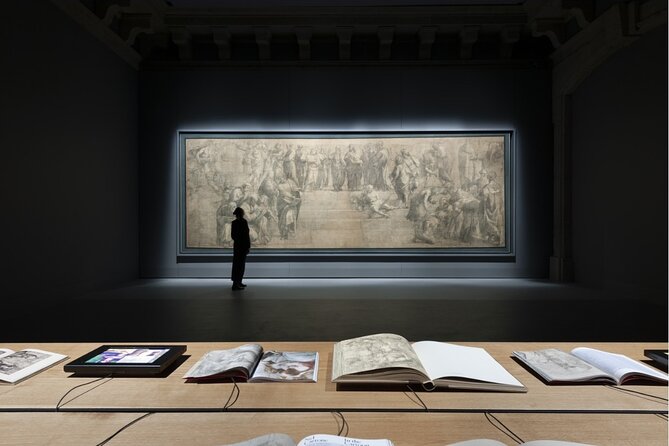
- Masterworks, in a focused route: Caravaggio, Raphael, Brueghel, and Leonardo-style highlights are built into the visit.
- A rare architectural shift: museum galleries up top, a medieval hypogean church below.
- Leonardo-adjacent details: original drawings tied to the Atlantic Codex appear in the reading room setting.
- A Milan-under-Milan feeling: the crypt floor incorporates stones from the Roman city Mediolanum.
- Mobile ticket convenience: you’ll use a mobile ticket for entry.
Pinacoteca Ambrosiana: the Art Museum That Moves Fast
The Pinacoteca Ambrosiana is one of those places where you don’t need a whole day to feel like you hit the good stuff. Your ticket is designed for a clean flow: you start with the picture collection first, then shift down (literally) for the crypt. The timing works out to about 1.5 to 2 hours total, so it fits neatly into a day that might also include the Duomo area or Sforza Castle.
What I like most about this museum for value is that it’s not trying to be everything. You’re guided toward specific, high-impact works, and the overall visit feels efficient rather than exhausting. That matters in Milan, where a lot of top sights are great but easy to overstuff.
You can also read our reviews of more tours and experiences in Milan

Caravaggio’s Basket of Fruit and Friends: What to Hunt For
If you’re the type who likes to know where to look, this is a satisfying route. The collection includes major names, and you’ll see them without having to guess what’s worth your time.
Start by looking for Caravaggio’s Basket of Fruit. Even if you’ve seen it in books, seeing it in the museum space changes how it hits. Caravaggio’s style tends to feel dramatic up close—strong light, intense realism, and that slightly unsettling sense that everything is happening right now.
Next, keep your eyes open for the Raphael connections, especially the work often described as the Cardboard for the School of Athens. It’s the kind of object that helps you understand how big Renaissance images got made—thinking tools and planning made visible.
Then watch for Brueghel’s Vase of Flowers. It’s a reminder that “still life” in this period was never just decoration. These works are packed with craft and observation, and a quick look can turn into a longer stare once you start spotting details.
Finally, look out for Leonardo’s Portrait of the Musician. Even if you don’t know every technical term, the portrait’s presence is the point: it feels alive, and it makes the rest of your Leonardo-adjacent moments land better later.
The 17th-Century Reading Room and Leonardo’s Atlantic Codex Drawings
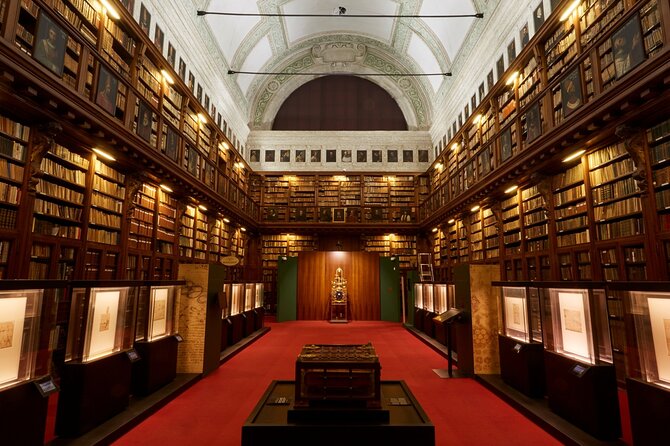
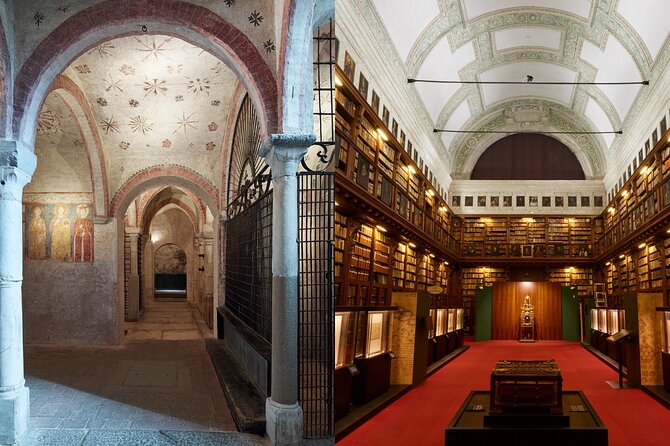
This is where the visit becomes more than gallery-walking. The Pinacoteca Ambrosiana includes a 17th-century reading room, and that setting matters. Instead of treating Leonardo as only a painter you already know, you see a different side of him: the inventor, the draftsman, and the thinker.
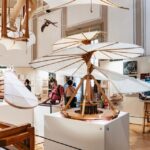
Within that room, you can see original drawings tied to Leonardo’s Atlantic Codex. That phrase might sound like a museum label, but here it’s more tangible. Drawings like these help you connect Leonardo the artist to Leonardo the scientist and engineer—someone who recorded ideas with the same seriousness he used for art.
I also like that this stop slows you down for a moment. The rest of the museum is about looking closely at art. The reading room is about looking closely at thinking.
Cripta San Sepolcro: A Medieval Church Underfoot
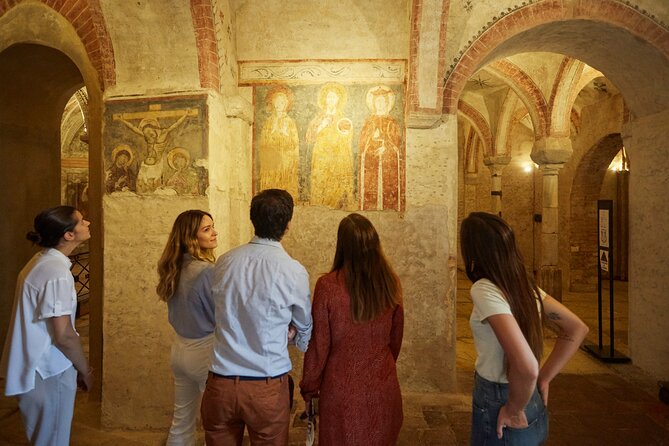
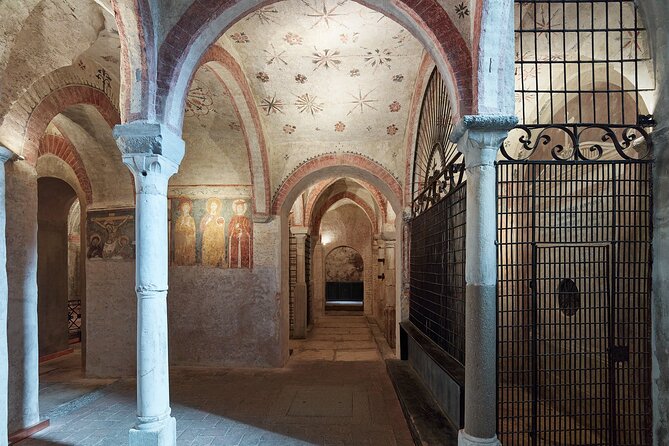
After the art, you head into Cripta San Sepolcro, a medieval hypogean church. The atmosphere shifts fast. Instead of bright walls and display lighting, you’re in a space designed for quiet, stone, and low perspective.
This crypt isn’t just a “cool basement.” The paving was made using ancient stones from the Roman city of Mediolanum. That single detail changes how you experience the place. You’re not only seeing medieval architecture; you’re literally stepping on material that survived from a much earlier Milan.
Think of it as a shortcut through time. One room takes you into Renaissance and Baroque culture. The next makes the city’s layering feel physical—less like a timeline on a plaque, more like the ground itself has a memory.
1.5 to 2 Hours: How to Pace Two Very Different Stops
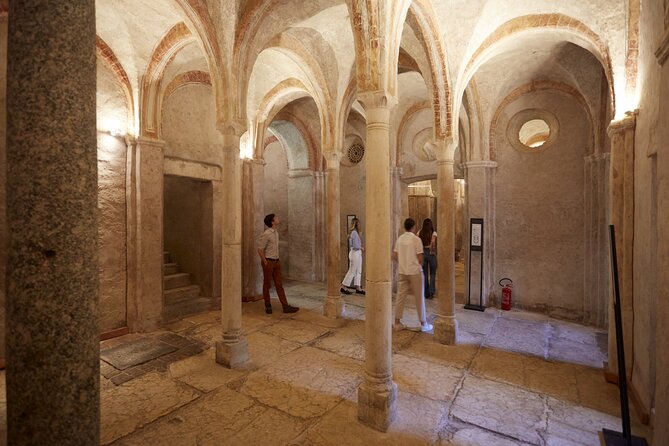
This ticket works best if you treat it like two focused mini-missions. Your schedule is roughly 1.5 hours for the Pinacoteca portion and about 30 minutes for the crypt. That’s enough time for a meaningful look without forcing you into a marathon.
Here’s a pacing trick I recommend: don’t try to see everything at once. Pick a top priority for the Pinacoteca—like Caravaggio’s fruit or Leonardo’s portrait—then give yourself permission to enjoy the rest as you walk. That keeps you from getting lost in a checklist mindset.
When you get to the crypt, switch gears. The crypt rewards stillness. Give yourself a few minutes to scan the space before you rush to the most visible parts. Once you slow down, the Roman-stone paving idea makes more sense, because you can actually notice what you’re standing on.



Ticket-Only Entry: Getting Value Without Audio or a Guide
Since tour guides and audio guides are not included, you’re responsible for the context you bring. That doesn’t make the visit worse—it just means the experience is more self-directed.
If you’re the kind of person who reads the main label and moves on, you’ll still get a strong museum hit. The named works are so famous that you don’t need deep background to enjoy them. If you like a little more meaning, do a small amount of prep before you go. Even a short read on Caravaggio’s style or Leonardo’s drawing practice can turn a quick viewing into a memorable one.
One interesting note from feedback about this kind of experience: the guide element, when present in some setups, is often praised for being very strong and for arriving early. That’s a hint for you: if you find yourself able to add guided interpretation, it’s worth considering. Even a short burst of expert framing can help you spot what you’d otherwise miss.
Mobile Ticket and Getting There: Simple, Practical Choices
You’ll use a mobile ticket, which is ideal if your travel day is already packed. No paper to track, no last-minute printing scramble.
The venue is also described as near public transportation, which is a big deal in Milan. This is the kind of stop you can slot in between other sights without turning your day into a logistics puzzle.
Most travelers can participate, so it’s a good fit for visitors who want cultural depth without athletic challenges. Still, because this includes an underground crypt, wear comfortable shoes. Even if you’re not thinking about “walking fitness,” you’ll likely appreciate grip and ease.
Who Should Book This Milan Combo Ticket?
This ticket is a great match if you want:
- High-impact art in a manageable time. You’re not committing to a half-day museum crawl.
- A two-layer experience: Renaissance/Baroque art above, medieval Milan below.
- A practical plan when you like seeing both famous names and a site with a strong atmosphere.
It’s also smart for first-time Milan visitors. You get major artworks tied to big names—Caravaggio, Raphael, Brueghel, and Leonardo—and then you get a crypt that makes Milan’s past feel tangible.
If you’re a hardcore art specialist, you might want extra time or added interpretation, because the schedule is tight. But for most people, this is a solid way to get meaningful access without burning an entire day.
Should You Book the Pinacoteca Ambrosiana + Cripta San Sepolcro?
Yes—if you like your Milan visits efficient and grounded in real places, not just photo stops. The combination makes sense: major artworks, then a medieval underground church built with Roman stones. That pairing gives you variety without chaos.
Book it if you want the comfort of a ready-to-use plan: a mobile ticket, a visit that totals about 1.5 to 2 hours, and a route that hits famous works without demanding museum stamina. Skip it only if you know you need a lot of narrated interpretation and you don’t want to do any light reading or on-site label time.
If you’re flexible and curious, this is exactly the kind of Milan stop that rewards attention. You’ll leave with both images and atmosphere stuck in your head for the rest of your trip.
FAQ
What is included in the Pinacoteca Ambrosiana + Cripta San Sepolcro ticket?
You get admission to both the Pinacoteca Ambrosiana and the Cripta San Sepolcro.
How long does the experience take?
It runs about 1 hour 30 minutes to 2 hours.
Is this a guided tour?
Tour guides are not included.
Are audio guides included?
Audio guides are not included.
Do I need a printed ticket?
No. It’s a mobile ticket.
Where does this take place?
In Milan, Italy.
When will I receive confirmation after booking?
Confirmation will be received at the time of booking.
Are service animals allowed?
Yes, service animals are allowed.
Can I cancel for a full refund?
Yes. Free cancellation is available if you cancel at least 24 hours in advance for a full refund.