Six stops. One smart loop.
This walking tour strings together Milan’s top anchors and a few personality-filled sidestops. You’ll get a guided look at the Duomo di Milano exterior, glide through Galleria Vittorio Emanuele II, and then shift into neighborhood texture around Brera, plus fashion and the fortress walls of Castello Sforzesco. It’s built for first-time orientation, with most stops marked as ticket-free from the outside.
What I like most is the tour’s pace and structure: each stop is timeboxed to about 20 minutes, so you’re not stuck waiting around. I also like that you’re not stuck juggling entry tickets for every photo stop—Duomo is outside only, and several stops keep you moving while the guide explains what matters.
One possible drawback: the tour is sold as about 2 hours, but timing and route consistency can vary in real life. Also, even though it’s offered in English, a guide named Matteo was reported as hard to follow due to English clarity—so if language precision matters to you, plan to speak up early if you can’t catch the details.
In This Review
- Key Highlights You’ll Actually Feel in the Street
- How the Walk Starts Near Montenapoleone (and What That Means for You)
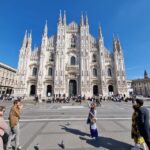
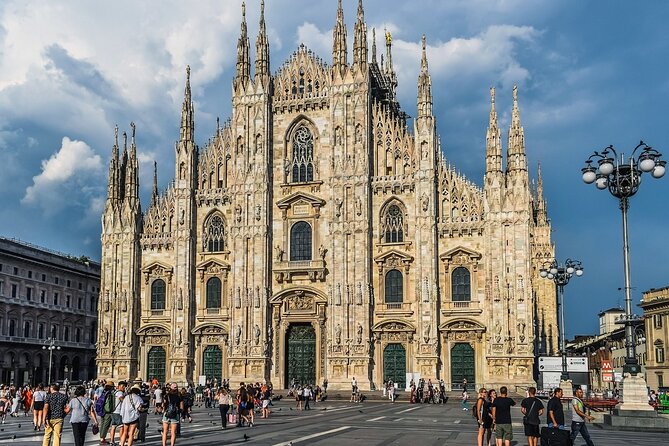
- Duomo di Milano Facade Focus: 3,000+ Statues, 135 Spires, Outside Only
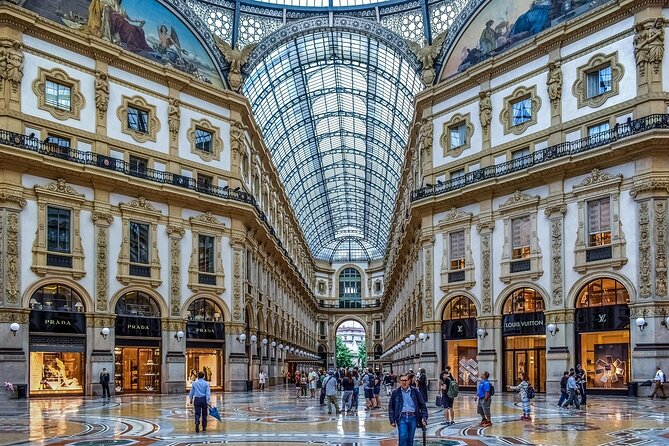
- Galleria Vittorio Emanuele II: The Covered Passage Between Two Major Squares
- Bottega Rossa: Milanese Food Storytelling Without Breaking the Flow
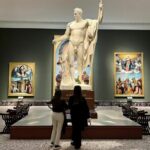
- Brera District and Pinacoteca di Brera Area: Art, Shops, and a Different Milan Mood
- Cavalli e Nastri Vintage Stop: Second-Hand Fashion as Milan Style Therapy
- Castello Sforzesco: Fortress Walls and Museum Territory at the Finish
- Price, Group Size, and Timing: Is $39 Good Value?
- Who Should Book This Tour (and Who Should Skip It)
- Should You Book This Milan Walking Tour?
- FAQ
- How long is the Milan walking tour?
- What’s included in the $39 price?
- Is the tour offered in English?
- Are entry tickets included for the stops?
- Where does the tour start?
- How many people are in the group?
Key Highlights You’ll Actually Feel in the Street

- Duomo di Milano, outside-only, with exact wow stats: 3,000+ statues and 135 spires, explained on the facade.
- Galleria Vittorio Emanuele II as a connector: it links Piazza del Duomo and Piazza della Scala, so you’re walking with purpose.
- Food culture explained without entering Bottega Rossa: you get context while the group keeps moving.
- Brera District stops you at the right moment: art galleries and shops with Pinacoteca di Brera in the mix.
- Cavalli e Nastri for second-hand fashion vibes: a quick look at vintage retail rather than museum-only Milan.
- Castello Sforzesco as the grand finish point: a former fortress that’s the gateway to multiple museums.
How the Walk Starts Near Montenapoleone (and What That Means for You)
The meeting point is Montenapoleone M320121. From there, you’re walking as a group and the tour ends back at the meeting point, so you don’t need to rebuild your own route after you’re done.
This matters because Milan can be a maze of one-ways, detours, and crowd flow. A guided loop is a nice way to get your bearings fast. And with a maximum group size of 15 travelers, the walk has a better chance of feeling conversational rather than like you’re being herded.
Quick practical tip: arrive a few minutes early and check the exact location on your map. “Montenapoleone” is a broad area, but the listed code (M320121) is what keeps it specific. If you’re using a mobile ticket, have your screen ready so you don’t hold everyone up.
One other thing: service animals are allowed, and the tour is near public transportation. That’s a plus if your day includes other stops, because you can link this walk with whatever you planned next.
You can also read our reviews of more walking tours in Milan


Duomo di Milano Facade Focus: 3,000+ Statues, 135 Spires, Outside Only

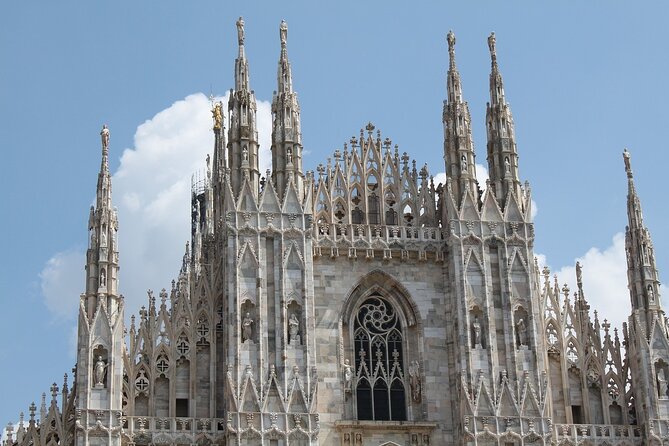
Stop 1 is Duomo di Milano—but outside visit only. That’s a big deal for pacing and expectations. You’re not signing up for a long interior schedule. Instead, you’re going straight to the part that photographs best and tells the story fastest: the facade.
The guide shares key context about how it was built over six centuries and points out the sheer scale: more than 3,000 statues and 135 spires. When you’re standing there, you can see why people remember the Duomo as more than a church. It’s sculpture, architecture, and civic pride layered together.
Why this stop is worth 20 minutes:
- It gives you a mental map of what you’re looking at before you decide whether you want to do more later.
- It keeps the day moving, so you don’t lose your momentum in a line.
Possible consideration: if your dream is interior views or the full Duomo experience, you’ll need a separate plan. This tour is clearly structured around the exterior, so treat it like a high-impact introduction.
Also, Milan crowds can turn any “quick look” into “why is it taking so long.” If you feel the group is stuck, this is the moment to gently ask the guide what the best photo timing is—so you still capture your angles without rushing.
Galleria Vittorio Emanuele II: The Covered Passage Between Two Major Squares
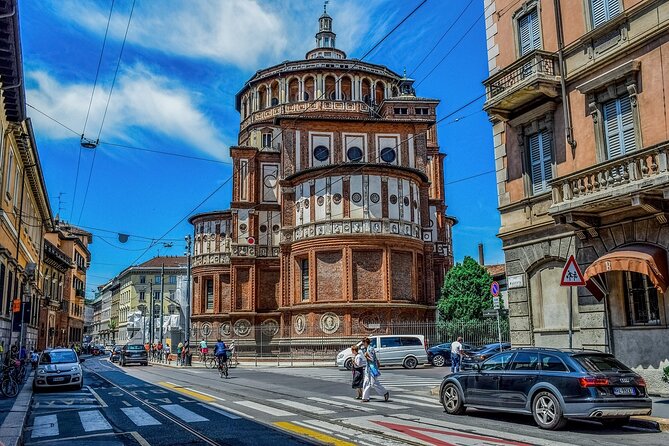
Stop 2 is Galleria Vittorio Emanuele II—the covered space connecting Piazza del Duomo with Piazza della Scala. In real terms, that means you’re not only seeing a famous interior; you’re using it as a shortcut through the center of Milan.
The guide links it to history through its historic shops and cafés. Even if you don’t stop to shop or sit down, the big win is understanding why this place exists as a connector. You see how Milan designed movement: people, commerce, and architecture in one long public room.
What you can do in your 20 minutes:
- Get a feel for the scale and proportions of the arcade.
- Snap photos before the crowd thickens.
- Use the guide’s timing to move on while you still have energy.
A small note on mindset: Galleria can encourage loitering. The tour’s time structure helps, but you’ll still want to resist the “just one more coffee” trap unless you plan to stay long after the walk ends.
Bottega Rossa: Milanese Food Storytelling Without Breaking the Flow
Stop 3 is Bottega Rossa. The key detail here is that you’ll learn through a historic restaurant—but the tour keeps you moving, and you do not enter.
This is one of those smart compromises that makes sense on a 2-hour schedule. You still get local culture context, but you’re not sacrificing half your afternoon to another indoor stop.
Since the tour description focuses on traditional Milanese food, your guide likely connects the name and setting to how locals think about food culture. Even if you already know what you want to eat later, this kind of “why it matters” explanation can help you make better choices when you’re hungry and scanning menus.
Possible consideration: if you’re the type who wants to taste your way through a place, you’ll need a separate meal plan. This stop is for understanding, not for dining as part of the tour.
If you’re not sure what to order later, take note of any food themes your guide mentions. Then at dinner, you can order with confidence instead of defaulting to the safest generic choice.
Brera District and Pinacoteca di Brera Area: Art, Shops, and a Different Milan Mood
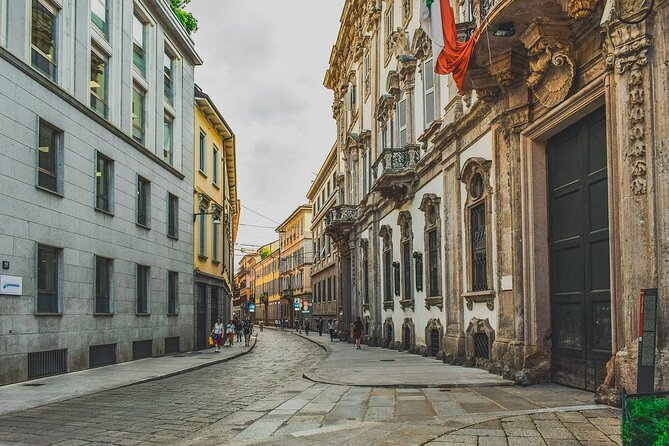
Stop 4 is the Brera District—a historic neighborhood with art galleries and shops, and with Pinacoteca di Brera in the picture.
This stop is a nice pivot. The tour starts with grand monuments and a famous covered passage, then shifts you into a part of Milan that feels more like walking through daily life. In a short time, you get both the cultural signal (Pinacoteca di Brera) and the everyday activity (galleries and shops).
Why 20 minutes here works:
- Brera is ideal for walking orientation because it’s easier to explore independently after you’ve been pointed in the right direction.
- You can decide on the spot whether you want to come back for more art focus, or just browse streets and shop windows.
A practical tip: if you spot a gallery storefront you like, don’t try to turn the tour into a shopping spree. Make a note of it mentally, then plan a separate visit when you’re not on someone else’s schedule.
If your pacing matters to you, this is also a good time to check in with the guide. In one reported case, the tour did not fully stick to the intended route and timing around major sites. Asking early helps prevent last-minute disappointment.


Cavalli e Nastri Vintage Stop: Second-Hand Fashion as Milan Style Therapy
Stop 5 is Cavalli e Nastri, described as a vintage clothing store selling second-hand fashion items.
This is where the tour adds personality. Instead of another museum stop, you get a peek at how Milan keeps fashion in the foreground—even through reuse and vintage style.
In 20 minutes, you can:
- Look at what’s in-store and how it’s presented.
- Get a sense of whether vintage shopping is your thing today or just a quick cultural detour.
- Treat it as a photo and people-watching stop.
Possible consideration: some tours can accidentally turn into side errands if the guide thinks it’s helpful. If you’d rather stay strictly aligned with the walking plan, you can gently set the tone at the beginning: you want the official sights and no extra detours. That keeps the day on track.
Castello Sforzesco: Fortress Walls and Museum Territory at the Finish
Stop 6 is Castello Sforzesco—a former fortress that houses several museums.
Even if you do not enter museums during this tour, the setting matters. The fortress gives you a dramatic close to the walk: you go from detailed facades and elegant passages into a more grounded, defensive-looking landmark.
Why this stop is a good ending:
- It feels like a “bookend” to the monuments earlier in the tour.
- It’s a natural place to pause and decide what you want to do next—museums, photos, or just regroup.
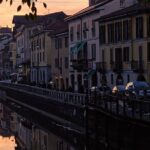
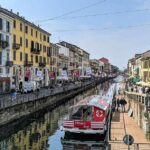
One consideration based on real-world experience: the published description says the tour ends back at the meeting point, but there have been cases where the tour ended earlier near the canals around 4:30 and participants were not guided back as expected. If this matters to you—especially if you’re catching a ticketed museum entry—ask the guide at the start where the finish will be and how the return walk will work.
Price, Group Size, and Timing: Is $39 Good Value?
The price is $39.00 per person, for an approximately 2-hour guided walking tour in English.
Here’s the value logic that makes sense: you’re paying for (1) a guide to connect the dots between major sights and local context, and (2) the convenience of a packed route. You’re also not being forced into paying entry tickets for every stop, and at least one key site (Duomo) is outside only.
What you still need to budget for:
- Any personal museum tickets you decide to add later, since entry tickets are not included.
- Gratuities, if you choose to tip.
Timing can affect value. In some reported cases, the tour ran longer than advertised—closer to 3 hours—and some departures may not match the described route exactly. That doesn’t automatically make the tour “bad,” but it can change whether the schedule fits your day.
My practical advice:
- If you have a timed plan later (dinner reservation, museum entry, an event), build in buffer time.
- At the start, confirm the route order and the intended end point.
- If English clarity is important for you, ask quick clarifying questions early so you know whether the explanation style works for you.
Who Should Book This Tour (and Who Should Skip It)
Book this walking tour if you want a compact way to see Duomo exterior, pass through Galleria, get placed in the Brera District zone, and finish at Castello Sforzesco—all with a guide and without committing to multiple entry-ticket plans.
It’s also a good choice if you like variety. The mix of architecture, neighborhood feel, and a vintage shop stop keeps the walk from feeling like a single-note monument marathon.
Skip it or use extra caution if:
- You need guaranteed strict timing to the minute.
- You rely on very clear spoken English and get easily lost if phrasing is hard to follow.
- You dislike any side-shopping or unrelated detours during paid tour time.
A slightly old-school mindset helps: treat this as a guided orientation and decide your deeper dives after you’ve walked it.
Should You Book This Milan Walking Tour?
Yes—with the right expectations. At $39, you’re buying a fast, structured walkthrough of Milan’s most recognizable landmarks plus a couple of practical culture stops (food context without entering, vintage fashion, Brera’s art-galleries area). If you’re flexible and you’re fine with “outside and orientation” for a few sites, you’ll get your money’s worth in time saved and context gained.
But if your day is tightly scheduled or you know you need very clear English narration, do one small extra step: confirm the route and where you’ll end before you start. That one question can protect you from the kind of surprises that have shown up in real-world experiences.
FAQ
How long is the Milan walking tour?
It’s listed as about 2 hours.
What’s included in the $39 price?
The price includes a 2-hour walking tour and a professional tour guide.
Is the tour offered in English?
Yes, it’s offered in English.
Are entry tickets included for the stops?
No. Entry tickets to attractions are not included. Duomo di Milano is described as an outside visit only.
Where does the tour start?
The meeting point is Montenapoleone M320121 Milan.
How many people are in the group?
The tour has a maximum of 15 travelers.