REVIEW · MILAN
Milan: Museum of the 900 Fast-Track Entry Ticket & Audio Guide
Book on Viator →Operated by Vox City International Ltd · Bookable on Viator
Walk into Milan’s 20th-century mood. This Museo del Novecento ticket skips the fuss and lets you explore modern art with a smartphone audio guide and digital map at your own pace.
I especially like the fast-track entry value paired with the audio plan: there are 40+ audio stops that point you to what to notice in rooms packed with over 400 works. The museum’s building is also a major part of the experience, and the collection is the kind that rewards slow looking.
One thing to consider: there’s no guided tour, and the ticket doesn’t include a phone or headphones. If you don’t want to manage your own device, this won’t feel as hands-on as a live tour.
In This Review
- Key highlights you should know before you go
- Museo del Novecento in 2 hours: what makes it worth your time
- Fast-track entry and smartphone audio: how to make it smooth
- Starting at the heart of the collection: 1902 and Pellizza da Volpedo
- Following the modern-art thread: Picasso, Klee, and Kandinsky
- Futurism and arte povera: using the audio stops to connect styles
- The building matters too: why Museo del Novecento feels like more than a checklist
- Ending with Nunzio Di Stefano: how to close the loop on the story
- Price and value: is $15.62 a smart buy?
- Who this ticket is best for (and who should think twice)
- Where to meet and when to go inside
- Should you book Museo del Novecento fast-track with audio guide?
- FAQ
- How long is the Museo del Novecento fast-track entry with audio guide experience?
- What do I get with the ticket?
- Do I need headphones or my own mobile device?
- Where is the ticket redemption point?
- What are the museum opening hours?
- How do I use my e-ticket to enter?
- Can I cancel for a full refund?
Key highlights you should know before you go
- Fast-track entry saves time, so your 2-hour visit doesn’t turn into a waiting game.
- 40+ audio points help you move room to room without guessing what matters most.
- Digital map included to keep the museum layout from feeling like a maze.
- Modern-art sweep in one route, from early-1900s works to later pieces by Nunzio Di Stefano.
- Multiple languages on the audio guide (English, French, German, Italian).
- City audio guide bonus is included digitally for extra Milan context.
Museo del Novecento in 2 hours: what makes it worth your time
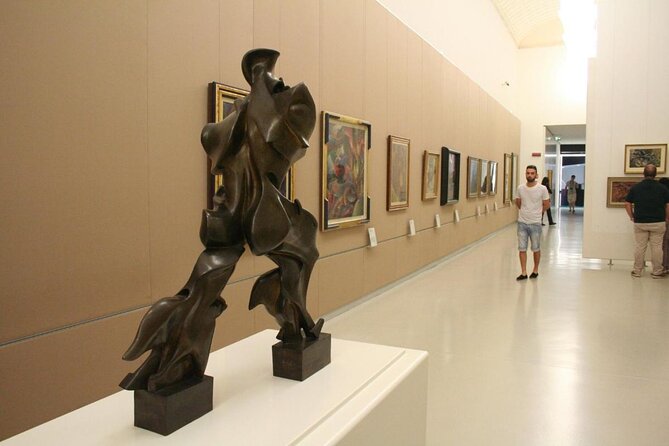
The Museo del Novecento, also known as the Museum of the 900, is one of those Milan stops that feels both “big deal” and easy to manage. You’re not racing a group around. You’re following an audio-led route through rooms of modern art, with enough structure to feel guided and enough freedom to pause.
In about 2 hours, you can get a satisfying overview of how Italian and European modern art evolved across the 1900s. The ticket is built for that pace: you start early, you track major themes, and you end with later works that give you something to think about as you exit.
If you like museum visits that feel organized without being rigid, this format fits well. You’ll use your own phone, press play when you want, and let the museum’s story unfold naturally.
You can also read our reviews of more tours and experiences in Milan


Fast-track entry and smartphone audio: how to make it smooth
This is a self-paced ticket with support tools. Here’s what that means for your day.
First, you’ll use your e-ticket on your mobile device at the museum staff desk. Your e-tickets are delivered via WhatsApp within 24 hours before your travel date, sent by Vox City. Plan for battery life, because you’ll be showing that screen at the entrance.
Second, your audio guide is digital and runs through your smartphone. You’ll also get a complimentary digital audio guide for the city of Milan in addition to the museum audio guide. You don’t have to decide that in advance, but it’s a nice add-on if you want to stretch the value of your ticket.
Two practical tips from how these tours are set up:
- Bring a fully charged phone and keep sound on low enough that you can still hear your surroundings when you need to.
- Don’t count on having headphones. The ticket says headphones and the mobile device are not included, so you’ll want your own.
Also note the museum schedule. It’s open Tuesday to Sunday from 10:00 am to 7:30 pm, with Thursday until 10:30 pm, and it’s closed on Monday. If you’re visiting around Monday, you’ll need a backup plan.
Starting at the heart of the collection: 1902 and Pellizza da Volpedo
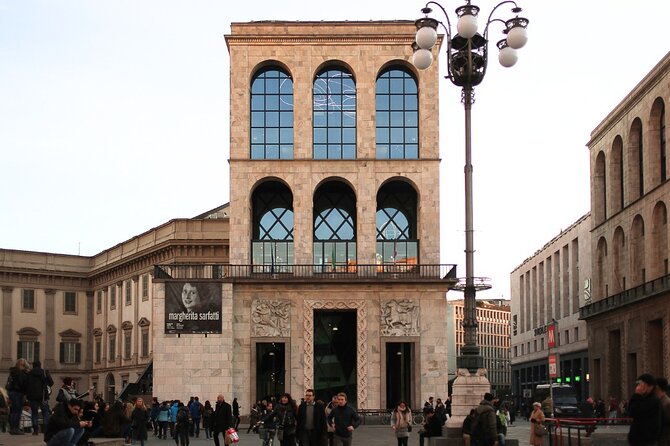
Your route begins with the early-1900s mood—starting in 1902 with works by Giuseppe Pellizza da Volpedo. This matters because it sets a baseline. You’re not dropped into modern art halfway through its story. You start near the point where modern ideas start gaining real momentum.
As you listen, the audio guide’s job is to give you anchors: what to look for, how to connect the work to the era, and how different movements shift over time. Even if you only catch parts of the commentary, you’ll still benefit from knowing what the museum wants you to notice.
What you’ll likely feel in this first section is contrast. Early works can be easier to read visually than the later experiments, so they give you confidence. Then, as you move forward, your eye starts adjusting—less “Where am I supposed to look?” and more “I get why this style changed.”
Following the modern-art thread: Picasso, Klee, and Kandinsky
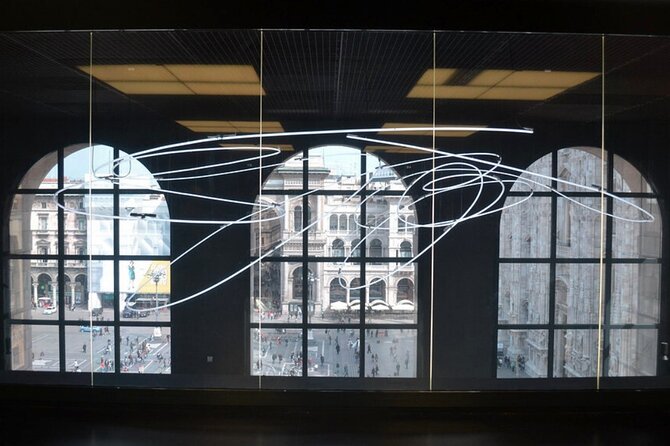
After the early starting point, the route moves through major names that many people associate with modern art breakthroughs: Pablo Picasso, Paul Klee, and Wassily Kandinsky, among others.
This is where the audio guide becomes especially useful. When the artworks push toward abstraction, fragmentation, or bold new visual logic, it helps to have a short prompt. The audio points (there are 40+) are designed to help you zoom in rather than get lost in impressions.
Here’s a helpful way to approach these rooms:
- Let yourself see the work first without audio, for 20–30 seconds.
- Then press play for the audio stop.
- Compare what you noticed with what the guide points out.
That small switch makes you less dependent on the commentary and more in control of the experience.
If you love modern art, you’ll enjoy the “name recognition” payoff. If you’re less sure about modern art, the guide’s structure can act like training wheels—still your experience, but with fewer dead ends.
Futurism and arte povera: using the audio stops to connect styles
The collection includes movements such as Futurism and arte povera. You might think of movements as labels, but in a museum they work better as lenses—ways of looking that shape materials, subjects, and even the feeling of the work.
This ticket is built around that idea. With the digital map and the audio stops, you’re not wandering randomly through 400+ works. You’re following a curated pathway that’s meant to show how different strands of modern art relate to each other.
One of the most practical benefits of the audio approach is pacing. If you’re someone who gets tired when there’s too much to read, audio keeps the flow moving. You still choose when to slow down, but the museum doesn’t depend on you to interpret everything from scratch.
Also, audio stops are a smart way to prevent “museum overload.” In big museums, it’s easy to see lots of art and remember almost none of it. The audio points act like memory hooks—small moments you can hold onto later.
You can also read our reviews of more guided tours in Milan



The building matters too: why Museo del Novecento feels like more than a checklist
A lot of museum tickets sell you on the artworks. This one does that too, but the museum space itself is part of the draw.
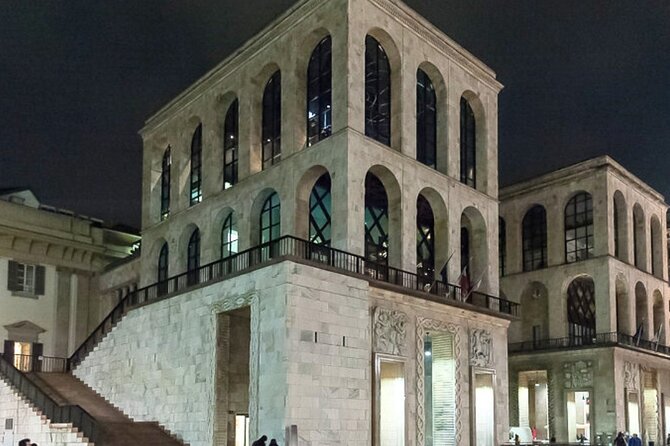
The Museo del Novecento is widely praised for its beautiful building as well as its modern collection. That combination is a big deal because it affects how you experience time. When the rooms are pleasant and the building feels iconic, you’re more likely to want an extra 10–15 minutes—time that turns a quick visit into a satisfying one.
Even with a strict 2-hour target, you can still do this right:
- Spend longer in the rooms where audio leads you to key works.
- Move faster through sections that feel less relevant to your taste.
- Keep one “buffer” stop for a second look at a piece that stuck.
Because this is fast-track and self-paced, you can make those micro-decisions without asking permission from a guide or a group schedule.
Ending with Nunzio Di Stefano: how to close the loop on the story
Your route doesn’t just fade out. It finishes with thought-provoking paintings by Nunzio Di Stefano and more later works.
That ending matters because it pushes you beyond a simple “modern art greatest hits” feeling. When you reach later artists, you’re reminded that modern art didn’t stop at a certain decade—it kept changing, reacting, and reframing what art could be.
When you’re near the end, do one small exercise:
- Think about how the earlier works you saw in the 1902 section compare to what you’re seeing now.
- Ask yourself what changed most—subject matter, technique, or the overall attitude toward the viewer.
Then, when you exit, you’ll have a clearer sense of what you actually learned, not just what you saw.
Price and value: is $15.62 a smart buy?
At $15.62 per person (booked about 12 days in advance on average), this ticket is priced like a budget-friendly add-on that still does real work.
Here’s what you’re getting for the money, in practical terms:
- Fast-track entry to the museum
- A digital audio guide in multiple languages (including English)
- A digital map so you’re not constantly orienting yourself
- A complimentary city audio guide for extra Milan context
The value question really depends on how you like to travel.
- If you’re comfortable using your phone and prefer a self-paced visit, this can be a strong deal because the ticket supplies the structure (audio points + map) that a guided tour would normally provide.
- If you want a live guide to explain everything in real time, this won’t replace that experience since a guided tour isn’t included.
Also, factor in the “hidden cost” of convenience: headphones and a device aren’t included. You’ll either bring your own setup or plan to use what you already have. If you’re arriving at the museum with those items ready, the ticket feels much more straightforward.
Who this ticket is best for (and who should think twice)
This experience is ideal if you:
- Want a museum visit that’s 2 hours long and easy to fit into a Milan itinerary.
- Like modern art but don’t want to feel lost in a big collection of 400+ works.
- Prefer independence: you choose when to pause, replay, or speed up.
- Appreciate an audio guide with enough “stops” to keep you on track (40+ points).
You might think twice if you:
- Strongly prefer a guided tour with a person talking through the art.
- Don’t want the responsibility of using your phone for admission and audio.
- Don’t have headphones (and you’re not willing to plan for that).
The good news is this is “most travelers can participate,” so it’s broadly usable. The bigger deciding factor is your travel style: self-guided or guided.
Where to meet and when to go inside
You redeem tickets at: Museo del Novecento, Piazza del Duomo 8, 20123 Milano MI, Italy. It’s also described as near public transportation, which helps if you’re building a day around the Duomo area.
For timing, remember the museum is open:
- Tuesday to Sunday: 10:00 am to 7:30 pm
- Thursday: until 10:30 pm
- Closed Monday
If you’re visiting during busy evenings (especially Thursday), fast-track entry can be the difference between a calm start and a rushed one.
Should you book Museo del Novecento fast-track with audio guide?
Yes, I think you should book it if you want a smart, lower-stress way to see Milan’s modern-art story in a single, organized visit. The ticket does a lot of the heavy lifting for you: fast-track entry, audio guidance with 40+ points, and a digital map that helps you navigate a collection that’s bigger than it looks.
Skip it if you need a live guide or if you’d rather not rely on your phone for audio and admission. In that case, a guided tour option may fit better.
If you’re on the fence, here’s the simplest decision rule: if you’re the type who enjoys pressing play, choosing your own pace, and spending time with a few key works, this is a great fit.
FAQ
How long is the Museo del Novecento fast-track entry with audio guide experience?
It takes about 2 hours (approx.).
What do I get with the ticket?
You get fast-track entry to the Museum of the 900, a digital audio guide in multiple languages, a digital map, and a complimentary digital audio guide for the city of Milan.
Do I need headphones or my own mobile device?
Yes. Headphones and a mobile device are not included, so you’ll need to use your own.
Where is the ticket redemption point?
You redeem at Museo del Novecento, Piazza del Duomo 8, 20123 Milano MI, Italy.
What are the museum opening hours?
The museum is open 10:00 am to 7:30 pm Tuesday to Sunday, with Thursday extended until 10:30 pm, and it is closed on Monday.
How do I use my e-ticket to enter?
You show your e-ticket on your mobile device to the museum staff at the entrance.
Can I cancel for a full refund?
Yes, you can cancel for a full refund if you cancel at least 24 hours before the experience’s start time.