REVIEW · MILAN
Intimate Small-Group Bernina UNESCO Scenic Train on Swiss Alps
Book on Viator →Operated by LUCAfromITALY · Bookable on Viator
A tiny red train cuts the Alps. I like that the whole day is built around the Bernina line and the UNESCO scenery it climbs through, not just another quick Swiss stop. I also love the warm-up with Lake Como and a real taste of northern Italy before you cross into Switzerland. The catch is the long day, with a few stairs and lots of riding.
In past departures, guides such as Luca and Silvia have a knack for keeping the group moving at a calm pace, while still making sure you’re in the right place for photos and views. With a max group size of 18, the vibe stays friendly instead of hectic, and you can actually hear the plan.
You’ll want to dress for big temperature swings. A light jacket in summer works, but in winter you’ll be glad for a heavy coat, scarf, gloves, and good shoes. And if you’re sensitive to curvy mountain roads, consider bringing motion-sickness help, because this route has plenty of switchbacks.
In This Review
- Key things you’ll notice right away
- Milan-to-Alps starts at Centrale, and it’s a full-day format
- Lake Como warm-up: a short walk, with stairs possible
- Valtellina Valley: the taste stop that keeps the day from feeling like transport
- Tirano and the walk to the Bernina station: plan for lunch on your own
- The Bernina Train is the point: highest stop and real mountain views
- St. Moritz isn’t a long stay, and that’s okay
- Back to Milan: expect road time and use it like part of the trip
- Group size and guides: what the small setting changes for you
- Price ($211.63) and whether it’s good value for this day
- What to bring: passport, shoes, and mountain clothing
- Who this tour fits best (and who should skip it)
- Should you book it?
- FAQ
- Where does the tour start and what time?
- How long is the day trip?
- What is the group size limit?
- What language is the tour guide?
- What about lunch—does the price include it?
- Do I need a passport?
- How much walking is involved?
- Does the highest stop on the Bernina change by season?
- What should I wear?
- Can I cancel and get a full refund?
- What is the minimum age?
Key things you’ll notice right away
- Max 18 people means a more personal feel and fewer delays between stops
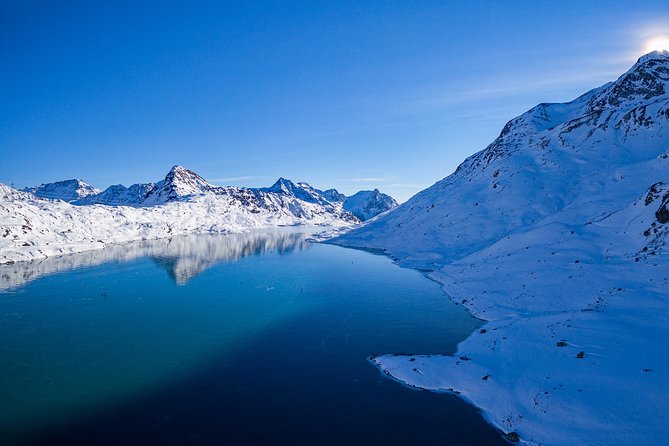
- Bernina is the headline: you get off at the top, Ospizio Bernina (summer) or Diavolezza (winter)
- Real alpine timing: bridges, viaducts, and high views show up along the ride up
- Short, scenic town breaks: Lake Como, Tirano, and then St. Moritz for a quick walk and free time
- Winter vs summer changes your highest stop but keeps the core experience the same
Milan-to-Alps starts at Centrale, and it’s a full-day format
You meet at Milan Central Station (Centrale FSPiazza Duca d’Aosta) at 8:00 am, and from there the day is a smooth chain of train/mini-bus rides plus a few timed walks. Expect a minimum 13-hour round trip. This is not a half-day “see it and leave” outing. It’s more like a long scenic workday in the Alps, with breaks built in.
The value here is that your guide handles the rhythm: where to line up, when to grab views, and how long you actually have in each place. The group stays small, so you aren’t constantly regrouping after every stop.
One practical note: the day depends on weather and train operations. If conditions are unsafe or the Bernina can’t run normally, you may get a cancellation or a partial ride that can affect reaching St. Moritz.
You can also read our reviews of more tours and experiences in Milan.
Lake Como warm-up: a short walk, with stairs possible
First comes the Lake Como section, which works as a mental shift from big-city travel into calm water-and-mountain views. You’ll transfer from Milan Central to a town on Lake Como by regional train or a minibus, with about an hour for the move.
Then you get a 30-minute walking break in a small lakeside town. That walk may include some stairs, so it helps to wear shoes you trust on uneven pavement. The goal isn’t to “cover” Lake Como. It’s to get you there early enough to enjoy the charm without turning it into a crowded slog.
If you’re the type who loves getting oriented fast, this part is perfect. You’ll see why people keep coming back to this part of Italy before you head into the Valtellina valley and up to Switzerland.
Valtellina Valley: the taste stop that keeps the day from feeling like transport
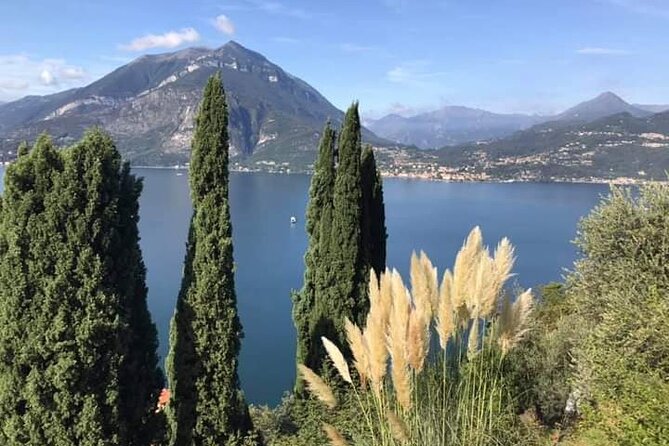
After Lake Como, you drive along part of the lake shore and then into the Valtellina valley. This is where you start seeing the mountains become real instead of background scenery.
There’s a quick 30-minute stop in the valley, with the option to break in a quaint town or a winery/café setting. The time is short, but it’s useful. It’s your chance to stretch your legs, grab a snack if you need one, and reset your head before the next long transfer.
If you’re hoping for a museum stop or a big meal, you won’t get that here. You’ll get a taste pause, which is smart for a day that is ultimately about train windows and mountain views.
Tirano and the walk to the Bernina station: plan for lunch on your own
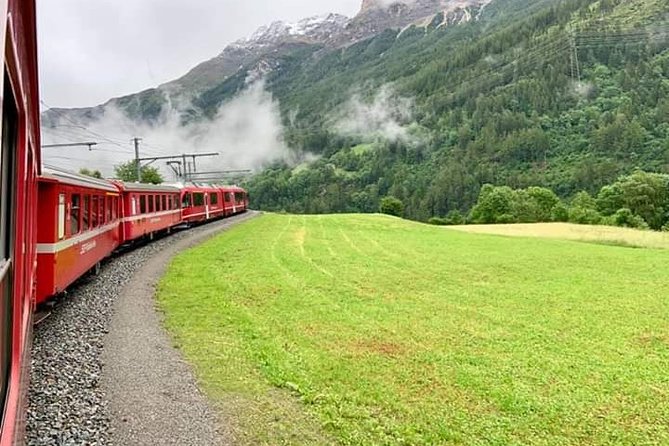
Next up is Tirano, the classic gateway town for the Bernina line. You’ll disembark from the minibus and then climb some stairs to reach the Bernina station. It’s not a long hike, but it’s the kind of stairs that can surprise you if your shoes are wrong or you underestimate the time pressure.
You also get free time for lunch at your own expense, about an hour. This is one of the easiest places to make the day feel smoother: grab something quick, warm, and easy to eat, then return to the station without stress.
A good strategy: eat early in that free window. Weather can shift fast in the mountains, and you’ll want enough margin to settle in before the train ride starts.
The Bernina Train is the point: highest stop and real mountain views
Now the day becomes the reason to book it.
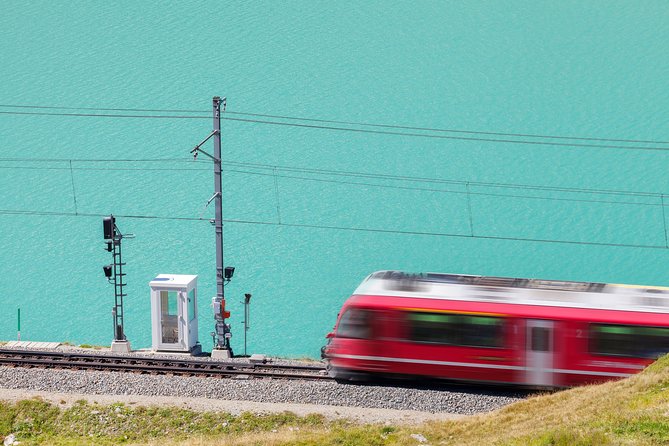
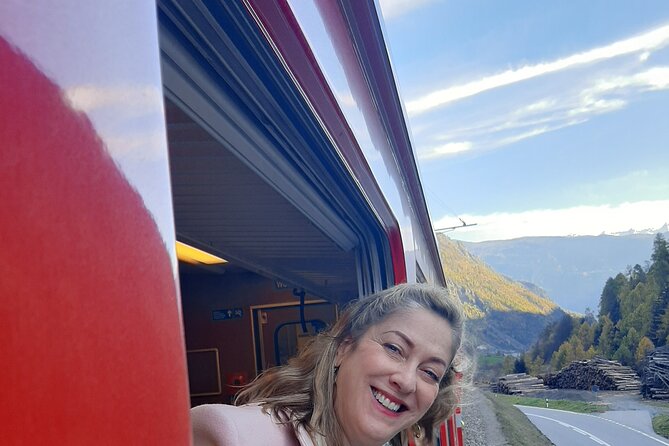
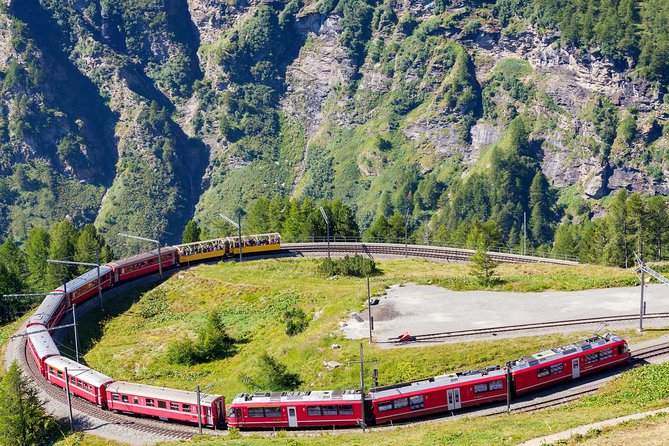
You board the Bernina Train on the Bernina Express railway, and the route runs through dramatic terrain: bridges, viaducts, and long stretches where you gain altitude quickly. This is the segment where your camera (and your attention) does the work. Every bend tends to bring a new angle.
In summer, your highest get-off point is Ospizio Bernina. In winter, it’s Diavolezza. That matters because you’re not just riding for views—you’re stepping off at the top to look around at the alpine setting.
A detail that can make a big difference for photos: the car setup can vary by departure. In some cases, windows can help with picture-taking, and a few riders find it easier to lean in for shots during smoother moments. Even so, expect cold air up there. Dress like you’re going outside, because you are.
There’s also the practical reality: if the Bernina isn’t operating normally, the operator reserves the right to cancel or run only part of the ride. If you don’t reach the highest point on schedule, it also affects whether you continue to St. Moritz that day.
St. Moritz isn’t a long stay, and that’s okay
After the train, you continue to St. Moritz by coach or minibus. This part is shorter on purpose. St. Moritz is a well-known place, but your time there is meant to be enough for a quick walk, some fresh-air views, and a little wandering—without eating up hours that belong to the Bernina ride.
You’ll walk about 10 minutes along a small alpine lake, then climb stairs and use an escalator to reach the more sloping downtown area. After that, you get roughly 30 minutes of free time to explore.
In colder season, stores and restaurants may be limited, so don’t expect full-on café hopping. Instead, treat this as your viewpoint-and-photo hour: admire the setting, do a short walk, and grab a snack if you find something open.
If you want a full St. Moritz day, this isn’t that tour. But if you want the Alps experience stitched into one long day from Milan, it’s a smart trade.
Back to Milan: expect road time and use it like part of the trip
On the return, you head back toward Milan Central Station. Depending on timing, this can be by coach all the way or partially by regional train. Either way, plan for about 3 hours on the way back (including a break).
Some people feel the return timing is less comfortable because it’s not always the same rail experience as the outward scenic portion. Traffic can also slow things down on mountain roads. That’s normal for this region. The best mindset is to treat the drive as part of the scenery window: villages, valley views, and occasional pull-offs when the schedule allows.
Also, take breaks seriously. This is a long day, and bathroom stops aren’t guaranteed at every point. If you’re sensitive, use the scheduled stop windows wisely.
Group size and guides: what the small setting changes for you
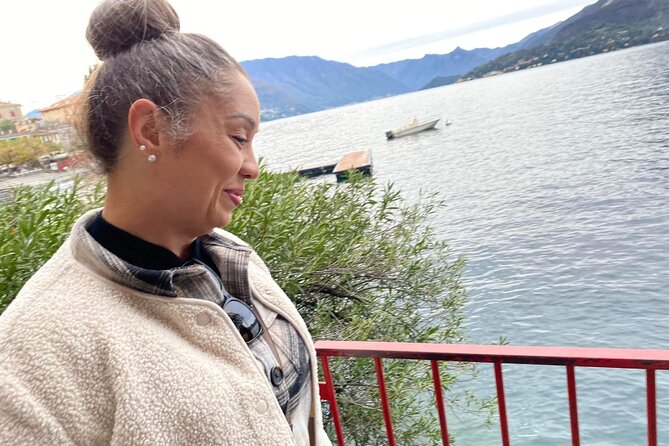
With a maximum of 18 travelers, you get two big benefits.
First, timing becomes more controlled. You’re not waiting for a huge crowd to find each other. Second, you can actually listen. When guides like Luca or Silvia explain what you’re seeing on the Bernina ride, it makes the scenery feel less like random postcards and more like a route with meaning.
In some departures, guides have also gone beyond the script with small practical help—photo tips, pacing so you don’t miss key moments, and quick guidance on where to eat in Tirano. You’ll feel that as fewer stressful moments.
Price ($211.63) and whether it’s good value for this day
At about $211.63 per person, you’re paying for a bundle: small-group handling, English guide, transport links from Milan, and the Bernina Train ticket that ties the whole day together.
What makes it feel like good value is that Bernina access isn’t just a single ticket. It’s the difficult part of the logistics—getting from Milan to the right start point, timing the train ride, and coordinating the rest of your day around it. If you tried to do all of that yourself, you’d either spend time building a plan or pay for transfers and organization anyway.
So I see this price as fair for people who want the Alps experience without turning their day into a spreadsheet. It’s also a popular trip, since it’s often booked about 75 days in advance, which is a sign the timing is in demand.
What to bring: passport, shoes, and mountain clothing
This day has a few clear “bring this” items.
- Passport required for every passenger
- Moderate physical fitness: short walks and stairs in Lake Como, Tirano, and St. Moritz
- Comfortable shoes for uneven pavement and steps
- Weather gear: light sweater/jacket in summer; heavy jacket, good shoes, scarf, gloves, and cap in winter
Also consider a small personal kit for comfort: water, a snack for the gaps, and whatever you use for motion sickness if you’re prone on curvy roads.
Who this tour fits best (and who should skip it)
This is a great fit if you want a classic, photo-heavy alpine day that starts in Italy and ends in Switzerland without planning headaches. You’ll enjoy it most if you like trains, scenic routes, and short town breaks rather than long stays.
It’s less ideal if you hate long days of transit. The tour is built around the Bernina ride, so you spend a lot of your day moving. Some people also find the return portion on roads harder on comfort, especially if your seat position isn’t your favorite.
It’s also not a good match if you have mobility limits that don’t work with stairs and short walking. The day includes steps at key stops, and you should be comfortable with that.
Should you book it?
Yes, I’d book it if your priority is the Bernina Train experience and you’re okay with a long day from Milan. This trip is built like a one-day Alpine circuit: Lake Como for charm, Tirano for the launch, the Bernina for the big moment, and St. Moritz for a quick taste.
Skip it if you need lots of time in St. Moritz, want a fully relaxed day with minimal walking, or you’re worried about weather-based changes. If the Alps aren’t treating you nicely, the day can be affected.
If you’re flexible, pack warm, and plan for stairs, this is the kind of trip that gives you real mountain memories, not just a checkbox train photo.
FAQ
Where does the tour start and what time?
It starts at Milan Central Station (Centrale FSPiazza Duca d’Aosta, 20124 Milano MI, Italy) at 8:00 am.
How long is the day trip?
It’s approximately 12 hours 45 minutes, and it’s described as a minimum 13-hour round trip from Milan Central Station.
What is the group size limit?
The tour has a maximum of 18 travelers.
What language is the tour guide?
The tour is offered with an English-speaking tour guide.
What about lunch—does the price include it?
Lunch is not included. In Tirano, you’ll have free time for lunch on your own.
Do I need a passport?
Yes. Each passenger must carry a valid passport.
How much walking is involved?
You should expect short walks and stairs, including a 30-minute walk (with possible stairs) on Lake Como, stairs to reach the Bernina station in Tirano, and walking plus stairs/escalator access in St. Moritz.
Does the highest stop on the Bernina change by season?
Yes. In summer, you get off at Ospizio Bernina. In winter, you get off at Diavolezza.
What should I wear?
Bring a light sweater or jacket in summer. In winter, bring a heavy jacket, good shoes, scarf, gloves, and a cap.
Can I cancel and get a full refund?
Free cancellation is available up to 24 hours in advance for a full refund. If it’s canceled due to poor weather, you’ll be offered a different date or a full refund.
What is the minimum age?
The minimum age is 12 years, and children must be accompanied by an adult.