Milan hits hard in 2 hours. This private walking tour threads together the big-name sights and quieter corners, with English guidance that helps you understand what you’re seeing and where to go next. You start near the medieval center, then fan out through modern Milan’s glamour and money district, ending in a spot most visitors miss.
Two things I really like: the guide-led focus on Milan where locals eat and drink, with practical suggestions you can use right away, and the balance of landmark stops plus lesser-known streets like Cinque Vie. In the feedback I’ve seen, guides including Marco get special praise for being super informative and for sharing strong dinner and drink recommendations; other guides named Simon and Julia also show up in the same high scores for pointing out quieter areas.
One possible drawback: Duomo Di Milano is seen from the outside only, and the whole route is designed for a short 2 hours, so you’re not going to “complete Milan” in one go. If you want cathedral interiors, plan a separate stop later.
In This Review
- Key things to know before you go
- A smart, short route that actually teaches you Milan
- Starting at Piazza Mercanti: medieval Milan before the main stage
- Piazza del Duomo: the Madonnina view without the line
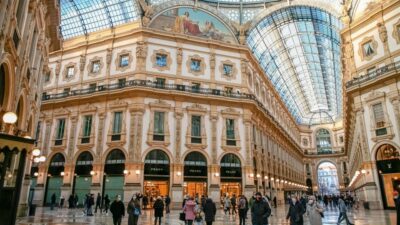
- Galleria Vittorio Emanuele II: fashion meets old-school architecture
- Piazza Affari and Cattelan’s provocation in the financial district
- Cinque Vie: the lanes where Milan slows down
- Roman leftovers near Imperial Palace Maximian
- San Maurizio al Monastero Maggiore: Milan’s Sistine Chapel moment
- How the guide’s recommendations make the tour feel worth it
- Price and time: where the value really comes from
- Timing, pace, and who this suits best
- Should you book this private Milan highlights tour?
- FAQ
- What’s the duration of the Private Milan Highlights Tour?
- Is this tour private or shared?
- What language is the tour offered in?
- Where does the tour start and end?
- Is the Duomo entrance included?
- What’s included in the tour price?
- Are snacks included?
Key things to know before you go
- It’s private, not a group shuffle: you tour with just your party.
- Most stops are free to view: only Duomo entrance is listed as not included.
- A smart mix of Milan eras: medieval squares, Roman remains, and a Renaissance church stop.
- Cinque Vie gets the most time: about 30 minutes for those winding lanes.
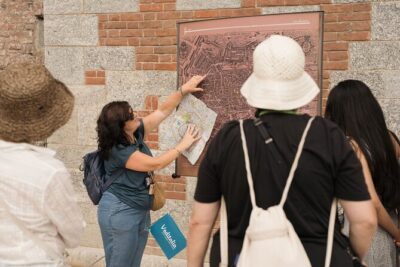
- You get a tips map: included, helpful for planning after the walk.
- It’s scheduled for 3:00 pm: so you can catch the city in late-afternoon light.
A smart, short route that actually teaches you Milan
A lot of Milan tours try to do everything in one afternoon and end up feeling like a checklist. This one feels more like a guided orientation: you walk, you stop, and you learn why each place matters. You’ll cover a compact footprint, with set time windows that keep the pace friendly.
Because it’s private, the guide can also adjust the flow to your comfort level. That matters in Milan, where you can hit everything from wide plazas to narrow lanes in minutes. Several people praised the guide for being punctual and for making the walk workable for their specific needs, including someone using a wheelchair due to a broken foot—so the route reads as a “doable strolling loop” rather than an all-day hike.
At $102.58 per person for roughly 2 hours, the big value is not the number of monuments. It’s the combination of (1) tight route planning, and (2) a guide who gives real, usable recommendations after the sightseeing.
You can also read our reviews of more private tours in Milan

Starting at Piazza Mercanti: medieval Milan before the main stage
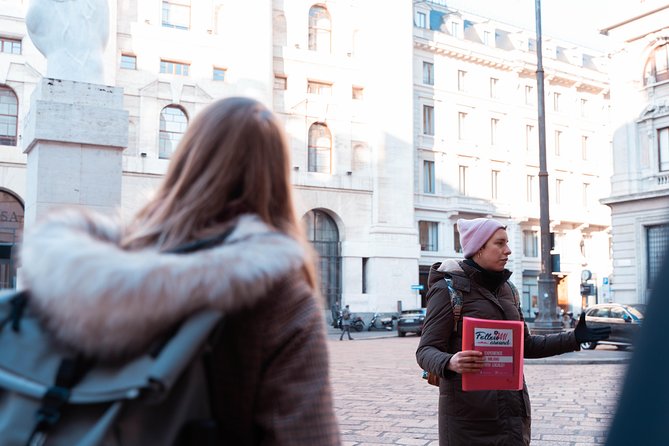
Your walk begins at Piazza Mercanti, a peaceful pocket of Milan that’s easy to miss if you’re only chasing the Duomo. This square sits in a medieval setting with historic buildings and old arcades, and it gives you a reset before the city’s modern “poster spots.”
What makes this stop feel worthwhile is the context. Piazza Mercanti was once at the heart of the city’s commercial life, so it helps explain Milan’s long relationship with trade, wealth, and civic power. You’re also surrounded by major landmarks tied to that older era, including Palazzo della Ragione and the medieval Torre dei Cenci.
Time here is short—about 10 minutes—but that’s the point. You get your bearings fast: where you are, what era you’re looking at, and what to notice as the guide steers you onward.
Practical tip: take a quick look for perspective. Stand still for a moment and notice how the arcades and building lines pull you through the space. It makes the later “modern Milan” stops easier to read.
Piazza del Duomo: the Madonnina view without the line
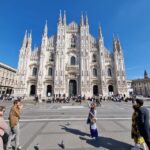
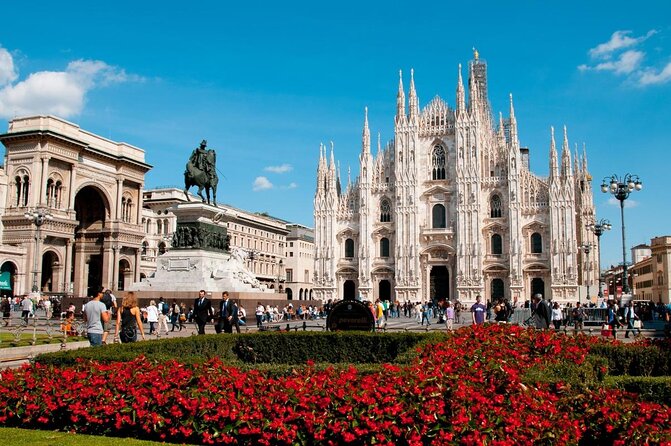
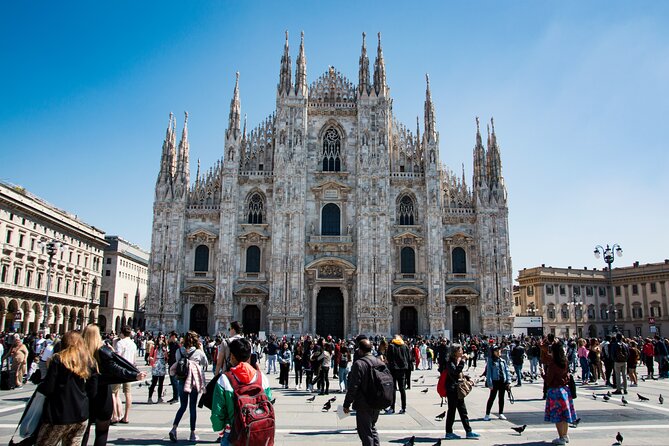
No Milan highlights walk avoids the Duomo area. Here, you get Piazza del Duomo as the starting point for understanding Milan’s identity. The square is the stage where locals and visitors gather, and it’s also where the cathedral’s scale hits you even before you move.
The tour’s Duomo approach is straightforward: you stay outside. You’ll admire the forest of spires and the marble lacework look, plus the famous Madonnina statue up on top. The guide will point you toward what to look at, including the way light plays on the white stone.
Stop time is about 15 minutes, and that outside viewing time is enough to take in the big picture. If you’re the type who wants to go inside, remember that Duomo entry is not included here. You’ll still get the iconic Duomo moment, but you’ll need a separate plan for the interior.
If you’re traveling with limited time, this outside-first approach can actually be a win. It keeps you moving through the rest of the itinerary instead of losing half your day to planning and entry details.
Galleria Vittorio Emanuele II: fashion meets old-school architecture
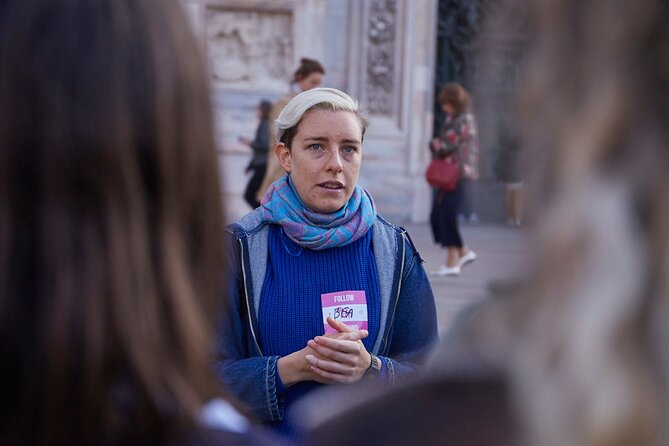
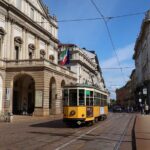
From the Duomo square area, you’ll step into the Galleria Vittorio Emanuele II—one of Milan’s signature spaces. Think elegant architecture, luxury retail, and that classic Milan “window shopping but make it art” energy.
Time is brief here—about 5 minutes—so don’t expect deep browsing. Instead, treat it like a transition stop. The guide will help you see what’s special about the building itself so you don’t just pass through it as a place to buy things.
A quick way to enjoy this stop: look up. The glass-and-roof feel is a huge part of why this place works, and you’ll get more out of those five minutes if you spend them looking at the architecture rather than hunting for a brand store.
Piazza Affari and Cattelan’s provocation in the financial district
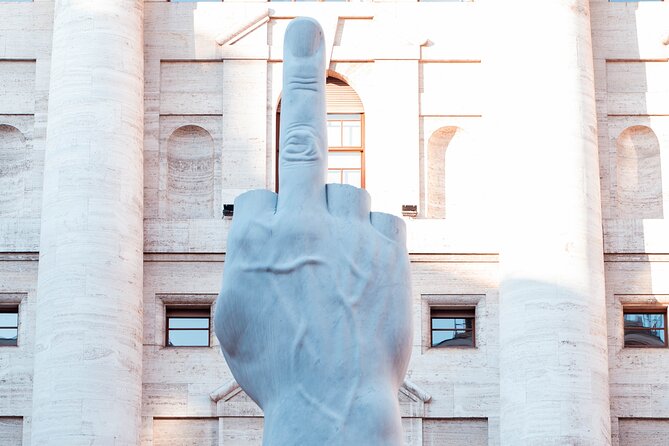
Next comes a tonal shift: Piazza Affari, right in Milan’s financial district. Here you’ll find a work by Maurizio Cattelan—the sculpture known for its confrontational, middle-finger gesture.
It’s a strange thing to see in an area tied to money and power, and that contrast is the point. Some people read it as defiance; others see it as critical commentary. Either way, it’s a conversation starter, and it’s a good reminder that Milan isn’t only cathedrals and design—it also has an art scene that plays with authority and hypocrisy.
This stop is only 5 minutes, so you won’t be stuck staring forever. But you will come away with a clearer sense that Milan’s modern identity includes the willingness to question systems, not just celebrate them.
Tip: if you’re photographing it, grab a couple angles quickly. It’s best captured when you include the surrounding plaza and not just the sculpture itself.

Cinque Vie: the lanes where Milan slows down
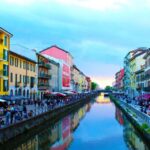
If you want the Milan that feels human-scale, Cinque Vie is your time-sink in the best way. This area is a maze of narrow, winding streets where medieval architecture and small boutiques meet. It’s the part of the route that’s less about famous landmarks and more about wandering with intention.
This stop gets about 30 minutes, which is generous compared to the earlier “quick photo and move” stops. That extra time matters: in places like this, you need a little breathing room to notice details, read street textures, and find small corners without feeling rushed.
What makes Cinque Vie effective on a guided loop is that the guide will steer you toward what to notice, not just where to walk. Instead of you guessing which alley looks interesting, you follow someone who knows which streets give you the right Milan atmosphere.
Practical tip: wear shoes you can walk in comfortably. The streets are narrow, and you’ll naturally slow down as the scenery changes. This is where your pace becomes part of the experience.
Roman leftovers near Imperial Palace Maximian
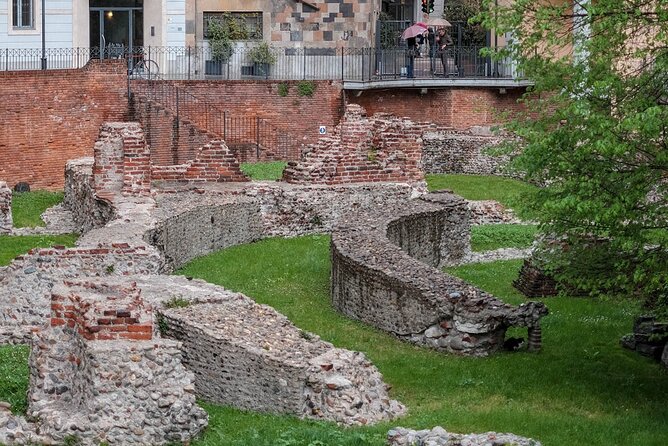
After the medieval lanes, you’ll hit something very different: Roman remains along Via Brisa, tied to Imperial Palace Maximian. These ruins sit quietly in the city fabric, which makes them feel extra surprising once you’re expecting only modern Milan.
This stop is about 10 minutes, but it’s packed with “wow, this is still here” energy. The guide points out remnants of Roman defensive structures, giving you a sense of how Milan evolved from an ancient fortified site into the city you walk today.
The contrast is key. You’re surrounded by modern surroundings, yet you’re looking at stone that once helped guard the city during the Roman Empire. Even if you’re not a hardcore ancient-history person, the physical reality of these ruins makes the timeline feel real.
If you like layered cities—those where different centuries sit next to each other—this stop is one of the most satisfying parts of the route.
San Maurizio al Monastero Maggiore: Milan’s Sistine Chapel moment
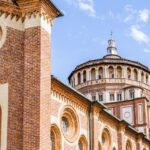
The final major sightseeing stop is Chiesa di San Maurizio al Monastero Maggiore, often called Milan’s Sistine Chapel. It’s a rare find for visitors because it’s not the first church most people plan around.
The church was built between 1503 and 1518, and it’s connected to the Monastero Maggiore, described as Milan’s most important Benedictine convent for noble women. The church design included two distinct areas: one for the nuns, separated by a dividing wall, and one for lay faithful. That separation stayed in place until 1794.
Time here is about 10 minutes, which is just enough to appreciate the significance and get the main takeaway. If you’re the type who loves to linger in sacred spaces and read every detail, you might wish you had longer. But for a two-hour highlights tour, it’s a strong closing stop because it gives you something memorable beyond the standard postcard list.
Practical tip: even though the stop is short, slow down once you’re inside. The power of this place is in how it feels as a preserved designed space.
How the guide’s recommendations make the tour feel worth it
A tour can show you sights. This one aims to help you use what you learn immediately. That comes through in the feedback: guides named Marco get praise for being punctual and super informative, and also for sharing great dinner and drinks recommendations afterward.
That kind of add-on is what turns a walking loop into a value-packed afternoon. If you’re only in Milan briefly, it’s the difference between guessing where to eat and knowing where your money will actually feel well spent.
What you can do with that right away:
- ask the guide for a simple plan for the evening
- get suggestions based on what you liked during the walk (cathedral area? Roman/medieval vibe? boutique streets?)
- save the tips map included with the tour and use it to connect next stops
Even if you’re familiar with Milan’s major attractions, those practical “what to do after” pointers can be a lifesaver.
Price and time: where the value really comes from
At $102.58 per person for about 2 hours, you’re paying for a private guide and a tight route. You’re also paying for the fact that you’re not going to spend your time figuring out where to walk and what each place means.
If you were to self-tour, you’d likely hit Duomo and Galleria anyway. The stronger reason to choose this tour is the extra layers: Piazza Mercanti’s medieval framing, Cinque Vie with actual time to wander, the Roman ruins near Imperial Palace Maximian, and the San Maurizio “Sistine Chapel” stop.
Also, it’s worth noting that most stops are free to view, and there’s no mention of included snacks—so you can plan your own food breaks without feeling like the tour is pushing you into set menus.
Bottom line on value: this is a good fit if you want guided context plus a few “off the obvious route” stops without losing your afternoon.
Timing, pace, and who this suits best
The tour starts at 3:00 pm and runs about 2 hours. Late afternoon is a smart window in Milan: you get daylight for the Duomo area and still have time to turn the rest of your day into an evening plan.
Because it’s a walking route with short stops—some as brief as 5 minutes—it suits people who:
- want a high-impact orientation
- don’t want to commit to a full-day tour
- appreciate history and architecture, but want it explained in digestible chunks
It also seems to work well for travelers who need a calmer pace and relatively manageable walking distances. One review specifically praised the tour for being short distances on level ground and for being workable with a wheelchair. Still, always keep in mind that sidewalks and street textures can vary in older parts of the city.
What to wear: comfortable walking shoes. That’s the one universal advice that fits every stop on this route.
Should you book this private Milan highlights tour?
Book it if you want a private, English-speaking guide to help you connect the dots across Milan’s medieval core, famous modern landmarks, a provocative art moment in Piazza Affari, Roman ruins, and the standout church of San Maurizio. The route is short, but the variety is real, and the guide adds value with practical suggestions for what to do next.
Skip it (or pair it with other plans) if your main goal is Duomo interior access, since this itinerary focuses on the Duomo from the outside. Also, if you’re hoping to spend long hours in museums or churches, this is built for a tight highlights format.
FAQ
What’s the duration of the Private Milan Highlights Tour?
It runs for about 2 hours.
Is this tour private or shared?
It’s private, meaning only your group participates.
What language is the tour offered in?
It’s offered in English.
Where does the tour start and end?
It starts at Piazza Mercanti and ends at Colonne di S. Lorenzo.
Is the Duomo entrance included?
No. The tour notes that Duomo Di Milano admission is not included, and you view it from the square area.
What’s included in the tour price?
You get a tips map. The tour also uses a mobile ticket.
Are snacks included?
No. Snacks are not included.
If you want, tell me your travel dates and whether you care more about church interiors, shopping, or eating/drink spots—I can suggest how to pair this walk with the best next stops.