REVIEW · MILAN
Private Tour from Milan: Venice Full Day Trip by Train
Book on Viator →Operated by Rental and Tour · Bookable on Viator
Venice in one day, minus the hassle. This private day trip from Milan uses a 2nd-class train and a real guide to move you from the Grand Canal viewpoints to Venetian church squares without wasting time. I love the private format that keeps things flexible and paced for your group. One thing to weigh: Venice crowds and lagoon smells can make photography tricky, especially near the busiest hotspots.
I also like that you start early from Milano Centrale (meeting point at Piazza Duca d’Aosta) and the day includes the travel time both ways, so you’re not guessing how long the logistics will take. You’ll receive your train ticket details by email and WhatsApp the day before, and you’ll use a mobile ticket once you’re set.
This is a great fit if it’s your first time in Venice and you want the big sights plus a few fun locals-only-feeling stops (like a working shipyard and a Banksy spot) without doing a marathon on your own.
In This Review
- Key highlights to know before you go
- Milan to Venice by train: the easiest way to do it
- What the private format really gives you (and what it doesn’t)
- The 7:30 am start: how the day stays manageable
- Grand Canal first: you get your bearings fast
- San Giorgio dei Greci and the leaning campanile
- Strada Nova: the practical shortcut between Rialto and the station
- Ponte di Rialto: Venice’s old economic center
- Piazza San Marco: the big square, the big decisions
- Ponte dei Sospiri: the story bridge between power and prison
- Chiesa di San Zaccaria: late-Gothic meets Renaissance
- Ponte dell’Accademia and the Grand Canal’s southern edge
- Squero di San Trovaso: the working gondola shipyard stop
- Campo San Pantalon: a Banksy moment in a real neighborhood
- Campo Santa Margherita: students, everyday Venice energy
- Piazzale Roma finish: where the train becomes a simple exit
- Price and value: is $391.34 per person a fair deal?
- Who this Venice day trip from Milan is best for
- Should you book this private Milan-to-Venice train day trip?
- FAQ
- What time does the tour start, and how long is it?
- Is the train from Milan to Venice included?
- Where do we meet in Milan?
- Is this a private tour?
- Are the key sights ticketed?
- What is the cancellation window?
Key highlights to know before you go
- Private guide in English: one group, no herding.
- 2nd-class train included: round-trip from Milan with travel time built in.
- Grand Canal sights in a smart order: less backtracking on foot.
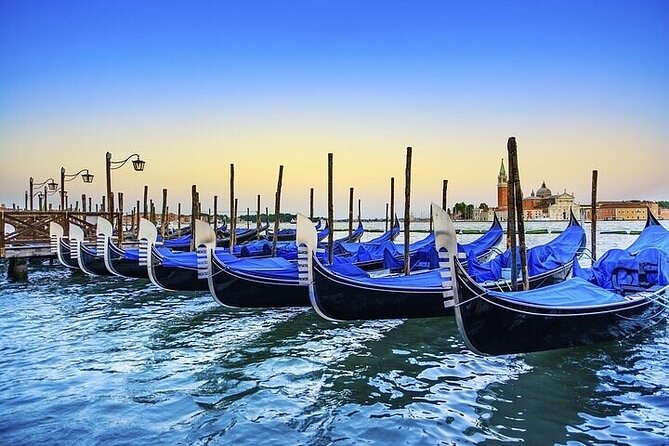
- Working Venezia stop: the Squero di San Trovaso gondola shipyard.
- A mix of famous and odd: Rialto and St. Mark, plus Banksy at Campo San Pantalon.
- Ends where cars can reach: Piazzale Roma makes the train return straightforward.
Milan to Venice by train: the easiest way to do it
If you’re basing yourself in Milan, the train is the cleanest way to reach Venice for a day trip. This tour starts at 7:30 am at Milano Centrale, and the long stretch of travel is already accounted for in the total day length (about 11 hours). That matters because Venice is one of those places where time evaporates fast once you’re in the maze of streets and bridges.
You ride 2nd class, and you do not have to arrange anything once you’re on the ground in Milan. The day before, you get your train info (email plus WhatsApp). Then you simply show up at the meeting point and connect with your guide.
A small practical note: train tickets are purchased 48 hours in advance, so if you’re planning last-minute changes, keep that timing in mind.
You can also read our reviews of more private tours in Milan

What the private format really gives you (and what it doesn’t)
“Private tour” can mean different things. Here, you’re not sharing your guide with a bunch of strangers, so the pacing can match your group. In practice, that shows up in two big ways: you can move at a comfortable walking pace, and you can adjust on the fly if you want more time at one stop.
The guides you might meet have earned strong marks for going off the beaten-path a bit. Several bookings mention the guide steering you through side streets to reduce crowd pressure, and helping make shopping stops feel less like a tourist trap. One person even noted their guide carried purchases, which sounds minor until you’re carrying bags across bridges in damp air.
The trade-off is that private tours still run inside Venice’s reality. You can avoid some crowds with route choices, but you can’t escape Venice being Venice. If your plan is all about perfect, empty-photo conditions, this may feel like a compromise.
The 7:30 am start: how the day stays manageable
This tour is built around a straightforward rhythm: train in, focused walking stops, then train back. Each major stop is short—often around 30 minutes—so you’re seeing a lot without spending half a day staring at one façade.
That timing can feel rushed if you’re the type who likes to linger. But for first-timers, it’s a smart structure. You get the highlights in a logical flow, plus time to reset with quick breaks as you move between sights.
Also, the tour operates in all weather. Venice can go from bright to misty quickly. If you hate unpredictable conditions, pack layers and a rain layer anyway. Your comfort will be better, and you’ll take better photos.
Grand Canal first: you get your bearings fast
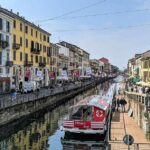
Starting on the Canal Grande is a smart move. It’s Venice’s main waterway, about 4 kilometers long, and it effectively splits the city into two halves. The architecture around it—the classic Venetian-Gothic style—looks different from each angle, and you can’t fully understand Venice until you’ve seen the canal as the city’s “street system.”
What I like about starting here is how it sets the mental map for everything that comes next. Even if you only get a partial look at the length of the canal, you’ll understand why bridges, squares, and “short cuts” matter so much.
You’ll also have a chance to see the Sanctuary of St. Lucy during this time. The tour’s emphasis here feels like a warm-up: get oriented, then walk into the quieter details.
One caution: Canal Grande photos are gorgeous, but the most photogenic spots can be crowded. If you want cleaner shots, focus on angles from bridges and slightly off-center viewpoints your guide points out.
San Giorgio dei Greci and the leaning campanile
Next comes Chiesa di San Giorgio dei Greci and its standout campanile—often described as the leaning clocktower. Even without measuring the tilt, you’ll get what makes it famous: the tower’s shape and the way the street-level views frame it.
This site is tied to Venice’s Greek community. The bell tower was built for (and by) the Greek community in Venice, especially sailors and merchants. That context turns a quick stop into something more interesting than a pretty tower. You’re not just collecting landmarks—you’re seeing how Venice’s trade world shaped its buildings.
The stop is brief, so think of it as a “look closely” moment. Step back, look up, then take a few photos and move on. That’s the best use of limited time.
You can also read our reviews of more tours and experiences in Milan

Strada Nova: the practical shortcut between Rialto and the station
At Strada Nova, the mood shifts from drama to logistics. This is the widest street in Venice, created in the 19th century to give faster pedestrian access between Rialto and the railway station. It’s a lesson in how Venice modernized itself without abandoning its overall layout.
You’ll feel the difference immediately: wider lanes mean less stop-and-go crowding, and bridges connect routes in a way that can save your legs. If you’re coming from Milan, where everything feels structured, Strada Nova gives you a taste of Venice’s planning side.
Ponte di Rialto: Venice’s old economic center
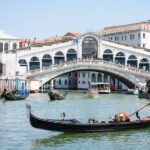
Rialto Bridge is the oldest of Venice’s Grand Canal bridges, and it used to be the hub of the city’s economy for years. That matters because it explains why this spot is constantly alive with foot traffic—even today.
You’ll get about 30 minutes here, which is long enough to do two things well: enjoy the architecture and take in views both upstream and downstream along the canal. Don’t waste that time scanning for a perfect photo spot. Instead, use your guide’s route choices to keep moving and avoid bottlenecks.
If you’re sensitive to crowds, Rialto is the place where you’ll feel them most. Venice’s most famous corners attract everyone.
Piazza San Marco: the big square, the big decisions
St. Mark’s Square (Piazza San Marco) is the principal public square in Venice, and it’s one of the most talked-about spaces in Europe. This tour gives you one focused stop, so you see it without trying to do it all.
Nearby is St Mark’s Basilica, whose interior is known for gold-ground mosaics covering domes, vaults, and upper walls. The schedule lists admission at no extra cost for this stop, which is a helpful detail if you want to actually look inside rather than just admire from the outside.
In a perfect world, you’d spend hours here. In real life, you’ve got train schedules and a long walking day. So aim for quality over quantity: pick one viewing approach, look at the mosaics, then step back out to reset before moving to the next bridge.
Ponte dei Sospiri: the story bridge between power and prison
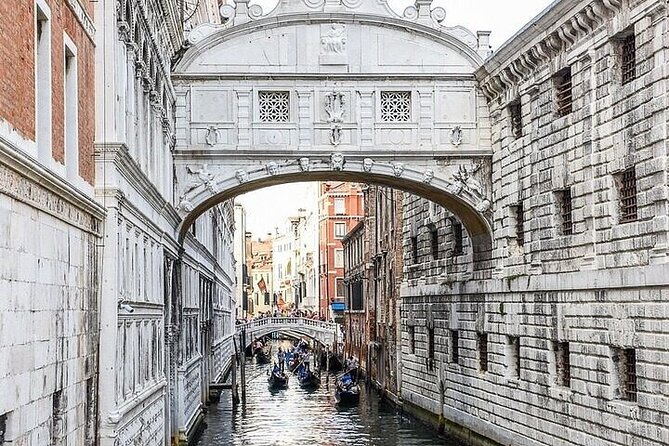
The Ponte dei Sospiri connects the Doge’s Palace with the historic prison. It was built in the 1600s, and locals call it the Bridge of Sighs. The tradition is that prisoners sighed as they crossed, knowing they wouldn’t see the outside world again.
Here’s how I’d use the time: don’t rush. Stand where you can understand the relationship between the palace side and the prison side. Venice’s bridges often feel like “just a bridge,” but this one carries actual weight.
The 30-minute stop is enough for a few photos plus a calm read of the setting. If it’s raining, water on stone adds atmosphere, but you’ll want to mind your footing.
Chiesa di San Zaccaria: late-Gothic meets Renaissance
Chiesa di San Zaccaria is a former monastic church, now a church, in central Venice. The current church was built between 1458 and 1515, and the façade is described as a harmonious mix of late-Gothic and Renaissance styles.
This stop is easy to overlook if you’re only chasing the most famous names. But it’s a nice breather. After Rialto and St. Mark’s, San Zaccaria gives you something more grounded and less photo-chaotic.
You’ll be in Campo San Zaccaria, and the short time works well here: look at the façade details, then quickly move to keep your day flowing.
Ponte dell’Accademia and the Grand Canal’s southern edge
Ponte dell’Accademia is one of only four bridges spanning the Grand Canal. It crosses near the canal’s southern end and is named for the Accademia di Belle Arti di Venezia.
This is a “views plus context” stop. From the bridge area, you can get a sense of how the canal channels movement across the city. Even if you’re not museum-hopping, the bridge ties into the idea that Venice is both art and infrastructure.
Squero di San Trovaso: the working gondola shipyard stop
If you want one stop that feels more alive than a postcard, it’s Squero di San Trovaso. This squero is one of the oldest and most famous Venetian shipyards, where small boats such as gondolas are repaired.
This is the kind of place where you look at a structure and realize Venice still supports its craft traditions. The tour includes time to have a peek at how a gondola is repaired or made, depending on what you catch during the visit.
The key advantage: this is not just scenery. It’s a functioning craft space. Even if you’re not obsessed with boats, it’s a refreshing change of pace mid-day.
Campo San Pantalon: a Banksy moment in a real neighborhood
Next is Campo San Pantalon, where you can admire a Banksy mural often referred to as the shipwrecked/migrant child.
This stop works best if you like seeing modern art embedded in real public spaces, not just in galleries. The setting feels more lived-in than the big landmarks, and that can make the mural hit harder.
If you’re worried about getting a photo, remember the mural is best enjoyed respectfully and quickly. Treat it like street art in the wild: look, snap a couple shots, then keep moving so the day stays on track.
Campo Santa Margherita: students, everyday Venice energy
Campo Santa Margherita is in Dorsoduro and near university buildings. It’s a gathering place for students at the end of the day, so it carries a different feel than St. Mark’s and Rialto.
On this tour, you likely experience it as a relaxed transition—less about monuments and more about a neighborhood pause. Use the 30 minutes to sit if you want, or just wander slowly through the edges of the square.
If you’re tired from walking, this is a good spot to reset before the final transfer back toward the train.
Piazzale Roma finish: where the train becomes a simple exit
The tour ends at Piazzale Roma, the square at the entrance of Venice at the end of the Ponte della Libertà. It’s also one of the only places in Venice’s insular urban core accessible by regular ground vehicles like buses and cars.
That matters because it makes departure smoother. You avoid the messy “how do we get back?” feeling that can hit you later when you’re already tired.
From Piazzale Roma, you take the train back to Milan (about 2.5 hours). Then you’re done with Venice for the day, which is the point when you only have a limited window.
Price and value: is $391.34 per person a fair deal?
At $391.34 per person, the price is not small. The value comes from what’s included, not from what you might squeeze in.
You’re getting:
- a private guided experience
- round-trip train transport from Milan (2nd class)
- the Venice visitor fee
- an English-speaking guide plus a set route of major stops
If you’ve ever tried to assemble a day like this yourself—train, visitor fees, a guide, and sensible routing—you’ll see how quickly costs add up. This tour is especially worth it when you want history explained while you walk, rather than trying to research on your phone between bridges.
Still, it’s only “good value” if the format matches your style. If you love unstructured wandering and don’t want scheduled stops, you might feel boxed in by the time windows. If you like guided pacing and clear priorities, the price starts to make sense.
Who this Venice day trip from Milan is best for
This is a strong pick for you if:
- it’s your first time in Venice and you want the core highlights in one day
- you prefer a guide to explain what you’re seeing, including the Greek community story and the gondola shipyard craft
- you want private pacing rather than joining a large group
- you’re also okay with a bit of crowd energy around Rialto and St. Mark’s
It may feel less ideal if:
- you need long museum-style time at a single monument
- you dislike crowded viewpoints and can’t tolerate Venice’s lagoon atmosphere
Should you book this private Milan-to-Venice train day trip?
I’d book it if your goal is a smart, guided Venice highlights day without spending your whole trip solving transport and timing. The train round-trip plus a private guide plus built-in routing makes this one of the more practical ways to see Venice when you only have a day.
I would skip—or at least rethink—if you want Venice to be slow and quiet all day. With its famous squares and bridges, you’ll be moving through busy areas. But if you’re okay with that reality and you’ll enjoy a working shipyard stop and a mix of famous and unusual sights, this tour fits well.
FAQ
What time does the tour start, and how long is it?
The start time is 7:30 am, and the tour lasts about 11 hours (including travel time).
Is the train from Milan to Venice included?
Yes. The tour includes round-trip train transport in 2nd class. The train ride is about 2.5 hours each way.
Where do we meet in Milan?
You meet at Milano Centrale, Piazza Duca d’Aosta, 1, 20124 Milano MI, Italy.
Is this a private tour?
Yes. It’s described as a private tour/activity, meaning only your group participates.
Are the key sights ticketed?
The tour schedule lists admission ticket free for the stops included in the route, so you’re not adding extra paid admissions for those specific sites.
What is the cancellation window?
Cancellation is free up to 24 hours before the experience starts for a full refund. If you cancel less than 24 hours before, the amount paid is not refunded.