REVIEW · MILAN
Milan: Small Group Walking Tour with Last Supper Access
Book on GetYourGuide →Operated by LivTours - We craft tours, you live them · Bookable on GetYourGuide
Leonardo’s Last Supper in a tiny room. This tour pairs small group access (limited to 6) with Last Supper skip-the-line entry, so you spend real time looking instead of waiting around. I also like how the walk stitches art, money, and street-level Milan into one easy route. The main catch: Duomo interior access is not included, so you’ll be seeing the cathedral from the outside and around the square unless you buy separate tickets.
What really sells it is the pacing and the guide work. You’ll get an English-speaking guide and a structured story as you move from the convent to fresco-filled churches and big city landmarks. One practical note: you must bring a valid picture ID to validate your ticket for The Last Supper (a photocopy works), so don’t leave that in your hotel.
In This Review
- Key things that make this tour worth your time
- Why the Last Supper access is the whole point
- The 3-hour walking format: efficient, not exhausting
- Santa Maria delle Grazie: seeing The Last Supper the right way
- San Maurizio al Monastero Maggiore: the Sistine Chapel feeling
- Piazza degli Affari: where Milan shows its money brain
- San Satiro: Bramante’s perspective trick you can feel
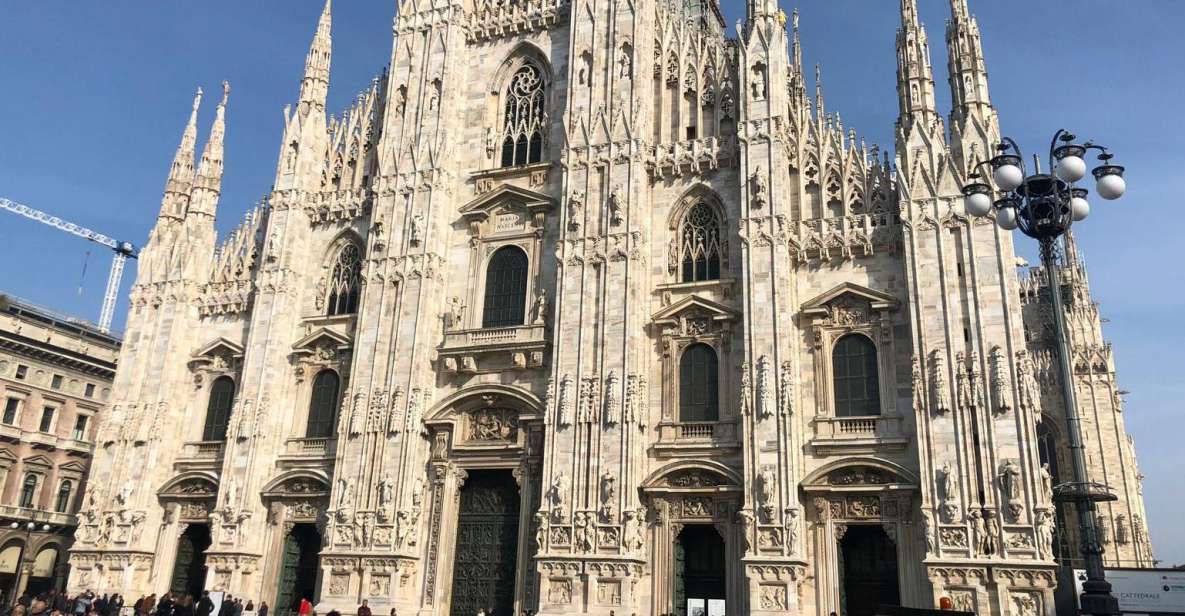
- Duomo Square and Duomo di Milano: iconic Gothic, with one important limit
- Price and value: what you’re paying for at $191.45
- Guides and storytelling: where the tour really earns points
- Who should book this tour (and who might skip)
- Should you book this Milan small-group Last Supper tour?
- FAQ
- How long is the Milan small-group walking tour with Last Supper access?
- Is the group actually small?
- Do I need to bring ID?
- Is entrance to The Last Supper included?
- Is Duomo entry included?
- What language is the tour guide?
Key things that make this tour worth your time
- Skip-the-line Last Supper entry for a focused, short stay with fewer people
- San Maurizio al Monastero Maggiore fresco rooms (ceiling and walls, not just a quick glance)
- San Satiro and Bramante’s perspective trick that makes a small space feel bigger
- Piazza degli Affari stops you might miss on your own, including L.O.V.E. by Maurizio Cattelan
- English guide + tight group size (6 max) keeps the walking tour feeling personal
- Coffee tasting at a local café breaks up the route before the Duomo area
Why the Last Supper access is the whole point
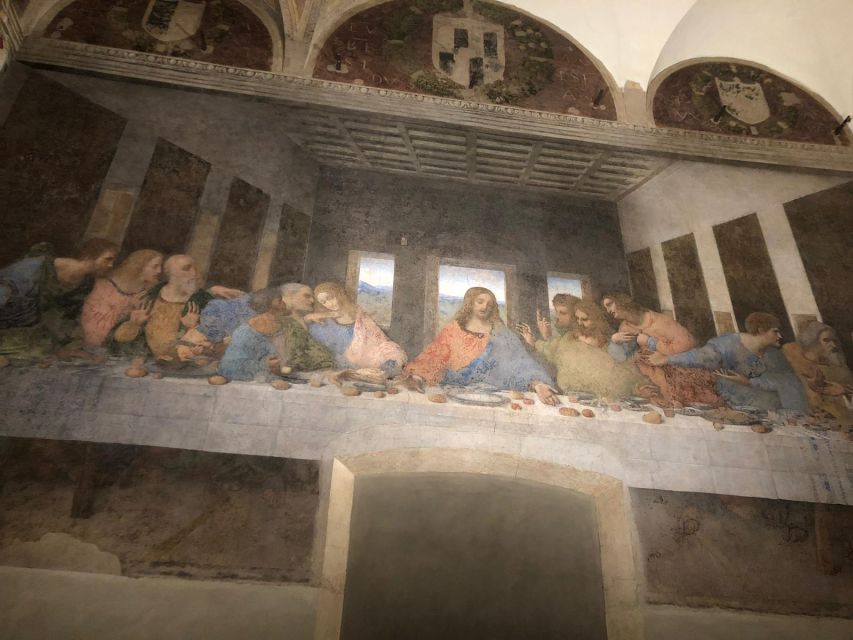
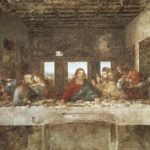
Let’s be blunt: The Last Supper is the reason most people come to this part of Milan. And that makes the format matter. This tour gives you entrance to Leonardo da Vinci’s mural at Santa Maria delle Grazie with skip-the-line handling through a separate entrance. That reduces the biggest headache in Milan for this attraction: time lost to queues.
I also like that you’re not shoved through in a blur. The setup is designed so you can actually see the painting up close, and the experience is kept to a small number of visitors in the room at a time. With a guide explaining what you’re looking at, you’re more likely to notice why this mural is so talked-about in the first place—composition, symbolism, and the way Renaissance art communicates ideas without spelling everything out.
One more thing: don’t treat this like a casual stop. The Last Supper visit requires a valid picture ID for ticket validation. Bring the original document or a photocopy. If you show up without it, your day can get messy fast.
You can also read our reviews of more walking tours in Milan

The 3-hour walking format: efficient, not exhausting
This is a 3-hour small-group walking tour, with a limit of 6 participants. That small number changes everything. You’re more likely to stay together, ask questions, and hear the guide without everyone shouting over everyone else.
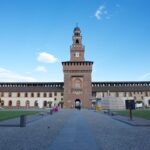
You also get a clear route that keeps you moving through key Milan areas without turning your day into a logistics puzzle. You’ll start near the Last Supper ticket area in Piazza Santa Maria delle Grazie (the itinerary also references Studio Legale Scaffa as a starting reference point). After the art stops, you move into the city’s commercial side around Piazza degli Affari, then transition toward the Duomo area.
Comfort tip: wear shoes you trust for continuous city walking. This is not a “hop in a van and pop out” tour. The payoff is that you see Milan as a real place, not just a list of indoor ticket sights. There’s also a local café stop along the way with a coffee tasting, so you’re not stuck walking on empty.
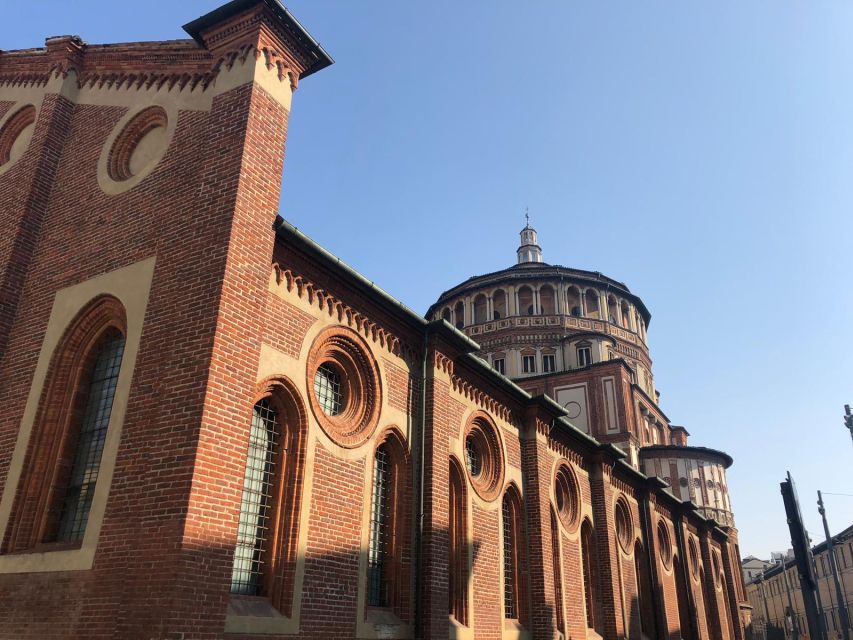
Santa Maria delle Grazie: seeing The Last Supper the right way
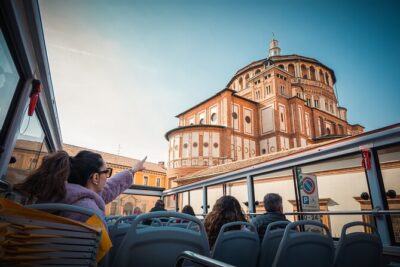
Your tour begins at the convent of Santa Maria delle Grazie, home of The Last Supper. This matters because the mural isn’t just a painting you view in a museum-like setting. It’s tied to the building and the viewing rules, so timing and controlled access are part of the experience.
With the guide, you’ll get help turning the mural from something you’ve seen in books into something you can read visually. The tour format is built around the moment you enter the room: look carefully, listen to the story, and notice how the work’s details hold up under real-world viewing conditions.
Also, the “handful of other people” approach makes the experience more respectful of your attention. If you hate crowded attractions where you can’t see anything, this is one of the few ways to do this sight without losing the plot.
San Maurizio al Monastero Maggiore: the Sistine Chapel feeling
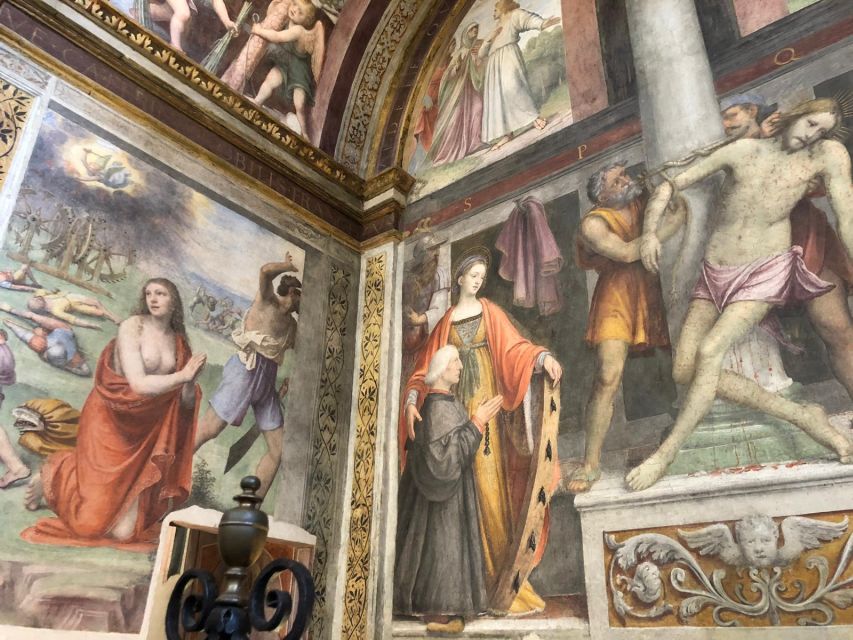
After The Last Supper, the tour heads to San Maurizio al Monastero Maggiore, one of Milan’s best art stops that doesn’t always get the same attention as the Duomo.
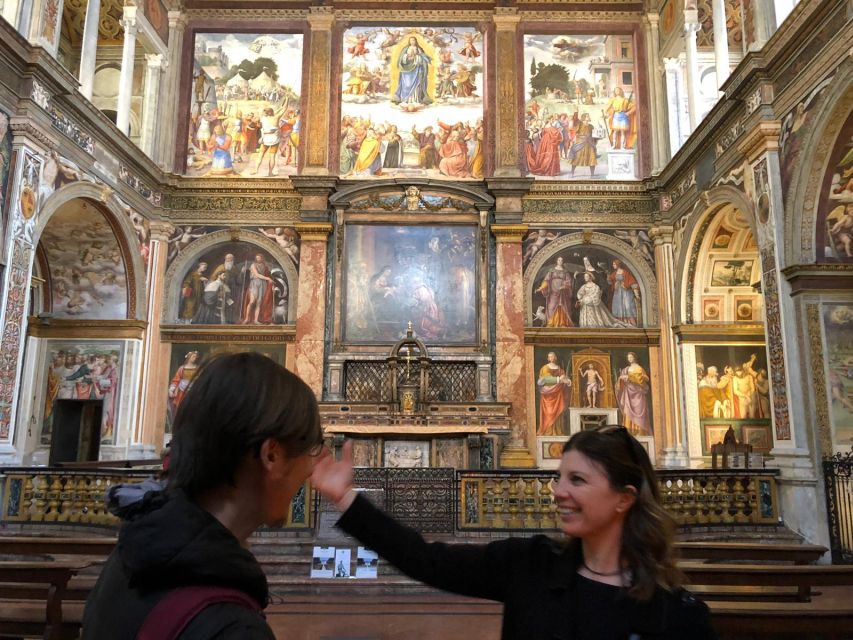
Here’s what makes it special: you’ll see spectacular 16th-century frescoes across both the ceiling and walls. That’s a big difference from churches where you glance at one altar area and move on. This one asks you to look up and all around.
The guide also connects the fresco program to the life and death of Santa Caterina, whose stories inspired the chapels inside the church. You’ll also hear about Luini frescoes, which helps make the artwork feel less like decoration and more like part of a larger spiritual and artistic project.
People love describing this church as the Sistine Chapel of the north of Italy, and that label isn’t just marketing. The sense of painted space—where the decoration becomes an environment you stand inside—comes through when you’re guided to the right sections and given a reason to care about the ceiling as much as the walls.
If you’re an art lover with limited time in Milan, this stop alone can justify choosing a guided format. Going in without context can leave you thinking you saw a pretty ceiling. With the guide, you leave with a clearer understanding of what you saw and why it was made.
Piazza degli Affari: where Milan shows its money brain
Next is a shift in mood. Piazza degli Affari is Milan’s financial district, and the tour uses this area to explain the city’s mix of modern commerce with older layers underneath.
The guide talks about beginnings dating to 1808, which gives you a timeline for why this area matters beyond today’s office buildings. Then you’ll also hear about Emperor Augustus’ reign, connecting the city’s more ancient Roman identity to the present-day rhythm.
This is also where you encounter a piece of modern public controversy: Maurizio Cattelan’s L.O.V.E. The tour notes that it’s known to many Milanese as Il Dito—their shorthand reference to its meaning. Even if you don’t love edgy contemporary art, the stop is useful because it shows how Milan can be both traditional and willing to provoke conversation in public space.
I like that this segment prevents the tour from feeling like “all churches, all the time.” It gives you a street-level view of what’s driving the city now—fashion, finance, and local folklore rubbing shoulders.

San Satiro: Bramante’s perspective trick you can feel
Then you land at San Satiro, designed by Bramante, who also worked on St Peter’s Basilica in Rome. That connection helps frame why architects in the Renaissance era cared so deeply about illusion and perspective.
This stop is famous for an optical effect: the church uses perspective in an innovative way for its time. The guide walks you through what you’re seeing so you understand the trick instead of just guessing at it. The result is the kind of “wait, how did they do that?” moment that makes architecture feel like magic rather than stone.
If you like design details, this is a great place to slow down. And if you’re the type who takes photos, you’ll likely want a couple of angles, because the effect tends to change as you move.
Duomo Square and Duomo di Milano: iconic Gothic, with one important limit
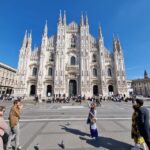
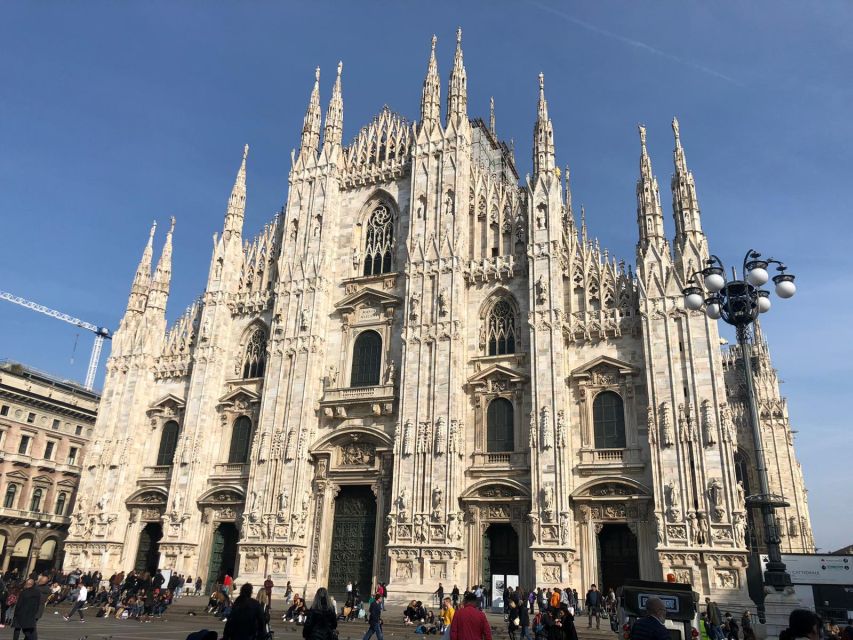
Your route culminates in the Duomo area, starting with Duomo Square and finishing near Duomo di Milano. This is the heart of Milan’s city center, and it connects back to the Roman era name Mediolanum.
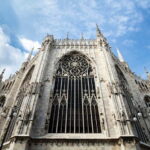
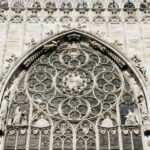
The guide explains the cathedral’s Gothic architecture and the long build timeline: construction was under Archbishop Antonio da Saluzzo, and it took nearly 600 years to finish. That kind of timescale changes how you read the building. It’s not one single design meeting; it’s layers of effort, taste, and engineering stretched across generations.
One key detail: entrance to the basilica is not included. So plan accordingly. You’ll get the big exterior views and the story of the church and square, but if you want to walk inside, you’ll need separate tickets and extra time on your schedule.
If you’re short on time and you’re still deciding where to spend money, consider this: the tour already includes a major high-cost, high-demand ticket sight (The Last Supper). The Duomo is a classic, but choosing a separate interior visit lets you control the pace and cost based on your interests.
Price and value: what you’re paying for at $191.45
At $191.45 per person, this tour isn’t cheap. But the value isn’t just “a walking guide.” You’re paying for:
- Entrance to The Last Supper (with access rules and ticket validation)
- Skip-the-line handling through a separate entrance
- A professional English guide who ties sites together into one coherent story
- A small group size (6 max), which matters for timed-entry attractions
The biggest value advantage is that timed ticket attractions are where self-guided plans often break down. In Milan, getting to the right place at the right moment is half the battle. This tour reduces the friction and replaces it with guided attention.
The main value trade-off is also clear: Duomo interior tickets are not included. If the inside of the cathedral is your top priority, you may spend more later anyway. But if your goal is to see Milan’s top sights in a smart, guided route—starting with Leonardo—you’re likely to feel like the price matches the access.
Guides and storytelling: where the tour really earns points
This experience lives and dies on guide quality. The tone from guides like Barbara, Larissa, and Elisa comes through in how they explain what you’re seeing. The common thread in their approach is clear communication: they connect the Last Supper and the surrounding artworks to specific stories and place details in a way you can actually remember later.
I especially like when a guide doesn’t treat the walk as a checklist. When you hear context—why a church is famous, what an artist did, why a square matters—you stop thinking of Milan as “just buildings” and start thinking of it as a city where art, power, and everyday life overlap.
And the coffee stop helps keep the tour human. It’s a small pause that makes the last stretch toward the Duomo feel less like a sprint.
Who should book this tour (and who might skip)
This tour is a strong fit if you:
- Want The Last Supper without the stress of figuring out access
- Appreciate guided interpretation at major art stops, especially fresco-heavy churches
- Like a route that mixes art + architecture + city culture, not just one theme
- Prefer smaller groups so you can hear the guide and see what’s in front of you
You might skip it if:
- You mainly want free time to wander without a schedule
- You’re not interested in churches and murals, even if you’re curious about Milan in general
- You’re specifically aiming for only Duomo interior time, since basilica entrance isn’t included
Should you book this Milan small-group Last Supper tour?
If you’re visiting Milan for a short time, I’d book it. This is one of those rare tours where the ticketed highlight is the start of the story, not an add-on. The small group limit, skip-the-line Last Supper access, and the follow-up stops—San Maurizio’s frescoes, San Satiro’s perspective effect, and Duomo Square—make it a smart use of a half-day.
If you’re willing to plan around the ID requirement and accept that the Duomo interior needs separate tickets, you’ll likely get a smooth, high-value introduction to Milan’s art side and its city pulse.
FAQ
How long is the Milan small-group walking tour with Last Supper access?
The tour lasts about 3 hours.
Is the group actually small?
Yes. It’s limited to 6 participants.
Do I need to bring ID?
Yes. A valid picture ID is required to validate your Last Supper ticket. A photocopy is also accepted.
Is entrance to The Last Supper included?
Yes. Entrance to the Last Supper is included, and you’ll use a separate entrance to skip the line.
Is Duomo entry included?
No. Entrance to the Duomo is not included.
What language is the tour guide?
The tour is conducted in English by a live guide.