REVIEW · MILAN
Milan: Highlights and Secret Treasures walking tour
Book on Viator →Operated by World Travel Guide · Bookable on Viator
A city like Milan can feel big and busy fast, but this walk helps you get your bearings without sprinting. I like that the route strings together major landmarks and smaller stops with clear context, so you actually understand what you’re looking at. I also like the small-group feel, where a guide can keep an eye on the pace and answer questions as you go.
One thing to consider: not every stop is guaranteed to be fully accessible from the outside, and some sights list admission as not included. If you’re the type who wants to go inside everything, you may need to budget extra time and a bit of extra money.
In This Review
- Key highlights to look for
- Piazza Fontana to Sforza: Why this route works
- Piazza Fontana: ancient waterworks, immediate orientation
- San Bernardino Alle Ossa: when Milan gets quietly unusual
- Ca’ Granda and Torre Velasca: big names, clear takeaways
- Piazza Missori and Santa Maria presso San Satiro: churches you remember
- Piazza San Sepolcro and the Ambrosiana library: Roman roots in a modern city
- Piazza Affari and the finger monument: business district with personality
- Chiesa di San Maurizio al Monastero Maggiore: the Renaissance interior that earns the hype
- Piazzale Luigi Cadorna: the colorful station break
- Castello Sforzesco: ending where the story tightens
- The guide is the real differentiator (Elisa, Alexa, and the Q&A style)
- Price and value: what $119.21 gets you
- When the weather and access matter
- Who should book this tour
- Should you book Milan: Highlights and Secret Treasures?
- FAQ
- How long is the Milan Highlights and Secret Treasures walking tour?
- Where does the tour start and end?
- What languages are offered?
- Is this tour private?
- Are admission tickets included?
- What happens if the weather is bad?
Key highlights to look for
- Small-group focus and real Q&A time so you’re not stuck just listening and moving.
- A carefully mapped route that moves from ancient Milan to the Renaissance without feeling rushed.
- Tucked-away churches and standout interiors paired with quick exterior highlights.
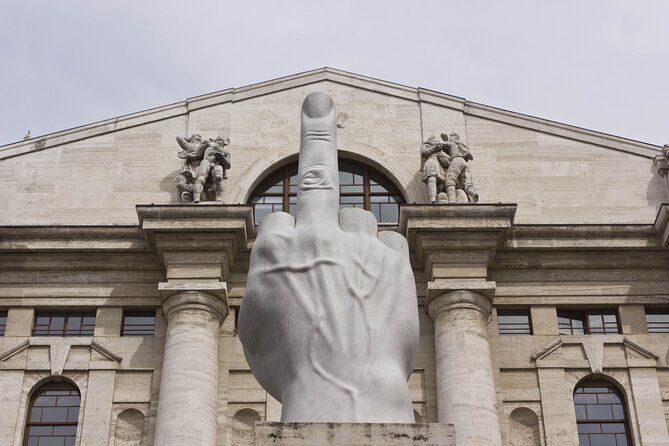
- Stock-exchange area surprises, including the famous finger monument mentioned by guide-led visits.
- A guide-led rhythm that’s easy to follow, with short stops (often 5–20 minutes) that keep energy up.
- Strong value for guided orientation, especially if you book early since departures are often filled.
Piazza Fontana to Sforza: Why this route works
This tour starts at Piazza Fontana, right in the center of the action. From the first stop, the idea is simple: give you a fast overview of Milan’s layout and explain why these specific places matter. You’re not just ticking off photos; you’re learning what role each area played in how the city grew.
The pacing is also smart. You get a series of short visits—many are around 5 to 20 minutes—so you can actually look, not just walk by. For a 3-hour experience, that structure matters. It helps you absorb details, and it helps your guide keep the conversation going.
And there’s another practical win: it’s offered in English, and your guide is available in English, French, and Italian. That multilingual set-up is useful if you’re traveling with mixed-language friends or if you want to ask clarifying questions.
You can also read our reviews of more walking tours in Milan


Piazza Fontana: ancient waterworks, immediate orientation
Your first moment is Piazza Fontana, featuring the most ancient fountain in Milan. This is a nice opener because it frames the city beyond the usual modern postcard view. You start with something old, but still right where people gather.
The stop is short—about 10 minutes—and admission isn’t included. That means you’re mostly observing rather than committing to a separate ticketed entry. For many people, that’s perfect. You’re getting context before your feet start clocking real distance.
San Bernardino Alle Ossa: when Milan gets quietly unusual
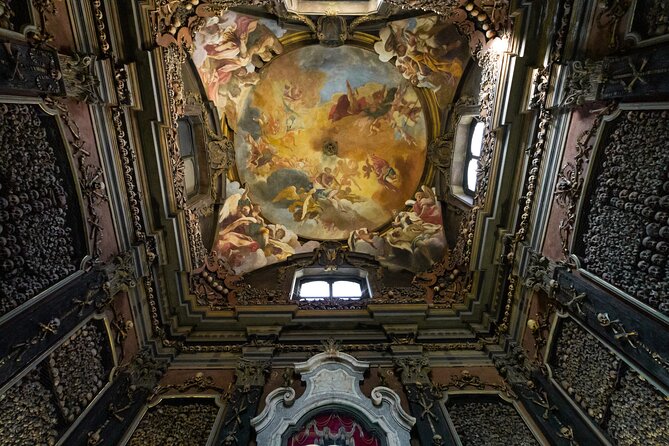
Next comes Santuario di San Bernardino Alle Ossa. The tour description calls it San Bernardino, and it lists admission as free. This is the kind of stop that makes a walking tour feel worth it, because it’s not the big, loud headline everyone knows before they arrive.
A free stop also helps your budget, and it keeps the walking experience feeling balanced. You’re building the story of Milan through contrasts—public squares, religious spaces, then forward into major buildings.
It’s only about 15 minutes, so you’ll see the essentials without turning this into a long sit-down. If you like places that feel a little offbeat, this is one of the moments where the tour earns its 5-star rating energy.
Ca’ Granda and Torre Velasca: big names, clear takeaways

Then you move to Visita della Ca’ Granda. Ca’ Granda is a stop where admission isn’t included. The timing is about 15 minutes, so expect a focused look and explanation rather than a full interior visit.
After that, Torre Velasca appears for about 5 minutes. The description calls it the most central skyscraper in Milan, and again admission isn’t included. Even with that quick stop, it’s useful because it shows you the city isn’t only medieval and Renaissance. Milan grew into modern identity too, and this is a snapshot of that shift.
Piazza Missori and Santa Maria presso San Satiro: churches you remember
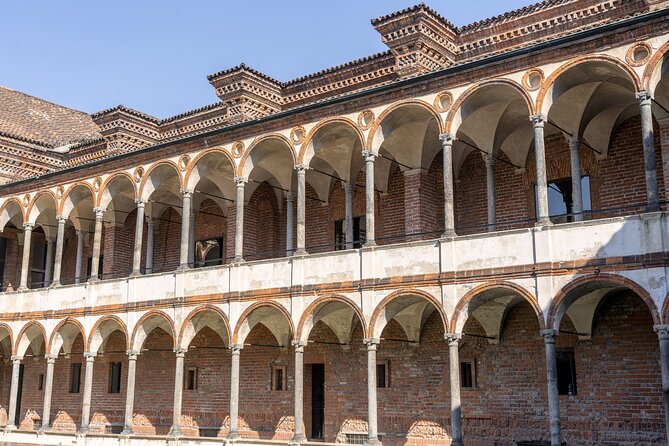
Piazza Missori is next, with a mention of the remainings of San Giovanni in Conca Church. Admission isn’t included here either, which likely means you’re seeing remnants and learning how the area changed over time. It’s a good pause because it slows the tour just enough for photos and reflection.
Then you get to Chiesa di Santa Maria presso San Satiro, with about 20 minutes on the schedule and admission listed as free. The tour calls it Santa maria presso San Satiro. Free churches are a gift on a paid walking itinerary. You’re not stuck paying for every stop, and you still get something meaningful.
Also, this is where the guide-led storytelling matters most. Churches can look similar at first glance, but a good guide ties each location to what Milan valued—religion, power, art, and how people lived around these spaces.



Piazza San Sepolcro and the Ambrosiana library: Roman roots in a modern city
Piazza San Sepolcro brings you to the old Roman Forum of Mediolanum, plus the Ambrosiana library connection. Admission isn’t included for this stop, and it’s about 10 minutes.
This is a strong pivot point. You’re moving from religious architecture to the earlier layers of city life—Rome-era Milan—and then forward toward later cultural institutions. If you’ve ever felt lost in Milan’s timeline, this kind of stop helps you build a mental map.
At just 10 minutes, you won’t get every detail, but you’ll get enough structure to connect what you saw earlier to what you’ll see later—especially when the walk ends near Sforzesco Castle.
Piazza Affari and the finger monument: business district with personality
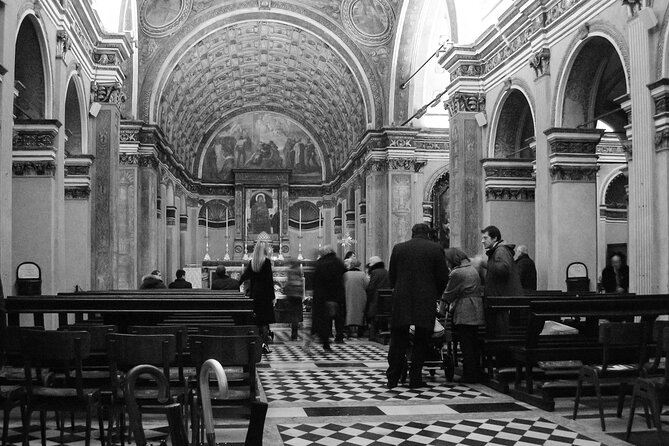
Then the tour heads toward Piazza Affari, the business and financial district of the city. Admission isn’t included here, and the stop is around 10 minutes. This is the part where Milan shows a different face: money, finance, and modern power.
And yes, there’s that provocative monument—the finger—mentioned in guide-led experiences. If you like moments that feel a little theatrical or surprising, this is the stop that gets people smiling. It’s one of those pieces of public art that becomes a story you remember later.
This segment also helps because it breaks up the day. After churches and older structures, you get the sense that Milan runs on contrast: sacred and serious, then modern and slightly cheeky.
Chiesa di San Maurizio al Monastero Maggiore: the Renaissance interior that earns the hype
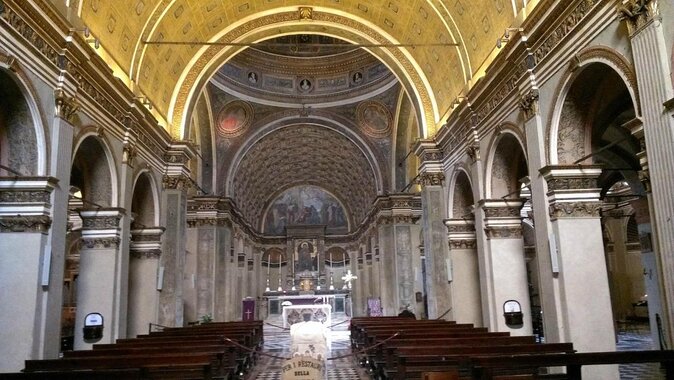
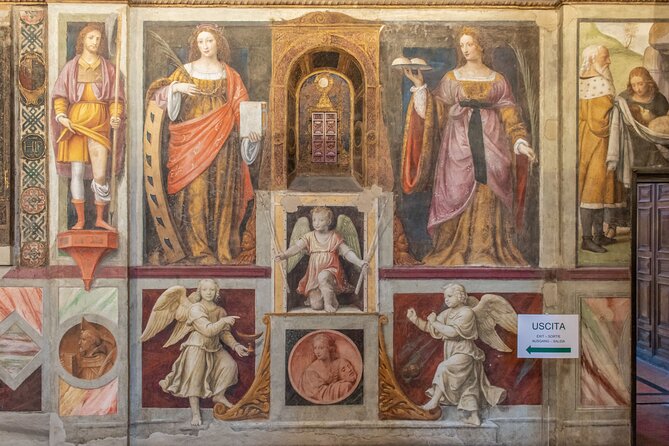
Next comes Chiesa di San Maurizio al Monastero Maggiore. The tour description calls it the Sistine Chapel of Milan and notes it as a Renaissance highlight, with admission listed as free. You’re there for about 20 minutes.
This is one of the best stops on paper and, based on the guide quality people highlight, also one of the best stops in real life. A free ticketed-feeling stop on a walking tour is a big deal. It gives you an interior moment that feels like a reward without requiring extra spending.
Timing here is important. Twenty minutes is long enough to actually take it in. It’s not so long that it drains the rest of your energy. And since the tour is designed as a walk-first experience, this is the kind of stop that balances architecture and story.
Piazzale Luigi Cadorna: the colorful station break
Then you hit Piazzale Luigi Cadorna. The tour calls it the most colourful train station, with about 5 minutes here and admission not included.
This stop is brief, but it matters for logistics and mood. Stations and transit hubs are where you see how people move through a city. Even in a short segment, it makes the tour feel anchored in real Milan life, not only museum Milan.
After that, you’re building toward the final touchdown: Sforzesco Castle.
Castello Sforzesco: ending where the story tightens
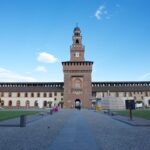
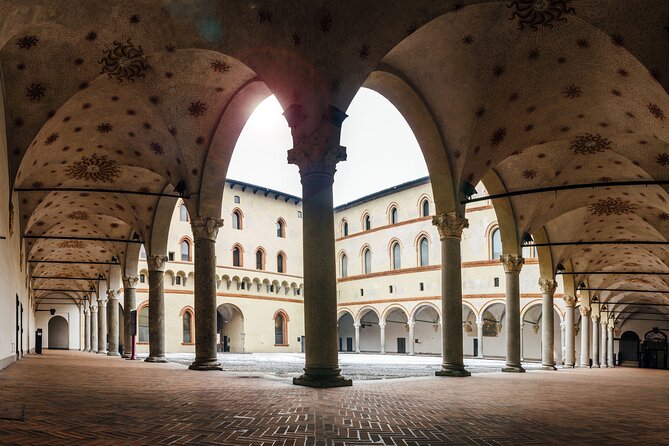
The tour finishes at Castello Sforzesco. It’s scheduled for about 20 minutes, admission listed as free. The tour notes you’ll go around and through the three courtyards of the ducal fortress and residential palace associated with the Renaissance Sforza family.
This is a satisfying ending because it’s both grand and legible. A castle-courtyard walk gives you space to look up, look around, and feel the scale. Three courtyards also add variety in a short time—so you aren’t stuck seeing only one angle.
And because it’s a free stop on the tour, it helps the overall value. You end with a big visual payoff without the day feeling like it turned into an expenses list.
The guide is the real differentiator (Elisa, Alexa, and the Q&A style)
The biggest reason this tour gets such strong reviews is the guide. People highlight that guides like Elisa and Alexa bring energy, a clear knowledge of Milan, and the confidence to answer questions. That matters because Milan’s sights can be confusing without someone pointing out what you should notice.
I also appreciate the approach described: informative, but not intense. The pacing feels pressure-free, with time to ask things and not just follow a set script. In practical terms, that’s what makes a walking tour feel like a conversation, not a relay race.
One more detail people remember: the tour seems to encourage small food moments. Mentions of the best bakery and the best gelato show up in guide-led experiences, plus the guide-led look at the finger monument at the stock exchange area. That’s a nice reminder that a great guide doesn’t only talk history. They help you live the trip.
Price and value: what $119.21 gets you
At $119.21 per person for about 3 hours, this isn’t a budget stroll. But it also isn’t priced like a high-end private car tour. The value comes from what you get packaged together:
- A guided route that covers a lot of Milan in one logical walk
- A multilingual guide setup (English with French and Italian at your disposal)
- A format designed for small-group attention and time to ask questions
- Several stops with free admission listed along the way
The main value check is admissions. Some stops list admission as not included. If you’re hoping to enter every site, you may pay extra. If your goal is to understand Milan and see what you can from the route, the listed free stops help keep the day feeling fair.
Also, the tour is often booked about 31 days in advance on average. That’s a hint that you shouldn’t wait until the last minute if your dates are firm. A busy city + limited spots + a route that people love often equals sellouts.
When the weather and access matter
This experience requires good weather. If conditions aren’t right, it may be canceled with an offered different date or a full refund. So it helps to check forecasts the day before.
Access can also affect what you can fully see. One highlight from guide-led experiences is that not every underground or more restricted area can always be accessed because of restrictions. Even when that happens, the tour route still aims to show plenty of sight and story above ground.
If you’re traveling with patience and flexible expectations, that turns into a non-issue. If you’re trying to force a perfect checklist, it can feel annoying. Think of the tour as guided orientation plus memorable interiors where available.
Who should book this tour
This tour fits best if you want:
- A guided Milan overview that doesn’t ignore quieter places
- A route that mixes major landmarks with smaller churches and squares
- A guide-led pace where you can ask questions
- A finish at Castello Sforzesco that feels like a real wrap-up
It might be less ideal if you want hours of free time to roam on your own, or if you only care about a few famous attractions and nothing else. For that kind of trip, a self-guided approach could be cheaper.
But if you like structure and you want Milan to make sense, this walk does a lot right.
Should you book Milan: Highlights and Secret Treasures?
I’d book it if you’re spending a limited number of hours in Milan and want to leave with a clearer sense of the city’s timeline—from Roman-era references to Renaissance power and modern Milan’s business district. The route’s mix of free interior moments and exterior orientation is a good balance for a short stay.
Skip it if you’re already comfortable planning your own route through churches and monuments, or if you’re determined to see only specific ticketed interiors. Also, if you’re traveling in marginal weather, you’ll want to be ready for schedule changes.
FAQ
How long is the Milan Highlights and Secret Treasures walking tour?
It runs for about 3 hours.
Where does the tour start and end?
It starts at Piazza Fontana, 20122 Milano MI, Italy, and ends at Sforzesco Castle, Piazza Castello, 20121 Milano MI, Italy.
What languages are offered?
The guide is available in English, French, and Italian.
Is this tour private?
Yes. Only your group participates.
Are admission tickets included?
Admission is not included for sights marked as not included. Some stops are listed as free, and others are not.
What happens if the weather is bad?
The tour requires good weather. If it’s canceled due to poor weather, you’ll be offered a different date or a full refund.