REVIEW · MILAN
Milan: Best of the Highlights Walking Tour
Book on GetYourGuide →Operated by Ways Tours | B Corp company · Bookable on GetYourGuide
Milan can feel huge, but this short walk keeps you focused. You get top highlights in about 2 hours, guided by a local who explains what you’re actually looking at, not just where to take photos. I especially like that the route links old-world Milan with today’s design and fashion energy.
Two things I come away appreciating: the pull of Castello Sforzesco as more than a pretty stop, and the way the tour uses the city’s layout to teach you how Milan grew. By the time you reach the Duomo area, the Gothic cathedral doesn’t feel like an isolated landmark.
One drawback to consider: it’s a rain-or-shine walking tour, and some parts may be tough if you have reduced mobility. If you need step-free routes or lots of wheelchair-friendly surfaces, it’s smart to check in first.
In This Review
- Key Highlights You’ll Feel on the Walk
- A 2-Hour Milan Walk That Actually Makes Sense
- Piazzale Luigi Cadorna: The Symbolic Start You’ll Remember
- Castello Sforzesco: Fortress Views With Real Cultural Context
- Piazza Affari and the Financial District Mood Shift
- Piazza dei Mercanti: Medieval Milan in a Small Area
- Scala Opera House and the Galleria Vittorio Emanuele II
- Finishing in Piazza Duomo: Gothic Details You Can Actually Read
- Price and Value: What $44.41 Buys You in 2 Hours
- Who Should Book This Walk (and Who Should Rethink It)
- Should You Book This Milan Highlights Tour?
- FAQ
- How long is the Milan Best of the Highlights Walking Tour?
- Where do I meet the guide?
- Is the tour in English?
- Does the price include food or drinks?
- Do I need pickup or drop-off?
- Is the tour guaranteed to run?
- Is it wheelchair accessible?
Key Highlights You’ll Feel on the Walk
- Needle, Thread and Knot as your symbolic start point near Piazzale Luigi Cadorna
- Castello Sforzesco framed as a fortress that became a cultural hub
- Piazza Affari for the financial district vibe and its central statue
- Piazza dei Mercanti for a medieval square with well-preserved structures
- Galleria Vittorio Emanuele II and its glass-and-iron arcades
- Piazza Duomo to finish with the Duomo’s Gothic details in your sights
A 2-Hour Milan Walk That Actually Makes Sense
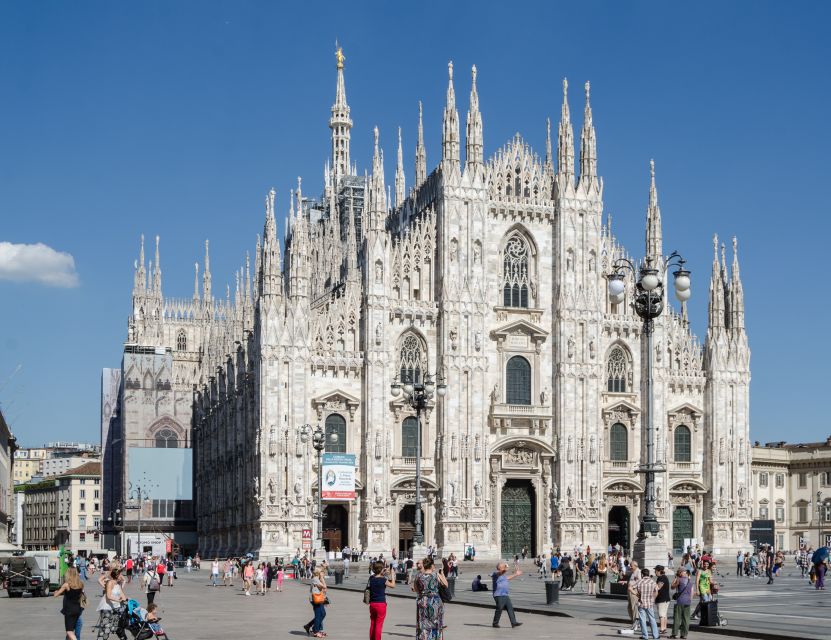
If you only have a morning or early afternoon, this tour is built for you. Milan’s famous sights are spread out enough that a self-guided plan can get messy fast. Here, the pace is tight on purpose: you move city-center to city-center, so you can see big names without losing the thread.
What I like most is the tone of the experience. It’s not “stand here, read this plaque.” You’ll be guided through a story of Milan—how the medieval core, the artistic legacy, and the modern identity fit together. And because it’s a live English guide, you can usually ask quick follow-ups when something clicks.
The route also gives you variety in a short span: fortress exterior views, a financial plaza, medieval streetscapes, and that iconic shopping gallery. That mix is ideal if you want a quick orientation before you explore on your own later.
You can also read our reviews of more walking tours in Milan


Piazzale Luigi Cadorna: The Symbolic Start You’ll Remember
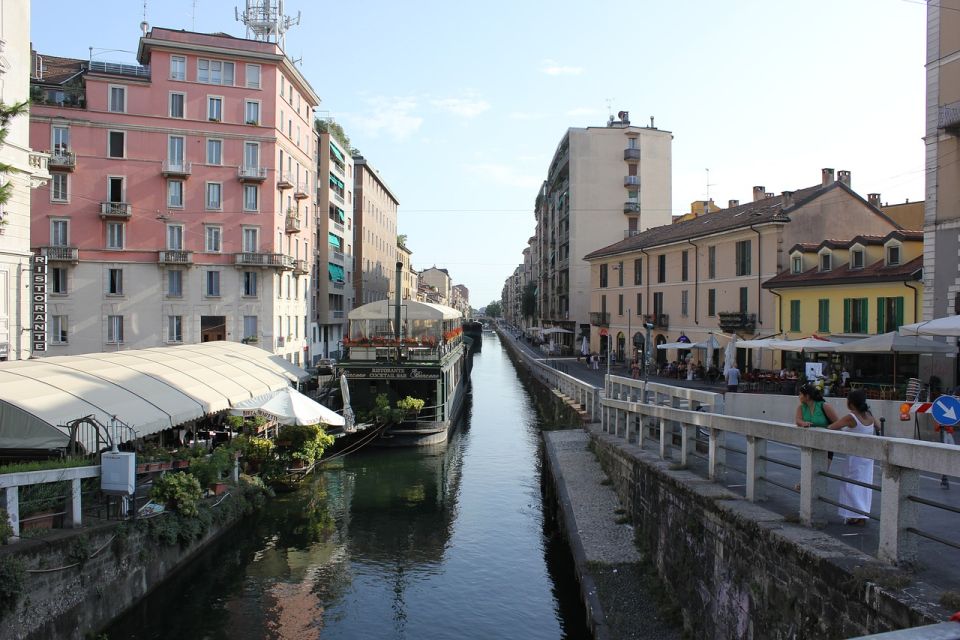
The tour meets at Piazzale Luigi Cadorna, right under the Needle and Thread sculpture, where the guide holds a yellow sign marked Tour. That little detail matters because it helps you orient fast. You’re not hunting for a meeting point while your group’s already moving.
The sculpture itself is a neat first clue to Milan’s mindset. The theme—thread, needle, knots—fits the city’s tradition of craft and precision. It also sets up what the tour keeps repeating: Milan is not one thing. You’ll see innovation and tradition operating side by side, even when the sights feel very different.
From this starting point, you’re launched into an efficient walk through the center. And because the tour returns to the meeting point at the end, you don’t have to solve your own “how do I get back” puzzle.
Castello Sforzesco: Fortress Views With Real Cultural Context
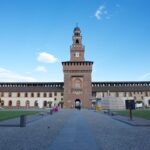
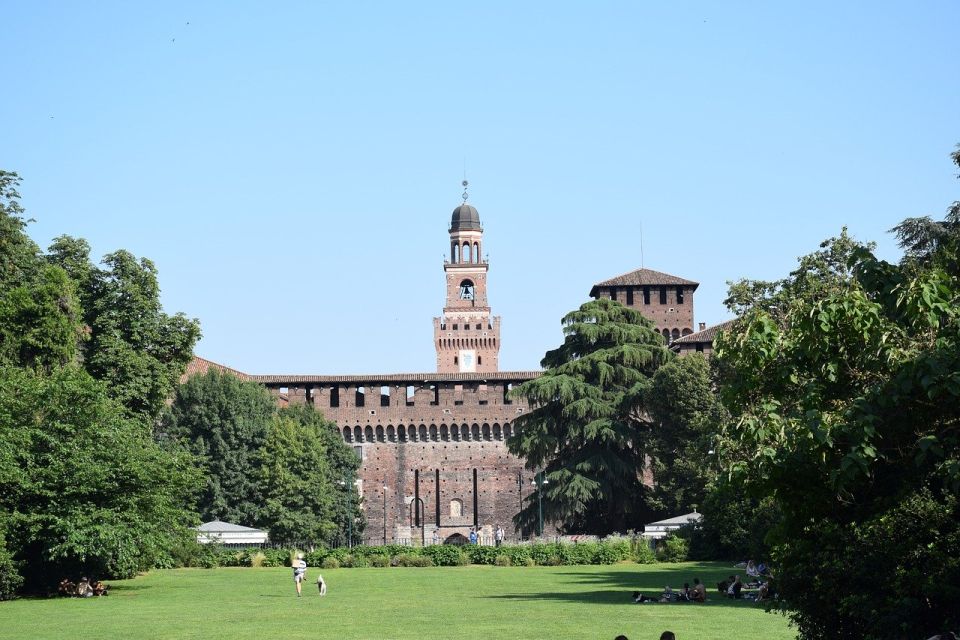
The first major stop is Castello Sforzesco, a medieval fortress. Even if you don’t go inside, the exterior can still feel powerful—thick walls, a sense of authority, and the feeling of a city built around defenses.
What makes this stop work on a highlights tour is the explanation. You’ll learn how the castle evolved into a cultural hub, known for masterpieces connected with artists like Michelangelo and Leonardo da Vinci. That context changes the way you look at the place. Instead of treating it like a static monument, you start seeing it as part of Milan’s larger shift toward art, learning, and prestige.
A practical note: because you’ll be seeing this primarily from the outside, you won’t get the same depth as a ticketed museum visit. But for a 2-hour route, the payback is big—you get the mood and the story without stretching your time budget.
Piazza Affari and the Financial District Mood Shift
Next comes Piazza Affari, famous for its central statue and its role as the center of Milan’s financial district. This is the moment the tour reminds you that Milan is also a working city, not just a postcard machine.
What I find useful here is the contrast. You move from a medieval fortress’s aura to a plaza tied to modern business. That shift helps you understand Milan’s rhythm: old stone and new ambition share the same streets.
In terms of your experience, this segment is less about lingering and more about noticing. Look at the way the square works as a focal point, then carry that observation into the next stops, where the tour leans more toward the medieval street scale.
Piazza dei Mercanti: Medieval Milan in a Small Area
Then you arrive at Piazza dei Mercanti, a medieval square that feels like a time capsule. It’s one of those places where your instincts kick in: the scale is different, and the architecture gives you a stronger sense of how the city organized itself before modern planning took over.
Here, you’ll get to admire preserved medieval structures, including the Palazzo della Ragione. That’s a great stop for understanding that Milan had real civic power long before the Duomo became the city’s image worldwide.
The value of this portion of the walk is that it makes the medieval section feel connected rather than random. Instead of seeing “a cool square,” you start to recognize patterns: plazas as meeting points, buildings as symbols of governance and identity.


Scala Opera House and the Galleria Vittorio Emanuele II
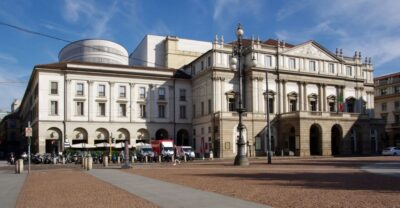
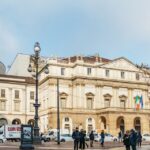
As you keep moving, you’ll pass by the Scala Opera House, also connected to the theater world—often referred to as the Temple of Opera. Even if you’re not stepping inside, the stop helps you frame Milan’s reputation in the arts, and it pairs nicely with what you heard at Castello Sforzesco about culture.
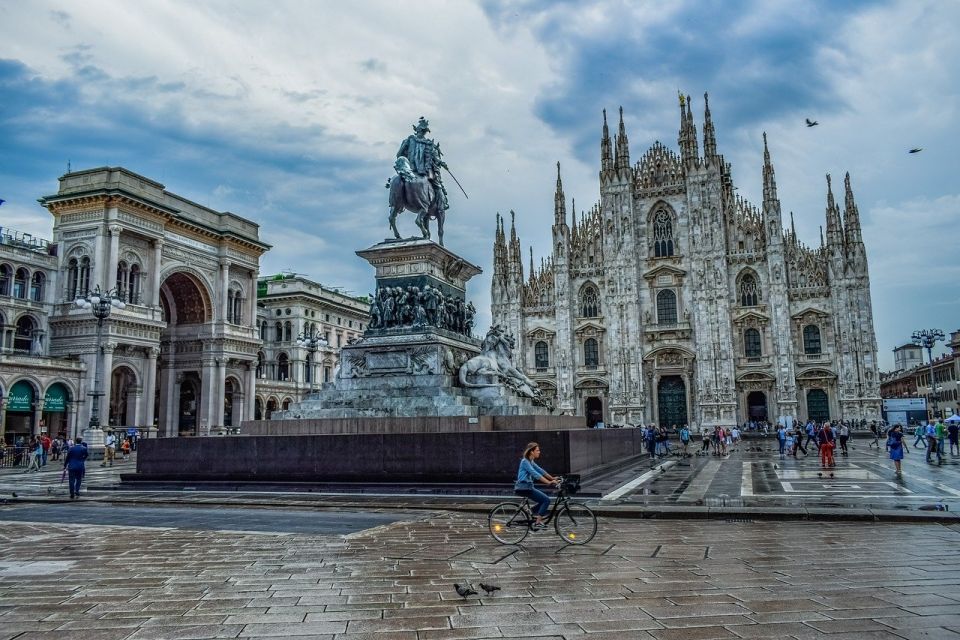
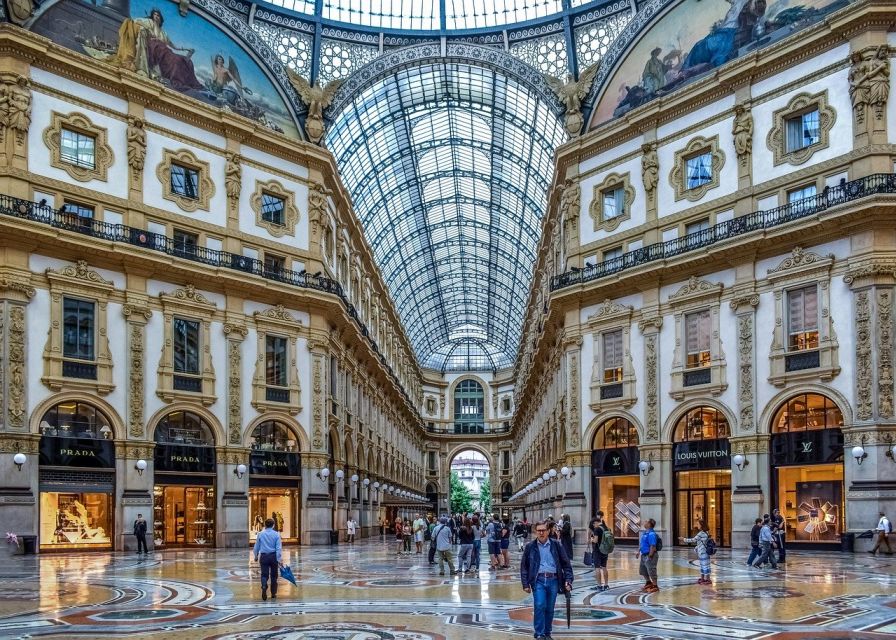
After that, the route brings you to Galleria Vittorio Emanuele II, one of Milan’s most famous shopping arcades. It’s the kind of place where you instantly notice the engineering: vaulted glass and iron arcades that turn a sidewalk into a covered spectacle.
This is also where the tour is a strong option for fashion and design lovers. You’ll see how Milan merges commerce with architecture—less “mall” and more “city room.” The walkthrough also helps you place the gallery within the larger urban story, rather than treating it as an isolated icon.
Practical consideration: this is a high-visibility area, so expect the flow of people around you. A guide helps you avoid getting stuck for too long in crowds.
Finishing in Piazza Duomo: Gothic Details You Can Actually Read
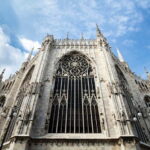
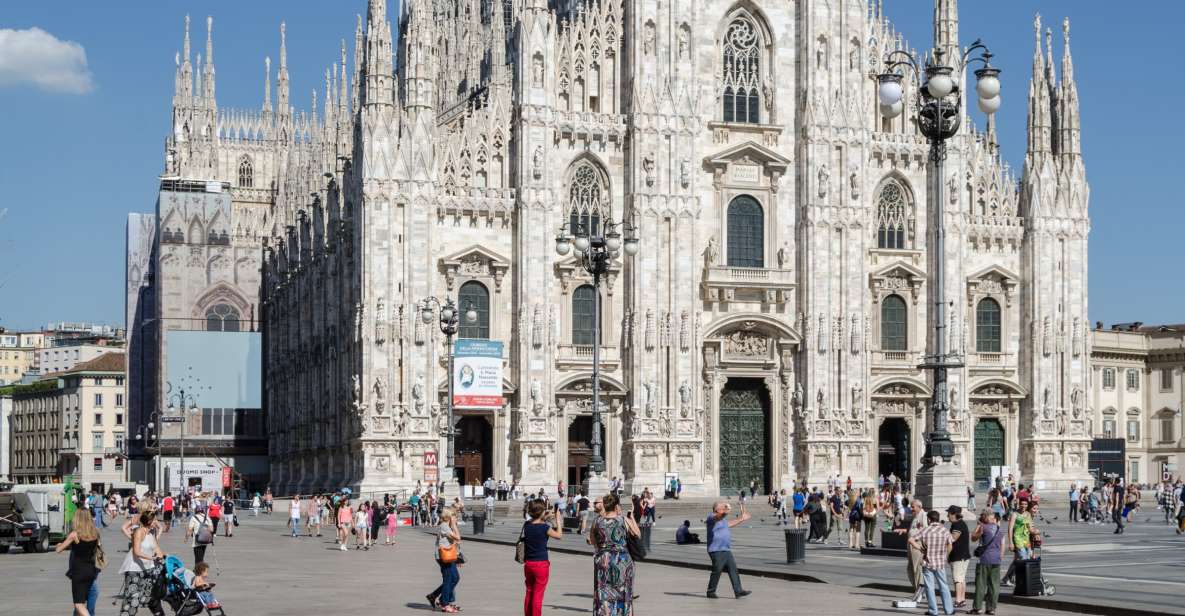
The tour ends at Piazza Duomo, dominated by the Gothic Cathedral of the Duomo. This is your grand finale, but it’s not just a final photo stop. Your guide points out details on the cathedral and the surrounding monuments, helping you see why the Duomo is such a visual obsession for locals and visitors.
The Duomo can look overwhelming at first—tons of statues, spires, textures. In a guided format, you get a way to focus: pick out the Gothic look, then learn what to notice so it doesn’t become visual noise.
By the time you reach this finish, the walking sequence matters. You’ve already seen the medieval feel near Piazza dei Mercanti, the cultural framing at Castello Sforzesco, and Milan’s modern contrasts near the financial district and the Galleria. So the Duomo lands differently: it feels like the culmination of Milan’s identity rather than a single stop you rushed past.
Price and Value: What $44.41 Buys You in 2 Hours
At $44.41 per person for a 2-hour guided highlight walk, the real question is value. You’re paying for three things: an English live guide, a curated route through multiple major landmarks, and time saved from figuring out the best order yourself.
You’re also getting a dense mix of Milan’s signature spaces: fortress exterior, medieval square, a finance plaza, a world-famous gallery, and the Duomo zone. For many visitors, that’s the difference between a “sightseeing walk” and an actual orientation. You get a framework for what you’ll want to explore later, even if you don’t add extra museum time during the tour.
The included part is simple—local guide—so if you’re expecting a lot of extras, don’t. Food and drinks are not included, so plan a quick snack or gelato before or after. (The good news: with a 2-hour duration, you’re not committing a full day to the guided portion.)
Who Should Book This Walk (and Who Should Rethink It)
I think this tour is a strong match for first-time visitors who want structure. If you like history explained in plain language, and you want a quick, efficient route through Milan’s central landmarks, this fits well.
It’s also a good option if you’re traveling solo or as a couple and want an easy way to get your bearings without doing a complicated map puzzle. The guaranteed format with a minimum number of participants means it’s designed to run when planned.
One more fit note: it’s not designed around very young kids traveling alone—unaccompanied minors aren’t allowed. And because some parts may be difficult for people with reduced mobility, you’ll want to think ahead if you rely on step-free access or need frequent seating.
If you’re a hardcore museum person who wants interior galleries and long ticket lines, you might treat this as a fast orientation step. For slower, deep-dive visits, you’ll still need additional time on your own.
Should You Book This Milan Highlights Tour?
If you want an efficient first look at Milan with a local English guide, this is a very sensible booking. I’d recommend it when you have limited time and you want the major “must-see” landmarks connected by a clear story—Castello Sforzesco, Piazza dei Mercanti, Galleria Vittorio Emanuele II, and the Duomo.
Book it especially if you enjoy learning what you’re seeing while you walk, not after you’re already tired. And if you’re lucky with your guide, you could get someone like Daniela—praised for being kind and intelligent, with history stories that stick.
Skip it if you strongly prefer fully ticketed museum experiences or you need a route designed around full step-free accessibility. In those cases, it’s better to choose a tour that matches your pace and mobility needs from the start.
FAQ
How long is the Milan Best of the Highlights Walking Tour?
It lasts about 2 hours.
Where do I meet the guide?
You’ll meet in Piazzale Luigi Cadorna, under the Needle and Thread sculpture. The guide will be holding a yellow sign that says Tour.
Is the tour in English?
Yes, the live guide speaks English.
Does the price include food or drinks?
No. Food and drinks are not included.
Do I need pickup or drop-off?
No pickup and drop-off are included. The tour starts at the meeting point and ends back at the meeting point.
Is the tour guaranteed to run?
It is guaranteed with a minimum number of 2 participants.
Is it wheelchair accessible?
Some parts may not be easily accessible for people with reduced mobility or disability. If you have specific needs, it’s worth contacting the provider to confirm details.