REVIEW · MILAN
Florence Renaissance and Medieval: Day Trip from Milano by High-Speed Train
Book on Viator →Operated by CAF Tour and Travel · Bookable on Viator
Florence in one day sounds impossible, but this train-and-walk plan makes it feel doable. I like that you start with an easy logistics setup—round-trip high-speed rail with seat reservation—then get a focused guided loop through the city’s key Renaissance and medieval landmarks. The payoff is a clear overview of Florence’s “why it matters,” not just a random hit list.
What I really like is the quality shape of the itinerary: short, well-chosen stops like Palazzo Medici Riccardi and Piazza della Signoria, plus real historical storylines instead of stand-and-stare photo time. You also get a long stretch to do your own thing—shopping, lunch at the Central Market area, or lingering in cafés—so the day doesn’t feel like one long guided chore.
One drawback to keep in mind: this is still a walking day in busy streets, and you must show up on time (train delays can make meeting the entry deadline tricky). If you hate crowds, or you’re dealing with mobility limits, you’ll want to think twice.
In This Review
- Key things to know before you go
- Milan to Florence by high-speed train: the real value
- Timing and the 7:00 am start: plan like a pro
- Palazzo Medici Riccardi: where Florence’s power starts
- Duomo time: what you see, and what the upgrade changes
- Dante’s streets and Orsanmichele: medieval Florence with sharp edges
- Piazza della Signoria: art, politics, and the porcellino moment
- Palazzo Vecchio and Ponte Vecchio: the “big scenes” route
- The long free chunk: how to use your 8 hours
- Walking and crowd reality: not a sit-down stroll
- Guides can make or break it (and here, they try hard)
- Price and value: is $198.68 fair for a full day?
- Who should book this day trip
- Should you book this Florence day trip from Milan?
- FAQ
- What is the duration of the Florence day trip?
- How do I travel between Milan and Florence?
- Is the tour in English?
- Does the tour include entry to the Florence Duomo?
- Where do I meet the tour in Milan?
- What time does the tour start?
- What is the cancellation policy?
Key things to know before you go
- Reserved high-speed train seats make the Milan-to-Florence ride predictable and low-stress
- A local guide leads a walking route through Medici, Dante’s neighborhood, and the political heart of Florence
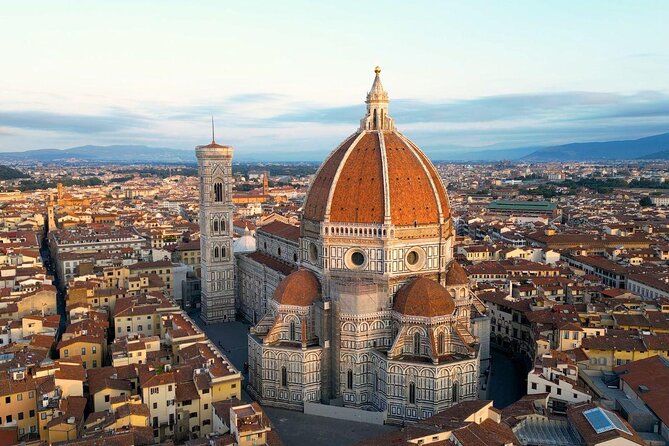
- Outside Duomo viewing is built in, with a Duomo entry option available as an upgrade
- You get about 8 hours free after the guided portion to pace the day your way
- Small group size (max 25) helps you keep moving rather than waiting forever
- You’ll cover more ground than you think thanks to station-to-meeting-point walking
Milan to Florence by high-speed train: the real value
This day trip’s strongest trick is that it reduces the “how do I get there” anxiety to almost nothing. You take the round trip by high-speed train between Milano Centrale and Florence Santa Maria Novella with a seat reservation, so you’re not hunting for tickets or fighting for space.
It’s also the more comfortable way to travel. You trade Milan traffic and parking stress for a relaxing ride where you can read, plan, or just stare out the window like it’s your job. For a one-day Florence visit, that matters.
The duration is listed as about 14 hours, which sounds like a long stretch—until you remember you’re not just sightseeing; you’re traveling too. The schedule is built to get you into Florence early enough to enjoy multiple stops, then let you roam for hours afterward.
You can also read our reviews of more tours and experiences in Milan
Timing and the 7:00 am start: plan like a pro
Start time is 7:00 am, and the meeting point is by Milan Central Station (Piazza Duca d’Aosta, 1). You’re told to arrive early for the train, with a hard requirement to be at the station at least 20 minutes before departure.
Here’s the practical part: the day can fall apart if you cut it too close. The rules note that if you’re late for the meeting and entry timing, you may miss time-entry tickets and museum access, with no refund or reschedule for that entry. That doesn’t mean the tour is mean—it just means the day is tightly scheduled to make it work for everyone.
In the real world, I’d treat this like a “buffer day.” If you’re coming from another place in Milan, give yourself extra transit time to get to the station and then extra time to find the exact meeting spot.
Palazzo Medici Riccardi: where Florence’s power starts
The guided portion starts at Palazzo Medici Riccardi, where the Medici story actually makes sense. You begin in the Medici district, admiring the palace (built in the mid-15th century) as the first residence of the family that basically helped steer Florence’s fate.
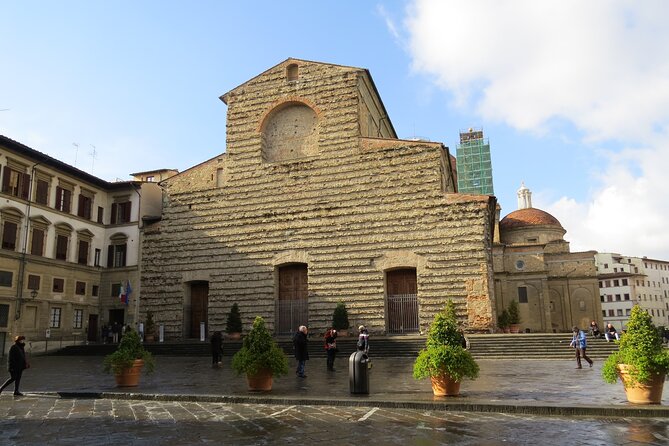
This stop is more than a pretty façade. The guide connects the buildings to the people—why this family mattered, and how Renaissance wealth and politics shaped what you see on the street today. You also visit (or view closely, depending on how the route flows) San Lorenzo Church and the Medici Chapels, including their mausoleum spaces.
Why this works on a day trip: it gives you context quickly. Instead of only hearing “art, art, art,” you understand the forces behind the art—patronage, power, and family branding.
Duomo time: what you see, and what the upgrade changes
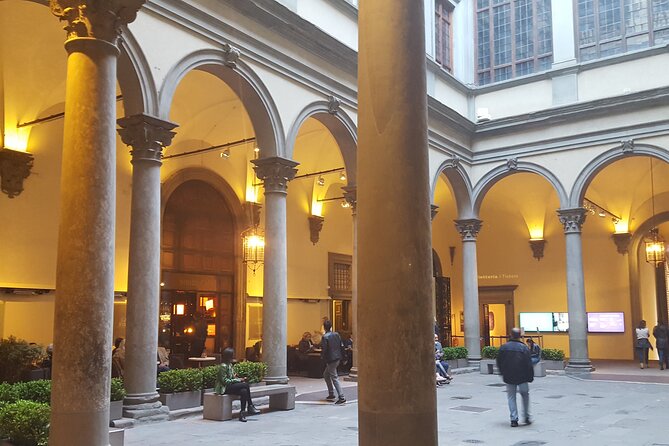
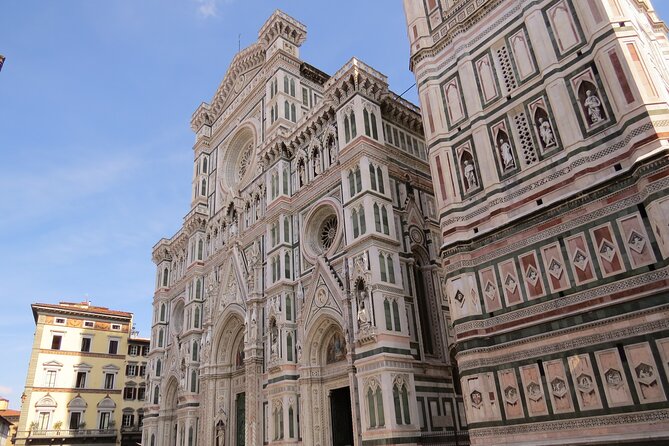
Next comes the Cathedral of Santa Maria del Fiore complex, with the famous Brunelleschi dome and the Giotto bell tower. You also take in the Romanesque Baptistery of San Giovanni with its golden Porta del Paradiso details.
Important: the standard tour includes the Duomo area stop as part of the walking route, but it also notes an option to upgrade for Duomo entry. So plan on seeing the complex impressively from the outside as part of the tour, and decide separately if you want interior access.
This is one of those places where even outside viewing can feel unreal. The façade details and scale are hard to process when you’re just walking by. If Duomo interior access is a must for you, treat the upgrade as part of your planning, not a last-minute thought.
Dante’s streets and Orsanmichele: medieval Florence with sharp edges
The route moves into Florence’s medieval lanes toward Museo Casa di Dante. This is where the tour adds a different flavor: less palace power, more literature-and-life streets.
You’ll also pass the Church of Orsanmichele, described as a masterpiece of Florentine Gothic art. What makes it a standout is the way the church’s façade connects to guild power—statues of patron saints tied to powerful medieval trading organizations.
This stop is useful because it shows Florence wasn’t only Renaissance-brilliance. It had medieval institutions running the show, and those institutions left physical fingerprints all over the city.

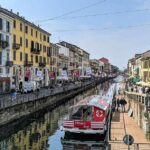
Piazza della Signoria: art, politics, and the porcellino moment
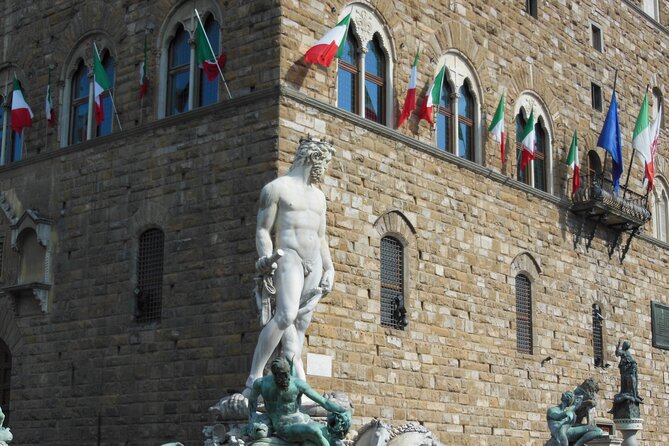
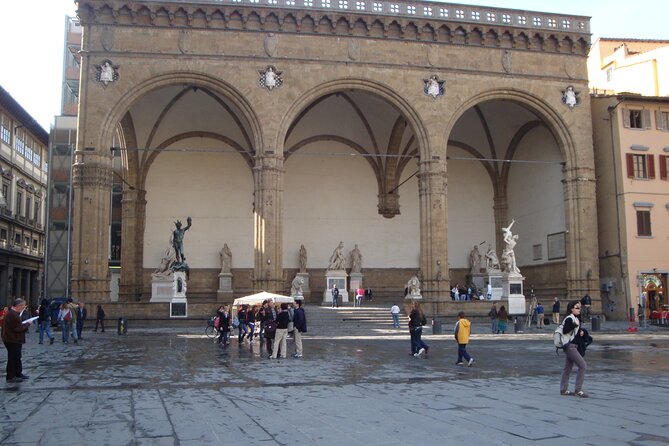
From there, you’re led toward Piazza della Signoria, but with a key detour: the Straw Market and the famous little pig—the porcellino statue—where people rub the nose as a quick bit of Florence folklore.
Then you reach the square, often described as an open-air museum, and it’s easy to see why. You’ll look at major monuments and sculptures, including the Fountain of Neptune and the works along the Loggia dei Lanzi, such as Perseus by Cellini and Rape of the Sabines by Giambologna.
Here’s the value of stopping at Piazza della Signoria on a guided day trip: the guide helps you read the square. Without a quick framework, it can turn into “wow, cool statue, next.” With the framework, it becomes “who funded it, what it represents, and why it sits here.”
Palazzo Vecchio and Ponte Vecchio: the “big scenes” route
You finish the guided loop with Palazzo Vecchio, the fortress-like, crenellated symbol dominating the square. This isn’t just architecture appreciation; it’s a lesson in how Florence’s political center looked and defended itself.
Then comes Ponte Vecchio, famous as the oldest bridge in Florence and known for its jewelry shops. The tour route also mentions a spectacular elevated path linked to the Vasari Corridor, so you get that sense of Florence’s layers—bridges, corridors, and viewpoints stacked like a living diagram.
Why Ponte Vecchio is a good capstone: it’s romantic on the surface, but the guide’s route connects it to the city’s bigger storyline. You end the walking part with this place still buzzing in your head, which makes the later free time more satisfying.
The long free chunk: how to use your 8 hours
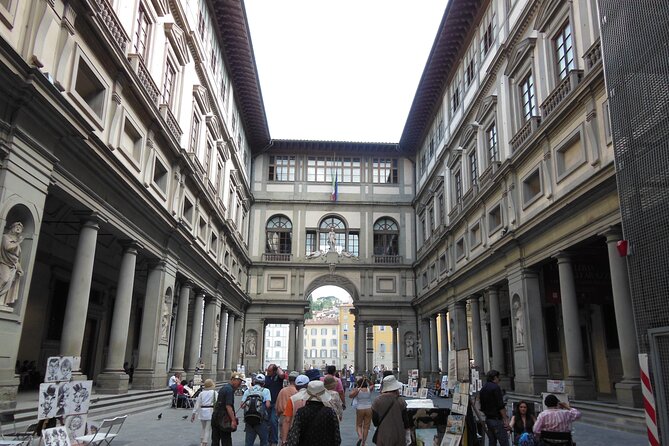
After the guided segment, you get roughly 8 hours at leisure. That’s the real luxury on a day trip, and you should treat it like a choice, not a penalty.
Here are smart ways to use it without burning time:
- Head toward the Central Market area for a meal. The tour points you there, and it’s a natural place to try local food.
- If you like shopping, use the time for artisan shops and crafts. Florence is better when you buy one or two things thoughtfully, not everything.
- If you want art beyond the landmarks you already saw, this is when you can decide what fits your energy and schedule.
Also: Florence streets can get intense. Plan for crowds and slow walking. If you’re the type who hates standing in a slow-moving line, you’ll want to schedule your must-dos with realistic pace.
Walking and crowd reality: not a sit-down stroll
A theme that matters: this is a guided walk built around major outdoors stops. Even though each stop is short, the total movement adds up, especially in tight streets.
One practical consideration to take seriously:
- You may walk from the rail area to the city meeting point.
- Then you’ll do a guided walking route within the city.
- After that, you still have hours to explore on your own, so you’ll likely keep moving.
This tour can work well if you’re comfortable with a full day outdoors. If you’re older, dealing with knee issues, or you’re sensitive to crowds, you should think about whether you’ll enjoy the “walking first, choosing later” format.
Guides can make or break it (and here, they try hard)
The best part of this experience is how the guide turns the sights into stories. Names that show up include Marta, Mia, and Yulia—and the consistent thread is that they explain Florence in a way that connects drama, conflict, and “why that matters.”
In practical terms, that means you’re more likely to leave with a mental map:
- Medici power wasn’t random.
- Dante’s neighborhood sits inside the medieval city pattern.
- Guilds influenced buildings and art in visible ways.
- Piazza della Signoria isn’t just a square; it’s a political stage.
If you’re the type who wants context—what you’re looking at and why it exists—this tour style tends to click. If you only want quick photo stops, you may find the guided time feels slightly “too talky,” but the structure is still useful.
Price and value: is $198.68 fair for a full day?
At $198.68 per person, you’re paying for four things:
- Round-trip high-speed train with seat reservation
- A guided walking tour led by a local professional guide
- Assistance in Florence at meeting points
- A tightly timed day plan that keeps you moving without you having to design it
That can be good value if you’re starting from Milan and you don’t want to spend your morning figuring out trains, tickets, and routes. The reserved seat also reduces stress in a way that’s hard to quantify until you’ve tried to travel spontaneously between big cities.
It’s also worth noting what can change the perceived value:
- Duomo entry is not included in the base plan (it’s an optional upgrade).
- Some people expect “Duomo ticket” included by default because the cathedral is the headline. If that’s your priority, budget for the upgrade and plan accordingly.
Who should book this day trip
You should lean toward this tour if:
- You want a guided overview that covers key Renaissance and medieval sites in one morning loop.
- You like the idea of combining a structured walk with hours of freedom afterward.
- You’re traveling from Milan and want a simple plan with reserved train seats.
You might want a different option if:
- You need lots of downtime or step-free touring.
- You can’t handle busy streets and a full day of walking.
- You’re specifically chasing Duomo interior as the main event and don’t want to think about upgrades.
Should you book this Florence day trip from Milan?
If your goal is first taste of Florence—the major squares, the Medici story, Dante’s neighborhood vibe, and a satisfying amount of free time—this is a strong choice. The reserved train and local guiding make it practical, and the itinerary hits several “anchor stops” that help you orient yourself for what you’ll explore later.
If you’re aiming for a fully ticketed, museum-heavy Florence day, or you want everything to revolve around indoor Duomo access, double-check the upgrade choice early and don’t assume entry is automatically included.
FAQ
What is the duration of the Florence day trip?
The trip is listed at approximately 14 hours total.
How do I travel between Milan and Florence?
You travel round trip by high-speed train between Milano Centrale and Florence Santa Maria Novella, with a reserved seat.
Is the tour in English?
Yes, the experience is offered in English.
Does the tour include entry to the Florence Duomo?
Duomo entry is described as an optional upgrade. The base tour includes the Duomo complex stop as part of the itinerary.
Where do I meet the tour in Milan?
The meeting point is at Milan Central (Piazza Duca d’Aosta, 1, 20124 Milano MI, Italy).
What time does the tour start?
The start time is 7:00 am.
What is the cancellation policy?
Free cancellation is available up to 24 hours before the experience starts for a full refund.