REVIEW · MILAN
Milano: Degustazione caffè di qualità dalla moka al filtro
Book on GetYourGuide →Operated by Il Cafetero Specialty Coffee · Bookable on GetYourGuide
Coffee gets personal here. This Milan tasting uses three single origins and pairs them with three brews so you can hear the difference in flavor, not just smell it. I like that it connects the classic Italian moka idea to modern pour-over technique, with guidance from Il Cafetero Specialty Coffee hosts such as Ivone and Federico, who keep the tone friendly and practical.
Two things I really love: first, the setup forces you to taste coffee as coffee, not only as a milk drink, so you start noticing aroma, balance, and how extraction changes everything. Second, you leave with clear at-home techniques you can actually repeat, plus a special discount on coffee beans. The one drawback to consider: this is a tasting session built around brewing methods and flavor notes, so if your main goal is a fast espresso stop, the format may feel more educational than caffeinated.
In This Review
- Key highlights at a glance
- A Milan coffee tasting built around single origins and real extraction
- Getting oriented: what you’ll know before the first cup
- Moka coffee: the Italian classic and how to use it better
- V60 and filter logic: understanding filter versus American coffee
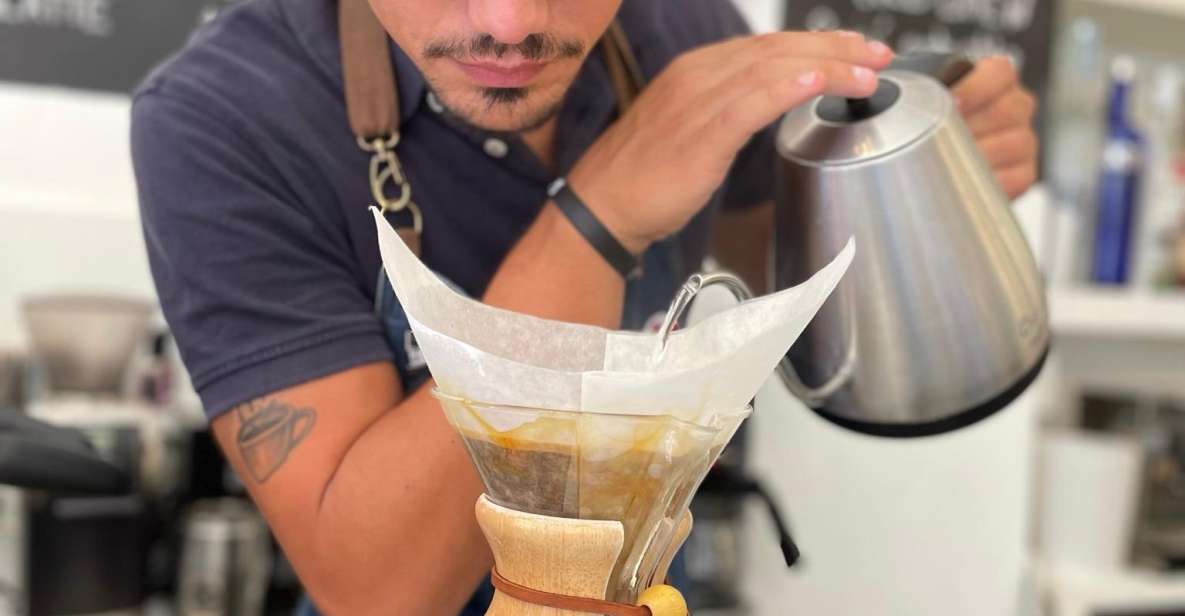
- Chemex: design-led brewing for extra aroma
- Tasting flow: water resets, dessert choices, and a relaxed pace
- How to bring it home: turning three methods into everyday skill
- Price and value in Milan: why $35 can make sense
- Who should book this coffee tasting in Milano
- Should you book Il Cafetero’s coffee degustazione?
- FAQ
- How long is the coffee tasting?
- How much does it cost?
- How many people are in the group?
- What coffee will you taste?
- Which brewing methods are included?
- Is dessert included?
- Are vegan and gluten-free options available?
- What languages does the instructor speak?
- Is there any discount on coffee?
- Is free cancellation available?
Key highlights at a glance
- Single-origin coffees chosen by season and availability, from Africa, South America, and Asia
- Three brewing methods in one session: Moka, V60, and Chemex
- Taste-by-taste resets with plenty of water between cups
- Dessert included, with vegan (and also vegan or gluten-free options for sweets/biscuits)
- Small group size (max 6) for questions and real back-and-forth
A Milan coffee tasting built around single origins and real extraction
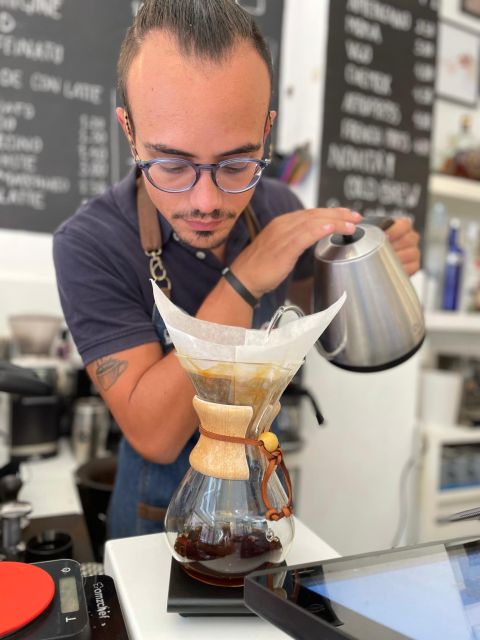
This experience is all about taking coffee out of autopilot. In two hours, you’ll learn how origin and extraction work together to create what you call good coffee. You start with three coffees that come from specific plantations or producers—so you’re not just tasting “coffee,” you’re tasting a particular source.
Il Cafetero Specialty Coffee runs it with a small group capped at 6. That matters more than it sounds. With fewer people, it’s easier to ask follow-ups while the brewer is still fresh in your mind—especially since you’re sampling multiple methods back-to-back. The instructor can guide in English, Italian, and Spanish, which makes it a lot less intimidating if you’re traveling with language limits.
Price is $35 per person for about 2 hours. Is that cheap? No. But you’re not just paying for drinks. You get three single-origin tastings, water between them, sweets/biscuits plus dessert, and a chance to understand what you should buy and how you should brew at home. That’s why the value works best when you’re curious and willing to taste slowly.
You can also read our reviews of more tours and experiences in Milan.



Getting oriented: what you’ll know before the first cup
Before the tasting moves into the three methods, the host frames coffee as something you can understand—not just something you consume. The premise is simple: once you see where coffee comes from and how it’s extracted, you stop relying on habit.
You’ll also be prepared for the fact that the coffees are selected based on seasonality and availability. That means the exact single-origin beans can change depending on when you go. The continents are consistent—Africa, South America, and Asia—but the specific producers may shift.
This kind of intro is useful because it tells you what to listen for while you taste. Instead of going cup-to-cup chasing “which is nicest,” you start to connect each method to what’s happening in the cup: aroma, strength, and clarity.
Moka coffee: the Italian classic and how to use it better
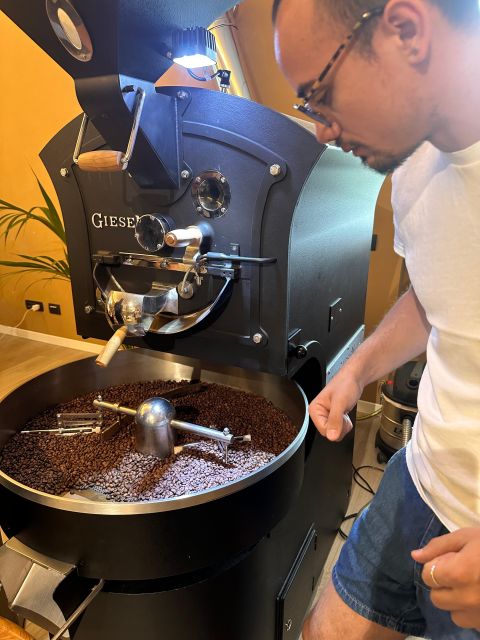
The session starts (or at least includes) the Moka method, presented as a symbol of traditional Italian coffee culture. You’re not just tasting it; you’re learning why it can taste different depending on how it’s handled, and you’ll hear how the moka approach has evolved over time.
What I like about including moka in this lineup is that it gives you a familiar anchor. If you’ve grown up with moka pot coffee, you already have a reference point. From there, you can understand what improvements are really possible, instead of treating moka as either “good” or “bad.”
During this part, the host explains how to use moka to highlight coffee’s aromatic and natural properties. You’ll leave with practical guidance to try at home. You don’t need to become a barista. You just need to apply the basics consistently so the cup stays stable.
A small consideration: moka coffee is typically the one most people think they already know. If you’ve never been curious about your moka pot’s results, this section is surprisingly eye-opening because it turns an everyday routine into a method you can control.
V60 and filter logic: understanding filter versus American coffee
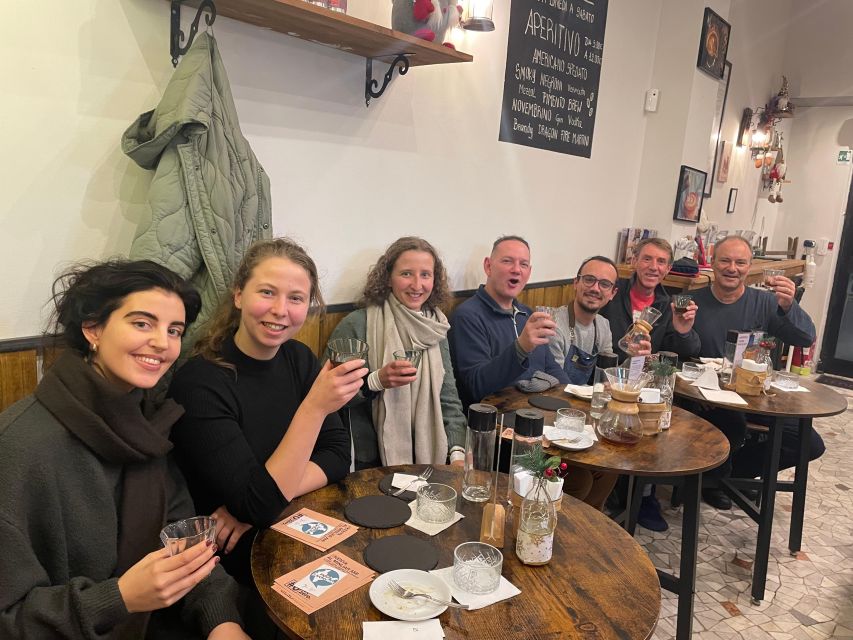
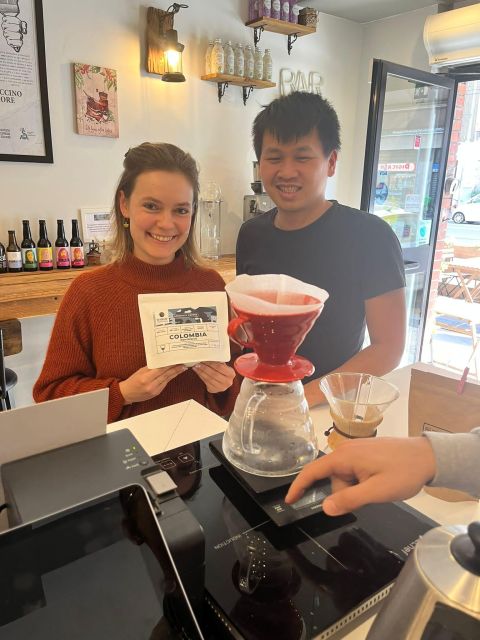
Next comes the V60, one of the best-known pour-over methods loved by baristas and spreading through coffee shops. The goal here is not only to taste. It’s to learn why technique matters, and specifically to understand the difference between American coffee preparation and filter coffee.
That distinction is exactly why V60 fits this workshop. American-style coffee gets treated like a catch-all term, but filter coffee is a brewing approach with its own structure and outcomes. With the V60, you can compare how a pour-over extraction changes what ends up in your cup compared to a method like moka.
In practical terms, this section helps you connect “taste” to “process.” When you understand the process, you can adjust your habits at home rather than guessing. You’ll also pick up tips for implementing the method yourself—so you’re not walking away with only a memory of how it tasted.
If you like making coffee at home, V60 is often the most approachable modern method to experiment with. The equipment is simple, and it’s easy to see the connection between your steps and your results.
Chemex: design-led brewing for extra aroma
The last method is Chemex, recognizable by its design. This part is about tasting how that specific brewing style can bring out strong aromatics.
Chemex in this workshop is positioned as the “last but not least” step, which makes sense because by now you’ve tasted the same general idea—single-origin coffee—through two very different extraction personalities. That makes it easier to notice what changes when the brewing setup changes.
You’ll focus on the aromatic side of the cup and understand why this method can be especially expressive. If you’re the kind of person who likes smelling the coffee as much as drinking it, this is likely the part that makes the biggest impression.
And because the tasting is structured in a single session, you’re not comparing Chemex to some random coffee you had days ago. You’re comparing it to the same overall concept, under the same learning framework.

Tasting flow: water resets, dessert choices, and a relaxed pace
Between each coffee, there’s a lot of water. This isn’t just a “nice touch.” It helps keep your palate from getting overwhelmed as you cycle through three methods. Coffee flavors can blur together if you push too fast, and this setup helps you stay accurate.
Then comes the sweet side of the equation. Your tasting is accompanied by dessert of your choice, including a vegan option. Also, sweets or biscuits are included, and the set-up notes vegan or gluten-free options. For food planning, that’s a relief if you’re traveling with dietary preferences.
The pacing is built for a small group. With a maximum of 6 participants, you’re less likely to feel like you’re waiting for your turn. You can ask questions while the instructor is still in explanation mode, instead of saving them until the end.
One practical note: coffee tasting works best when you take breaks between sips. You’ll get the water and the dessert support, but your own pace matters too. Plan to be fully present for the full 2 hours rather than treating it as a quick stop between sights.
How to bring it home: turning three methods into everyday skill
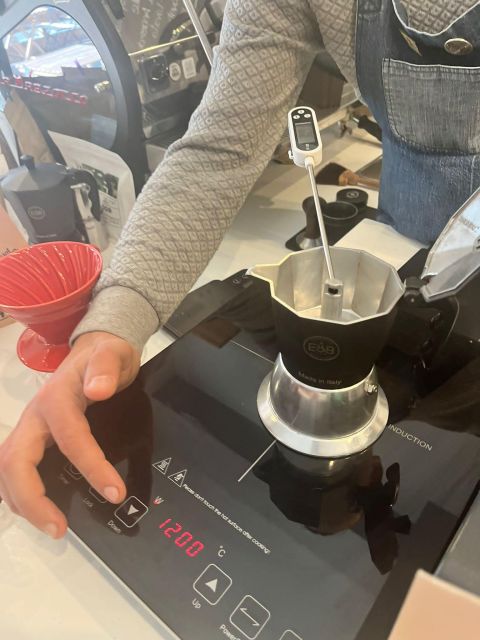
The workshop doesn’t stop at “taste and score.” It’s designed to make you capable at home. You’ll explore the three methods with their differences, get explanations of preparation techniques, and receive tips you can apply immediately.
This is where the experience can pay off long after you leave Milan. If you’ve only ever ordered espresso, cappuccino, or latte, this kind of session changes your baseline. You start understanding what you like in plain coffee, what you don’t, and what brewing method tends to produce the result you want.
You’ll also get a special discount on their coffee beans. That matters because it nudges you to try the same kind of product again, not just the same method. When you buy beans that match what you sampled, you’re more likely to recreate the flavor that impressed you.
A good way to think of it: you’re learning two things at once—method and ingredient. That combo is how most people improve faster than trying to tweak only one variable.
Price and value in Milan: why $35 can make sense
At $35 for about 2 hours, the ticket isn’t a bargain. But it is well-structured value if you care about quality.
Here’s what you’re getting for your money:
- Three single-origin coffees selected by season
- Three distinct extractions (Moka, V60, Chemex) tied to real technique
- Water included between tastings so you can actually compare
- Dessert included (with vegan option) plus sweets/biscuits, including vegan or gluten-free options
- Tips for brewing at home and a discount on coffee beans
If you’re the type who already buys decent coffee or owns brewing gear, this can feel like a shortcut to better results. If you mostly drink milk drinks, this experience can widen what you enjoy—because you get to taste coffee by itself through multiple methods in one sitting.
If your budget is tight or your goal is purely a caffeine hit, you might feel the price. But if you want to understand coffee and improve how you brew, it’s a practical use of an evening in Milan.
Who should book this coffee tasting in Milano
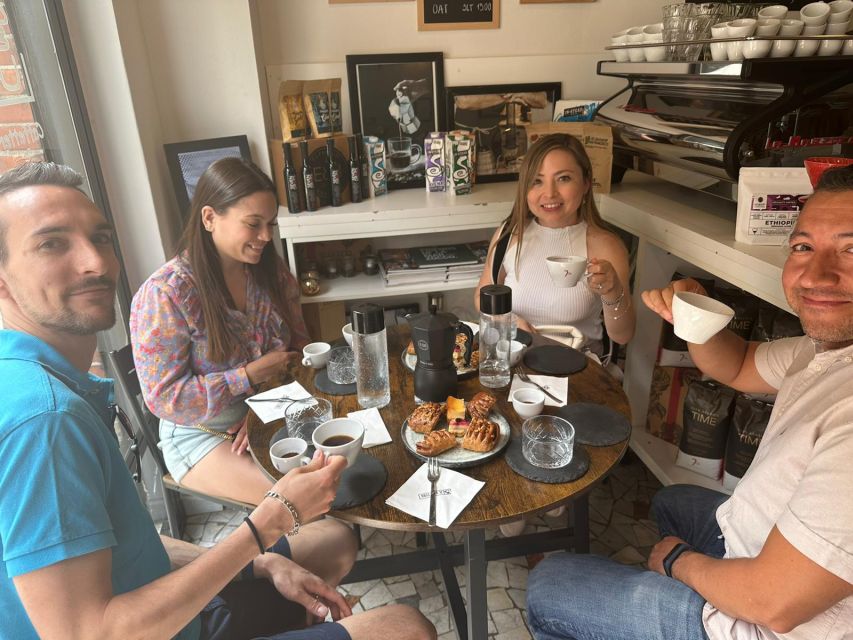
This is a great fit if you’re:
- A coffee lover who wants more than a standard café recommendation
- Curious about how brewing methods change flavor
- Open to tasting single-origin coffees from different regions
- Traveling with someone who drinks coffee regularly, since it’s easy to relate (and often lands well with people who mostly enjoy coffee with milk)
It also makes sense if you care about food options. Vegan and gluten-free options are explicitly included in the sweets/biscuits and dessert portion.
You might consider skipping if you want a simple, quick drink stop or if you prefer not to taste coffee without milk at all. This workshop is built around exploring coffee’s flavor through brewing, so the educational angle is part of the deal.
Should you book Il Cafetero’s coffee degustazione?
If you like the idea of learning the how, not just the what, I’d book it. The format is tight (2 hours), the group stays small (up to 6), and you get a real comparison of Moka vs V60 vs Chemex using single-origin coffees. Add in water between tastings, dessert options, and a discount on beans, and the experience makes practical sense.
If you’re unsure, here’s the simplest test: Do you want to be able to make better coffee at home, not just drink something nice once? If yes, this is a smart use of time in Milan. If no, you may prefer a standard café meal and a lighter coffee mission.
FAQ
How long is the coffee tasting?
The experience lasts 2 hours.
How much does it cost?
It costs $35 per person.
How many people are in the group?
It’s a small group limited to 6 participants.
What coffee will you taste?
You’ll taste 3 types of single origin coffee, sourced from single plantations or single producers. The exact origins depend on seasonality and availability.
Which brewing methods are included?
You’ll taste coffee prepared with three methods: Moka, V60, and Chemex.
Is dessert included?
Yes. Dessert is included with the tasting, with a vegan option available.
Are vegan and gluten-free options available?
The experience includes sweets or biscuits with vegan or gluten-free options, and dessert includes a vegan option.
What languages does the instructor speak?
The instructor offers English, Italian, and Spanish.
Is there any discount on coffee?
Yes. There’s a special discount on the coffee beans.
Is free cancellation available?
Free cancellation is available up to 24 hours in advance for a full refund.