REVIEW · LOMBARDY
6-Day Cinque Terre, Florence & the Flavours of Tuscany Tour from Milan to Rome
Book on Viator →Operated by Rabbie's Small Group Tours Ireland · Bookable on Viator
Six days from Milan to Rome feels like a fast art-and-food highlight reel. But the smart part is how the days are built around small-group guidance, short travel legs, and real time in places like Florence and Cinque Terre.
I especially like two things: the Cinque Terre Card train setup that gets you into the villages without hassle, and the included winery visit and wine tasting in Tuscany that turns the region’s reputation into something you can taste. You’re also sleeping in comfortable 3–4 star hotels with breakfast, which matters when you’re moving every day.
One drawback to plan around: meals (besides breakfast) aren’t included, so you’ll need to budget and choose lunches on the go—sometimes in towns where time is tight and everything closes earlier than you expect.
In This Review
- Key things that make this tour work
- Milan to Rome in six days: why the route feels efficient
- Cinque Terre Day 1: La Spezia base, then Monterosso and Manarola
- Pietrasanta, Pisa, Lucca: three stops that widen your Italy lens
- Florence free day: build your art plan around your interests
- Chianti towers, Siena’s shell-shaped square, and the hill-town feel of Montepulciano
- Val d’Orcia day: Pienza planning, Montalcino wine, and Bagno Vignoni’s spa waters
- Sovana Necropolis and Capodimonte: Maremma quiet before Rome
- Hotels and group comfort: why 16 people changes the trip
- Price and value: is $2,747.20 fair for what you get?
- Packing and timing tips that make days less stressful
- Should you book this Milan to Rome tour?
- FAQ
- How long is the tour, and what are the start and end cities?
- When does the tour start in Milan?
- What’s the group size?
- What nights are included, and where do you stay?
- Is the Cinque Terre train included?
- Is a winery visit and wine tasting included?
- Are meals included during the tour?
- What luggage can I bring?
- Can I request a double or twin room?
- If I cancel, do I get a refund?
Key things that make this tour work
- Up to 16 people keeps the pace human and the guide’s attention more useful
- Cinque Terre Card train handles the main connection, so you’re freer to wander Monterosso and Manarola
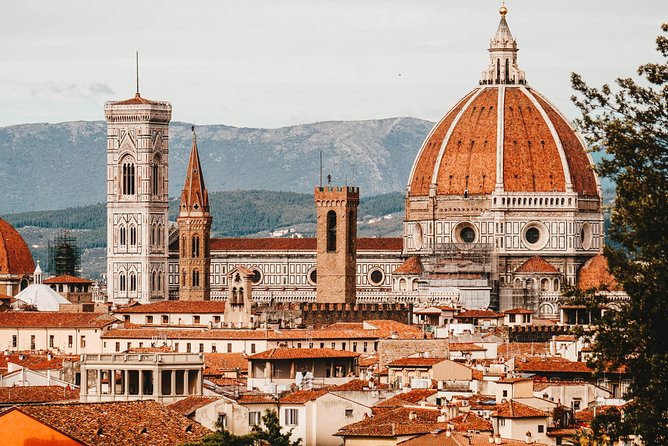
- Florence with a real menu of art (Duomo, Uffizi, Accademia and David, plus optional Palazzo Pitti/Boboli)
- Tuscany in layers: San Gimignano and Siena, then the Val d’Orcia classics with Pienza, Montalcino, and Bagno Vignoni
- Wine included via a winery tour and tasting, plus more scenic countryside time than a rush-only day trip
- Comfort-first logistics: luxury mini-coach with a local driver and 5 nights in 3–4 star hotels
Milan to Rome in six days: why the route feels efficient
This tour strings together two big Italian pillars—Northern cities and central wine country—without making you live on train schedules all day. You start in Milan at 8:30am and end in Rome, with overnight bases that make sense: one night in La Spezia, two in Florence, and two in Montepulciano.
The travel style is straightforward. You’ll board a small, comfortable mini-coach for the longer legs, then use the train on the Cinque Terre day. It’s the kind of setup where you spend less mental energy on transfers and more on walking, looking, eating, and buying that one postcard you’ll actually mail.
You can also read our reviews of more tours and experiences in Lombardy.
Cinque Terre Day 1: La Spezia base, then Monterosso and Manarola
La Spezia is the gateway town here. You check in, and your guide keeps things moving with a short train connection to your first seaside stop. This is a good way to do Cinque Terre because you’re not dragging luggage through cliffs and tight lanes all day.
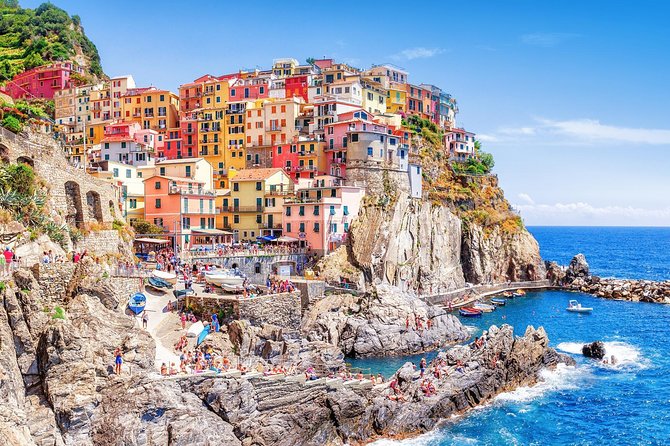
From there, you get time in Monterosso, which is the Cinque Terre town you’ll likely want if you want a beach and seafront promenade. You’re given a large block of free time, so you can decide whether you want a slow stroll, a snack stop, or a longer walk along the waterfront.
Then the day turns to Manarola, a favorite for views and for that local rhythm of terraced streets dropping toward the water. The tour also flags wine here, which is worth taking seriously in Cinque Terre. Even if you’re not a heavy wine person, it’s a simple way to understand why these places cling to the slopes—they’re not just pretty; they’re productive.
A practical note: your day works best if you move with good shoes and a realistic plan. Cinque Terre is gorgeous, but it’s also stairs, stone steps, and sudden angles. Build in breaks, especially in warmer months.
Pietrasanta, Pisa, Lucca: three stops that widen your Italy lens
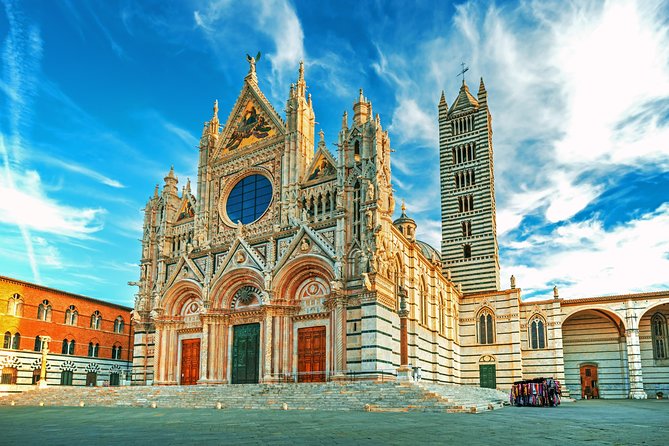
On Day 2, you leave La Spezia and head toward Florence, but not in a straight line. This is where the itinerary earns its keep: you get northern Italy context that you’d otherwise cram into one rushed city after another.
Pietrasanta is a quick stop with a specific story. It’s tied to the marble tradition and even to Michelangelo’s choices of materials for sculpture. Even with just about an hour, you’ll feel the town’s craft identity. It’s a nice reset after the seaside day—more workshop energy, less coastal scenery.
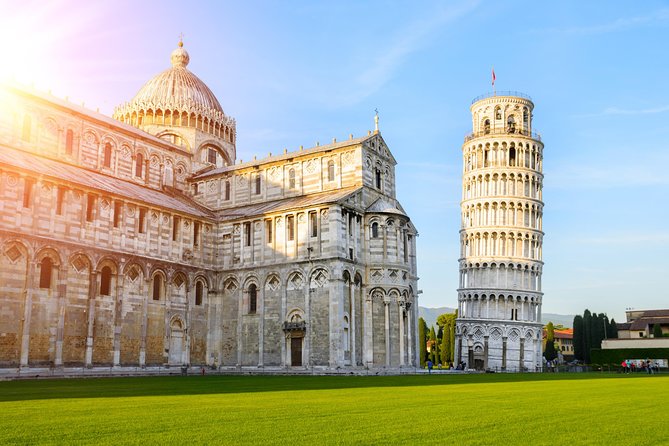
Then comes Pisa, with time to explore and a clear reason for visiting. You’ll see the famous Leaning Tower area and Campo dei Miracoli views. The big tip here is to treat Pisa as a walkable picture set, not an all-day museum mission. Do your highlights, grab lunch, and use the extra time to look at the Romanesque details around the complex.
After Pisa, you reach Lucca, known for its completely preserved city walls. This gives you a different kind of “old city” experience: less crowded rush, more space to circle the walls and absorb the town at a slower pace. If you like architecture and the feel of piazzas, Lucca is the kind of stop you’ll remember more than you expected.
By evening, you roll into Florence, your base for the next two nights.
Florence free day: build your art plan around your interests
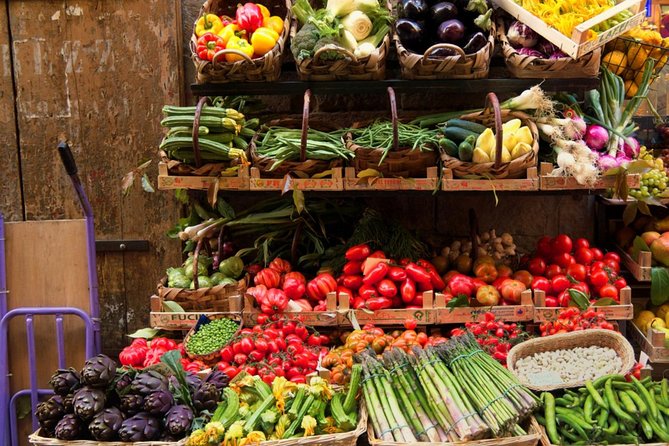
Day 3 is your full Florence time, and it’s structured as freedom. That’s important. Florence rewards choice. If you’re an art-and-architecture person, you’ll want a plan. If you’re more of a wander-and-savor traveler, you’ll still find enough anchor points.
Your options are clearly signposted around major names: Leonardo, Michelangelo, Dante, and Galileo. You can aim for the skyline centerpiece with the Duomo, then decide whether you want to prioritize sculpture, painting, or the Uffizi circuit.
The Uffizi is listed as a must for famous works like The Birth of Venus, while the Galleria dell’Accademia is where Michelangelo’s David gets center stage. If you’re doing both museums in one day, I’d keep your expectations tight and focus on a short list of works—otherwise you’ll spend your energy reading signs instead of seeing art.
In the afternoon, the itinerary also points you toward Palazzo Pitti and Boboli Gardens if you want a Medici-flavored shift from galleries to residence and landscape design. (And yes, gardens in Florence are their own kind of art.)
My advice: pick a “core” and a “bonus.” Core might be Duomo + one museum. Bonus might be Palazzo Pitti or Boboli. Florence is big, and your feet will tell you when you’ve done enough.
Chianti towers, Siena’s shell-shaped square, and the hill-town feel of Montepulciano
Day 4 is Tuscany’s medieval side, but it doesn’t feel like a single long lecture. It’s a sequence of towns with distinct shapes and moods.
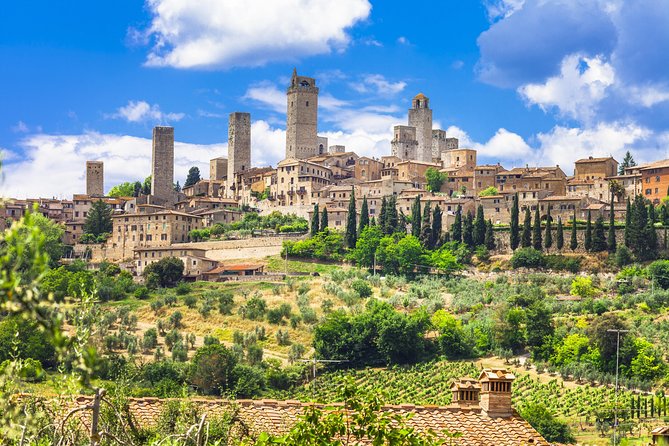
First is San Gimignano, with those 14 towers rising like a medieval skyline. The visit includes a story angle about noble families and the race to build upward tower houses. Then you get time to walk the well-preserved old center and sample local delicacies for lunch. If you like photo-worthy views and old stone lanes, San Gimignano delivers.
Next up is Siena, focused on Gothic architecture and the famous Piazza del Campo—a shell-shaped square that’s clearly the city’s heart. The itinerary also notes the Palio di Siena horse race, and it even points out that Siena appeared in the film Quantum of Solace. Whether you’re a movie fan or not, it helps explain why Siena feels so staged and cinematic.
In the evening, you reach Montepulciano, where you sleep for two nights. This is a smart choice for the final days, because it keeps you close to the Val d’Orcia and winery country. Montepulciano’s atmosphere tends to be more relaxed than Siena, which can feel like a relief after tower towns and major squares.
Val d’Orcia day: Pienza planning, Montalcino wine, and Bagno Vignoni’s spa waters
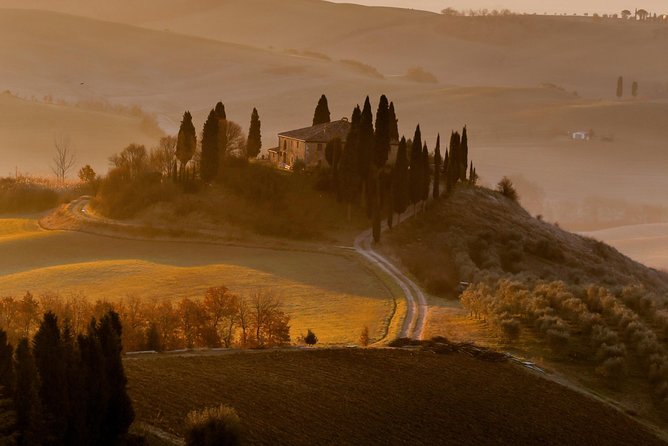
Day 5 is a highlight for food and countryside lovers. It’s built around the Val d’Orcia feel—rolling hills, cypress silhouettes, and towns that seem designed for slow walking.
You start again with Montepulciano on your own for about an hour. This is the kind of free time I actually like on tours, because you can revisit what caught your eye on your first night and do a quick orientation walk.
Then you move to Pienza, described as a “jewel of urban planning” and connected to Pope Pius II’s Renaissance vision. The quick visit time is enough to understand why UNESCO recognized it and to stroll the town without turning it into a checklist.
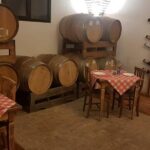
After that comes Montalcino, and here the tour shifts from sightseeing to tasting. You’ll visit an area winery for an included experience, with the guide choosing from a hand-picked set of top options. You’ll likely appreciate the structure: it removes the need to decide where to go while still giving you a real winery visit instead of a short stop at a gift shop.
You wrap up the day with Bagno Vignoni, known for curative waters and the dramatic sight of spring water flowing across the area tied to the old spa tradition. This stop is a great counterweight to vineyards. You’re still in Tuscany, but the vibe turns ancient, quiet, and gently surreal.
At the end, you return to Montepulciano for your second night.
Sovana Necropolis and Capodimonte: Maremma quiet before Rome
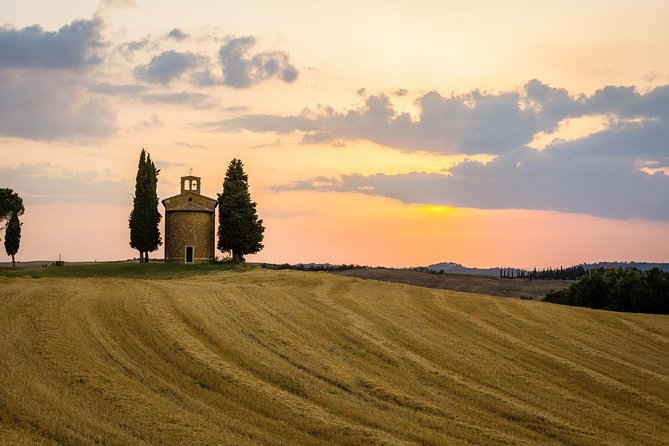
Day 6 moves away from the classic Tuscany postcard and into the Maremma region. It’s a smart fade-out before Rome, and it also gives you something different from the usual crowds.
First is Sovana, with a visit to the Sovana Necropolis and the Vie Cave—an impressive network carved in tuff dating back to the Bronze Age. This part is less about shopping and more about scale and stonework. Even if you’re not a hardcore history person, the physical effect of these spaces can be memorable.
You also get time in Sovana town to grab something to eat and soak in the medieval feel before heading onward.
In the afternoon you reach Capodimonte, on the bank of Bolsena Lake, described as the largest volcanic lake in Italy. It’s your final comfort stop, basically a last chance to enjoy a slower moment by water before you finish in Rome.
Then you travel on to the tour’s end point in Rome.
Hotels and group comfort: why 16 people changes the trip
The tour runs with a maximum of 16 travelers, which is the difference between feeling like you’re joining a moving crowd and feeling like you’re part of a group that can actually pay attention. Smaller groups also tend to make timing easier to manage on days with free roaming.
You stay in 3–4 star hotels, with continental breakfast included. The overnight bases are practical: La Spezia for Cinque Terre access, Florence for the art day, and Montepulciano for Val d’Orcia and wineries. You’re not packing and unpacking constantly, but you are moving enough that breakfast and a comfortable bed really matter.
One extra note from real-world experience with flexible guides: when the group ends up very small, your driver and tour guide may be able to adjust timing to fit your pace. If your guide happens to be someone like Sebastian, you’ll likely feel how much that flexibility can help in Tuscany, where even 30 minutes can change how rushed (or unhurried) a town feels.
Price and value: is $2,747.20 fair for what you get?
At $2,747.20 per person, this isn’t a budget trip. But it’s also not just “a sightseeing bus tour.” Your cost includes 5 nights in hotels with breakfast, luxury mini-coach transport with a local driver, and a Cinque Terre train ride handled through the Cinque Terre Card. You also get an included winery visit with wine tasting.
What’s not included is also clear: meals and refreshments, plus attraction fees unless specified. That matters for your planning. If you want every meal handled for you, you’ll need to be choosy about lunch and dinner budgeting.
If you were doing this on your own, you’d be paying for transportation between regions and booking separate tickets and timed visits. This tour bundles a lot of the hardest logistics—especially the Cinque Terre connection—into one package. For many people, that’s the real value.
Packing and timing tips that make days less stressful
This is a moving trip. You’ll want to keep your luggage easy for hotel changes and transport.
- You’re allowed 20kg of luggage plus one medium suitcase/bag for carry-on-style packing, and a small personal item bag.
- Pack for uneven walking in old towns, especially on Cinque Terre and around medieval streets.
- Expect days that mix guided time with free time, so bring a plan for breaks and snacks.
Also pay attention to the fact that timing can shift for operational reasons. You’re given reference tour times, but real life happens. Your best strategy is a flexible mindset and a willingness to adjust.
Should you book this Milan to Rome tour?
Book it if you want an organized route that links Cinque Terre, Florence, and Tuscany without spending your holiday on transport math. The small group cap, the included Cinque Terre train setup, and the winery tasting are the three big reasons this works for people who want comfort and authenticity.
Skip it if you hate day-by-day structure or if you prefer fully guided museum marathons with meals handled. You’ll need to manage lunches and attraction entry choices on your own.
If your travel style is part walking, part tasting, and part art shopping, this is a strong fit.
FAQ
How long is the tour, and what are the start and end cities?
The tour is about 6 days. It starts in Milan and finishes in Rome.
When does the tour start in Milan?
The start time is 8:30am, from AC Hotel Milan Sesto Via Luciano Lama, 10, 20099 Milano MI, Italy.
What’s the group size?
It’s a small-group tour with a maximum of 16 passengers.
What nights are included, and where do you stay?
You stay 5 nights total: one night in La Spezia, two nights in Florence, and two nights in Montepulciano. Breakfast is included each morning.
Is the Cinque Terre train included?
Yes. You travel to Cinque Terre by train as part of the Cinque Terre Card.
Is a winery visit and wine tasting included?
Yes. The tour includes a winery visit and a wine tasting in Tuscany.
Are meals included during the tour?
No. Meals and refreshments are not included (breakfast is included with the hotels).
What luggage can I bring?
You’re allowed 20kg of luggage (44lbs) per person, plus one medium sized suitcase/bag similar to airline carry-on standards, and a small bag for personal items.
Can I request a double or twin room?
Yes. You can specify your room preference (double or twin) at the time of booking under Special Requirements.
If I cancel, do I get a refund?
No. This experience is non-refundable and cannot be changed for any reason, so cancellations won’t be refunded.