REVIEW · MILAN
Milan: San Sepolcro Crypt Skip-the-Line Entry Ticket
Book on GetYourGuide →Operated by Veneranda Biblioteca Ambrosiana · Bookable on GetYourGuide
One staircase later, Milan goes underground. The San Sepolcro Crypt is a small, powerful medieval church built entirely below ground, on the site of the old Roman city center, with restored frescoes and vaults that make you slow down fast. I love the physical feeling of being in a sacred, time-layered space, and I also love the Roman forum floor details you can actually walk near. The main drawback: the visit is short and the space is limited, so if you expect a big sight like a cathedral, you may feel it is over too quickly.
To make it worth your time, go with the right mindset: this is history up close, not a long guided loop. It is also not a place for strollers, and it is not designed for wheelchair access.
Key things to know before you go
- Underground by design: an underground church on the former forum area of Roman Mediolanum
- The forum pavement is part of the story: white Verona stone slabs tied to the old 4th-century layout
- Restored medieval decoration: vaults with late 13th-century decor you can see clearly
- A very time-bound visit: plan for a ~30-minute experience, not a long wandering session
- You start at the Piazza San Sepolcro entrance: look for the courtyard gate near the Pinacoteca Ambrosiana exit and the staircase down
In This Review
- Why the San Sepolcro Crypt feels so different from typical Milan sights
- Getting to the entrance at Piazza San Sepolcro (what to look for)
- What the 30-minute ticket experience actually feels like
- The Roman forum pavement: white Verona stone and the 4th-century link
- Medieval vaults and late 1200s decoration after restoration
- The sacred atmosphere and what it means historically
- Practical tips to make the most of your skip-the-line entry
- Price and value: is $11 worth it?
- Who should book this crypt ticket (and who might feel shortchanged)
- Should you book the Milan San Sepolcro Crypt skip-the-line ticket?
- FAQ
- Where is the entrance to the Crypt of San Sepolcro?
- How long is the visit?
- Does this ticket include skip-the-line entry?
- How much does it cost?
- Is the experience wheelchair accessible?
- Are baby strollers allowed?
- What is the provider of the activity?
- What cancellation options are available?
- Are there language options?
Why the San Sepolcro Crypt feels so different from typical Milan sights
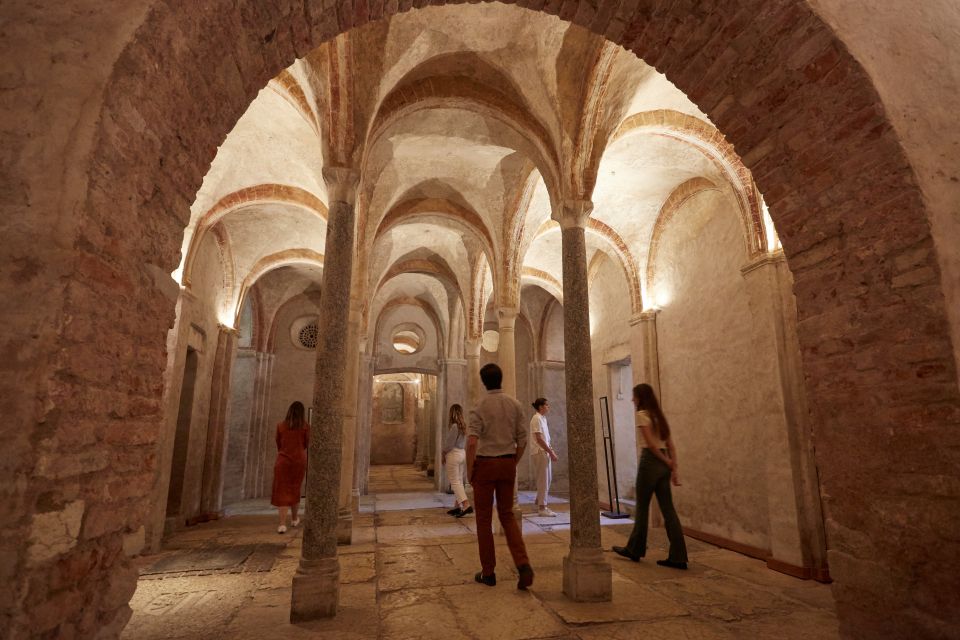
Most Milan highlights are all about what sits above street level: palaces, galleries, churches you can approach from the sidewalk and photograph from a wide angle. The San Sepolcro Crypt flips that habit. This is not a church you admire from a distance. It is a church you enter from street life and then gradually leave it behind.
I like that the experience is compact. You get history that feels built into the walls and floor, not history staged behind barriers. And I also like the way it layers eras in a very literal way: Roman city center, then medieval sacred space, then modern restoration that makes the visuals easier to appreciate.
There is a reason this place registers with people who care about authenticity. It does not try to be flashy. It simply gives you a small, serious room where the past is physically present—stone, paving, vaults, and fresco surfaces.
One more practical point: because it is a crypt and underground, your pace matters. Come expecting a short visit and you will likely come away happy. Come expecting a half-day attraction, and you may leave thinking you wanted more square footage.
Getting to the entrance at Piazza San Sepolcro (what to look for)
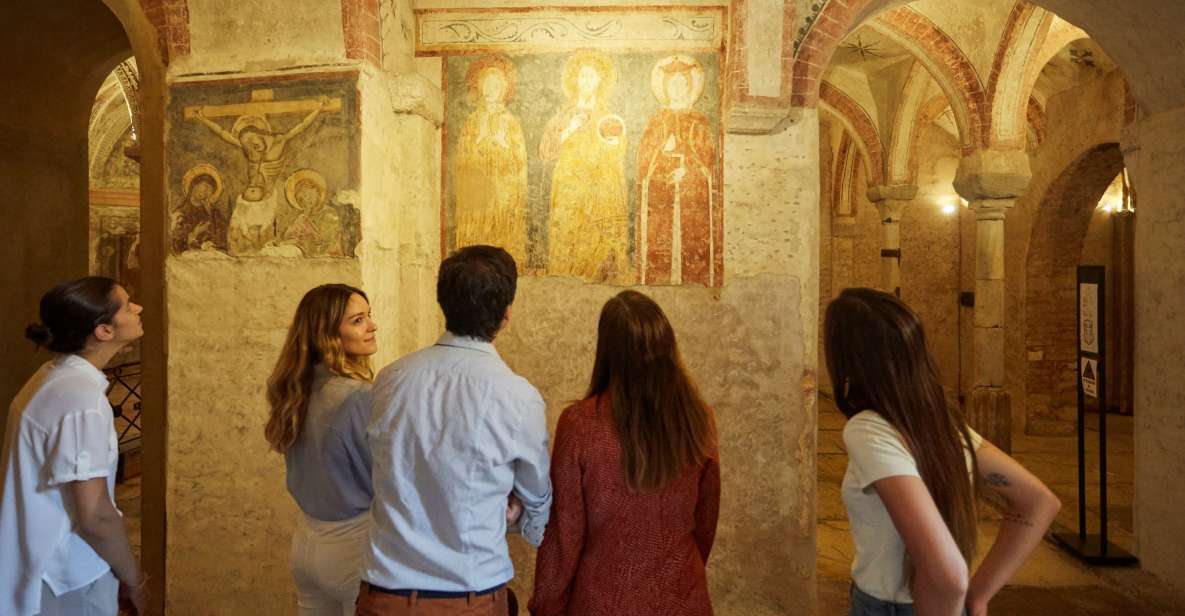
The entrance is in Piazza San Sepolcro. Your key orientation point is the courtyard connected to the Pinacoteca Ambrosiana area. Go through the gate of that courtyard where the exit of the Pinacoteca Ambrosiana is located.
From there, find the statue of Federico Borromeo. Next to that statue, there is a staircase that leads down to the crypt’s entrance. That staircase is the moment you stop seeing the modern city and start going into it.
If you are visiting around other sites in central Milan, this is an easy stop to slot in between museum or cathedral time blocks. But do not “arrive whenever.” One past issue in the booking world was simply that someone showed up and found no staff—so I’d treat the stated entry timing as real. Check your start time before you walk over.
You can also read our reviews of more tours and experiences in Milan



What the 30-minute ticket experience actually feels like
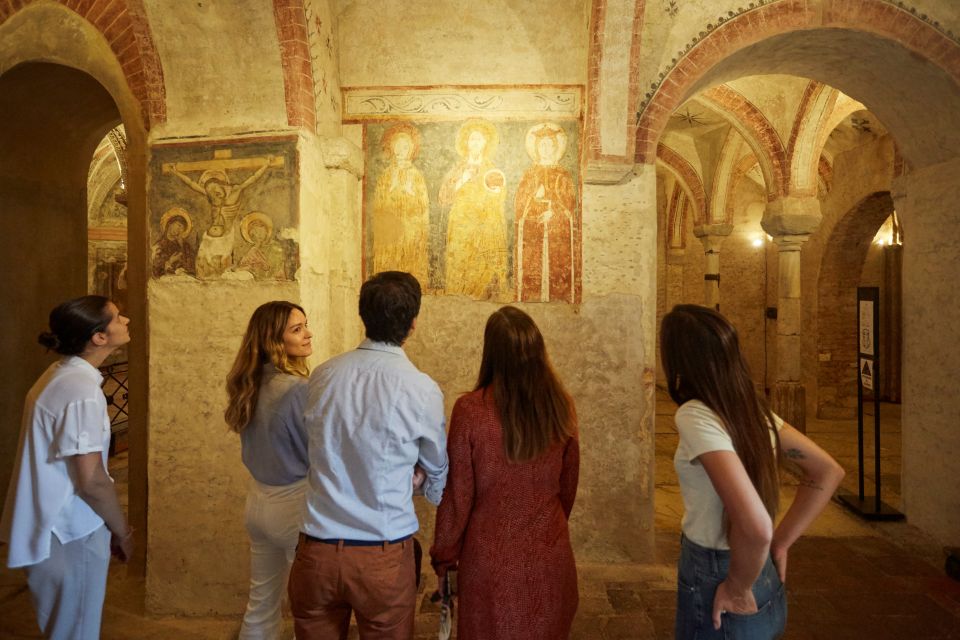
Your ticket is for a short visit—listed at 30 minutes—and that time has a purpose. The crypt is not large, and you will spend that window moving through the underground areas and taking in the key features: the church space, the restored surfaces, and the Roman forum paving elements connected to the ancient site.
In a place this compact, you will feel the difference between two types of visitors:
- The ones who rush and get only quick impressions
- The ones who pause long enough to notice what changed and what remained
If you want the most value, I’d plan to spend extra time looking at the surfaces. Restoration matters here because it helps you read the medieval decoration instead of squinting at faded fragments. The experience is also more meaningful when you accept that you are not “covering” the entire crypt like a museum floor plan. You are connecting with a few key visual zones—floor, walls, vaults—and letting them tell the story.
Language is offered, but the provided details do not list exactly which languages are available. If you care about a specific language, you can check what is offered during booking so your visit matches your expectations.
The Roman forum pavement: white Verona stone and the 4th-century link
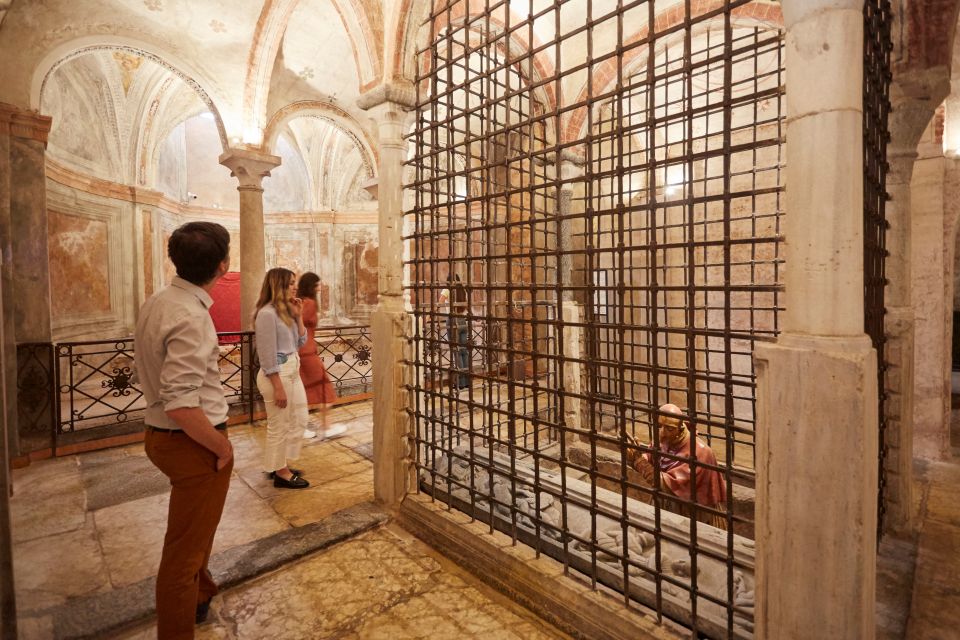
One of the best parts of this ticket is that the Roman story is not just mentioned—it is visible in the flooring. Inside, you can see large slabs of white Verona stone, and the important detail is that this paving comes from the former Roman forum area connected to the ancient city of Mediolanum.
There is also a fascinating connection to art and curiosity. The ancient forum pavement reportedly fascinated Leonardo da Vinci, and the pavement dates back to the 4th century. That matters because it means you are not just looking at “old stones.” You are looking at a material that helped form the city’s memory and also caught the eye of one of history’s great observers.
What to do here: slow down right where the paving is most noticeable. In a small underground space, floor details can be easy to miss if you keep walking at a museum speed. This is the kind of moment where standing still for 30 seconds can multiply what you get out of the visit.
This part also explains why the crypt’s location is more than a label. Being built on the forum site changes your understanding. You are essentially looking at where civic and religious life intersected in Roman Milan—and then watching how later centuries built a sacred layer over the same ground.
Medieval vaults and late 1200s decoration after restoration
Another big highlight is the visual impact of the ceiling vaults. The crypt has recently restored vaults with medieval decoration from the late 13th century. When restoration is done well, it makes the shapes and details feel less like guesswork.
In practical terms, restoration helps you do three things:
- Spot the decorative patterns without needing a guide standing right next to you
- See how the vault structure frames the interior space
- Feel the continuity of sacred use over centuries
Because this is underground, the vaults do more than decorate. They shape the acoustics and the atmosphere, and they also create that “sealed time capsule” feeling people describe.
I’d also suggest you pay attention to the transitions. Underground sites often feel like a single room. Here, you can feel different segments as you move through. The key is to let your eyes adjust and stop thinking of this as a quick hallway. Even if the total time is short, the details reward a calm pace.
The sacred atmosphere and what it means historically
This church is believed to have been founded in 1030 A.D., and it sits on top of layers tied to Roman Milan’s core. That blend is not abstract. The crypt was built entirely underground, and it is tied to the place where principal civil and religious activities took place for Roman citizens.
So when you stand there, you are doing something more than sightseeing. You are watching the same site get reinterpreted—Roman civic center into medieval sacred space, with centuries of change embedded in architecture and decoration.
For many visitors, the feeling is what sticks: the space is profoundly sacred in a way that is hard to fake. It is quiet, it is enclosed, and it is designed for contemplation rather than for crowds to sprint from photo spot to photo spot.
That also explains the mismatch some people feel. If you expect a larger, more varied walk-through experience with many separate rooms, the crypt can feel limited. But if you want concentrated meaning—history in a small footprint—this is exactly the kind of place that works.
You can also read our reviews of more tours and experiences in Milan




Practical tips to make the most of your skip-the-line entry
The ticket includes skip-the-line entry, which is valuable in a city where lines can eat your day. But the skip-the-line benefit works best when you arrive ready and on time.
Here’s how to get the best experience out of a 30-minute visit:
- Treat it like a stop with depth, not a drive-by. Give the floor and vault areas time.
- Wear comfortable shoes. You will be using stairs to get down, and underground spaces can encourage slower movement.
- Bring your curiosity. If you like Roman Milan, look for how the forum pavement relates to where you stand.
- Keep your expectations aligned: this is small, and your reward comes from attention, not scale.
One more reality check: the crypt is listed as not suitable for wheelchair users, and baby strollers are not allowed. If mobility or stroller access is part of your group needs, plan an alternative Milan site that better fits your constraints.
Price and value: is $11 worth it?
At about $11 per person, the math is pretty favorable for what you get—especially because this is skip-the-line entry to a place that is both historically specific and visually focused.
The value is not just the ticket cost. It is the combination:
- A unique underground church experience in Milan
- Roman forum pavement details you can see and step near
- Restored medieval vaults and late 1200s decoration
- A short time commitment that slots into a busy itinerary
Where some people get disappointed is simple. If you compare it to a big indoor attraction with lots of rooms, it can feel like less than you paid for. But for me, the better comparison is: a targeted, high-impact stop for anyone who likes Roman traces and medieval interiors.
If your goal is one thoughtful stop that adds real texture to your Milan day, this price is hard to argue with.
Who should book this crypt ticket (and who might feel shortchanged)
This is a great fit if you:
- Like Roman archaeology details, especially those tied to Roman Mediolanum
- Enjoy medieval church interiors where restoration helps you see the artwork
- Prefer short, meaningful visits over long museum marathons
- Want something different from the usual “big landmark” Milan route
You might feel shortchanged if you:
- Need a long walk-through with many separate rooms or photo-heavy viewpoints
- Prefer fully accessible layouts (the information provided says it is not suitable for wheelchair users)
- Are traveling with a stroller (not allowed)
If you are in the first group, you will likely find that the crypt’s size is not a limitation—it is part of the effect. It keeps the focus tight and the atmosphere intense.
Should you book the Milan San Sepolcro Crypt skip-the-line ticket?
If you like history you can touch—Roman paving, medieval vaults, and restored fresco surfaces—this is a clear yes. The $11 price makes it easy to justify, and the short 30-minute time window makes it easy to plan around other Milan highlights.
My advice for the decision:
- Book it if you want a compact, high-feeling stop that teaches you something specific about Milan’s origin point.
- Consider skipping if you want a big, sprawling attraction or if your group needs stroller or wheelchair-friendly access.
One final practical tip: confirm your entry time so you don’t show up at the wrong moment. For a short ticketed experience, that small detail can make or break the day.
FAQ
Where is the entrance to the Crypt of San Sepolcro?
The entrance is in Piazza San Sepolcro. Go through the courtyard gate where the exit of the Pinacoteca Ambrosiana is located, then look for the statue of Federico Borromeo and the staircase that leads down to the crypt entrance.
How long is the visit?
The duration is about 30 minutes.
Does this ticket include skip-the-line entry?
Yes, the ticket includes skip-the-line entry.
How much does it cost?
The price is listed as $11 per person.
Is the experience wheelchair accessible?
No, it is listed as not suitable for wheelchair users.
Are baby strollers allowed?
No, baby strollers are not allowed.
What is the provider of the activity?
The experience provider is Veneranda Biblioteca Ambrosiana.
What cancellation options are available?
The booking includes free cancellation up to 24 hours in advance for a full refund.
Are there language options?
Languages are offered, but the exact list isn’t provided in the details here. The booking page should show what languages are available for your chosen time.