REVIEW · MILAN
Milan Highlights semi-Private Walking Tour
Book on Viator →Operated by Ways · Bookable on Viator
Two hours that actually make Milan make sense. This semi-private Milan walk puts a local licensed guide in your ear while you move between big-name sights and the streets that connect them, from Roman-era bits and statues to landmarks like Milan Duomo and Teatro alla Scala.
I like the format because it’s small enough for real questions, and the route is built for quick orientation—so you can come back later without feeling lost. I also love the practical “then what?” payoff: you’ll leave with a mental map and ideas for what to revisit in your remaining days.
One thing to consider: you won’t be doing deep museum-style entry stops. Some major highlights are passed from the outside, and a few stretches may be tricky if you have reduced mobility.
In This Review
- Quick take: what makes this Milan Highlights walk work
- Milan Highlights in 2 hours: the best use of your first day
- Starting at Piazzale Luigi Cadorna: the Needle, Thread, and Knot clue
- Castello Sforzesco and Parco Sempione: power, then park views
- Heading toward Via Dante and Navigli: street energy with historical breadcrumbs
- Piazza Affari: where money and old stones share the same view
- Piazza Mercanti: the medieval square that feels like time travel
- Teatro alla Scala: learning the La Scala story from the outside
- Galleria Vittorio Emanuele II: the architecture you’ll remember
- Duomo di Milano from the outside: what to focus on
- Price and value: is $44.71 worth it?
- Who this Milan Highlights walk is best for
- Practical tips for a smoother walk
- Should you book this tour?
- FAQ
- Where does the tour start and end?
- What time does the Milan Highlights walk begin?
- How long is the tour?
- How big is the group?
- Are tickets to the castle, La Scala, or the Duomo included?
- Is hotel pickup included?
- Can I cancel for a full refund?
- Is the tour accessible for people with reduced mobility?
Quick take: what makes this Milan Highlights walk work
- Small-group feel (capped at 10 for a more personal experience, with a stated maximum up to 16)
- Learn fast on foot, with commentary that connects Roman, medieval, and modern Milan
- Icon-sight pacing: Duomo outside, La Scala outside, plus a strong run through central squares
- Galleria time: the glass-and-iron arcade is more interesting when someone points out the details
- Mobile ticket for an easy start near public transport
- Low-stress admissions since key entrances aren’t included
Milan Highlights in 2 hours: the best use of your first day
If Milan is on your must-do list, you can waste time doing random stops that never connect. This tour is designed to solve that. In about two hours, you cover a sweep of the city that helps you understand how different eras stack on top of each other—Roman traces, medieval squares, Renaissance-era power, and then the modern cultural swagger.
The best part is the guide-driven flow. A good local guide doesn’t just name places. They explain why those places matter and what you should look for next. The reviews back this up with praise for clear, articulate guides—names like Danielle, Laura, Carrisa, and Laritza show up in feedback for bringing Milan’s story down to earth.
And because the group is small, you’re not just standing in a crowd listening to someone talk at you from the front. You’re close enough to ask a quick question, adjust your walking pace, and actually absorb what you’re seeing.
You can also read our reviews of more walking tours in Milan


Starting at Piazzale Luigi Cadorna: the Needle, Thread, and Knot clue
You meet at Piazzale Luigi Cadorna around 9:30am. This is a smart starting point because it’s a major transit area, so getting there is usually straightforward. It also gives you a clean “reset” before the old-city sights begin.
At the start, you’ll see the Needle, Thread and Knot sculpture. It’s not just an art object sitting there for looks. It’s used as a symbolic anchor for Milan—one of those quick prompts that helps you understand the city’s mix of industry, precision, and style.
Practical tip: arrive a few minutes early. In the meeting area, you’ll want that buffer time so you can settle your group and start walking without stress. Two hours goes fast once you’re moving.
Castello Sforzesco and Parco Sempione: power, then park views
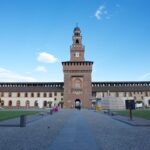
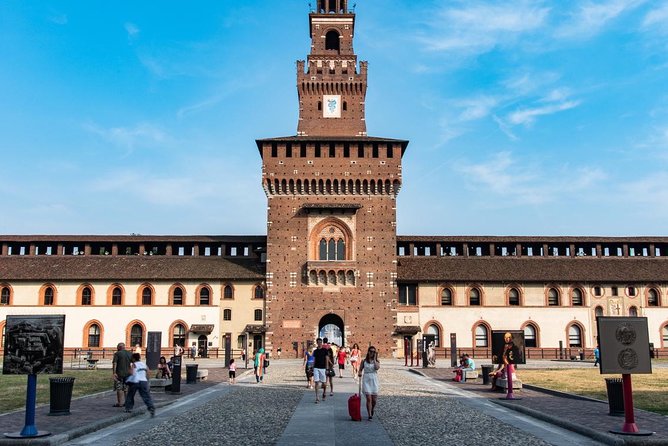
Next up is Castello Sforzesco, the Sforza Castle. Even if you don’t go inside, you get a strong first impression: the castle is substantial, and it sits right near Parco Sempione, giving you a sense of how Milan mixes monumental architecture with open space.
This stop is also a useful pacing choice. It’s long enough to feel like a “real stop,” not a photo-op sprint. You’ll get context for the Sforza presence—Milan at its political height—and how that influence still shapes the city layout around it.
One drawback to note: castle admission isn’t included. That’s fine on this tour, because the value is the explanation and orientation. But if you want to actually enter the castle, you’ll need separate plans.
Heading toward Via Dante and Navigli: street energy with historical breadcrumbs
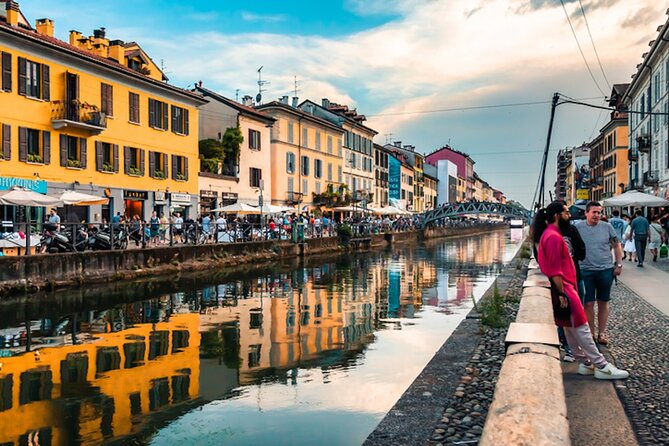
From the castle area, you move into the central grid with commentary that helps you connect what you’re seeing with what came before. The tour description points toward the Navigli quarter and the canal-side vibe, and you’ll feel it in the way the streets open up and the character shifts.
Then the walk continues through Via Dante, a pedestrian street where modern daily Milan life meets older character. This is a good moment to slow down just a little. If you’re the type who likes to understand a neighborhood rather than just tick off landmarks, Via Dante gives you that chance.
Along the way, you’ll also be guided to notice things like Roman archaeological sites and statues. You might not spot every detail on your own at street speed—so having someone point out the why behind what you’re seeing makes a difference.
A small-group note: because you aren’t in a huge pack, you can usually adjust your position. That matters for streets like Via Dante, where it’s easy to get squeezed into the wrong spot for photos.
Piazza Affari: where money and old stones share the same view
Next is Piazza Affari, known as the center of Milan’s financial district. It’s the kind of place that can feel too modern at first glance—until your guide frames it properly.
A statue sits in the middle of the square, and the real lesson here is contrast. You’re learning how Milan doesn’t erase its past when it builds for the future. Instead, it layers. That theme shows up over and over on this walk, and Piazza Affari is one of the clearest examples.
This stop is also a reminder that Milan isn’t just churches and museums. It’s a working city. If you’re coming for culture, this viewpoint helps you understand why the city feels alive even when you’re surrounded by history.
You can also read our reviews of more private tours in Milan






Piazza Mercanti: the medieval square that feels like time travel
If you want one “transport me back” moment on this tour, aim your attention at Piazza Mercanti. It’s described as a medieval square with well-preserved structures, including Palazzo della Ragione.
This stop is where the medieval layer becomes more than trivia. You’ll start to see why squares mattered back then: trade, civic life, and public identity all gathered here. Standing in an actual medieval-style setting makes the stories feel less abstract.
Also, this is a good place for quick questions. If you’re wondering how Milan’s government and guild life shaped the city’s look, your guide can usually connect that directly to what you’re seeing in the stonework and layout.
Admission isn’t included here either, because most of the “experience” is about the architecture and street context. That’s consistent with the tour’s theme: explanation over entrances.
Teatro alla Scala: learning the La Scala story from the outside
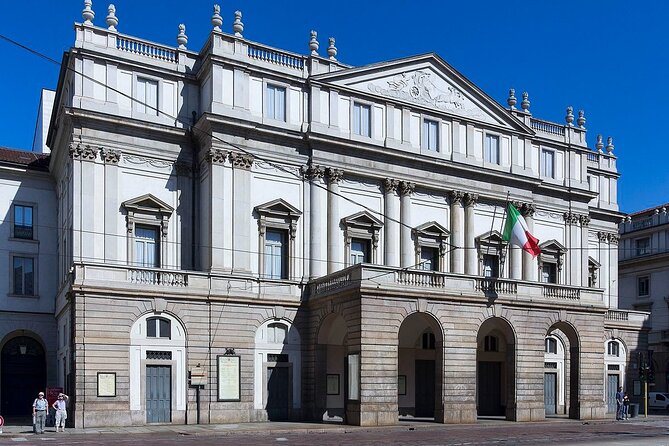
At Teatro alla Scala, you won’t be going inside, but you’ll pass by one of Italy’s cultural symbols. The tour includes commentary about the opera house, so you’re not just looking at a famous façade.
Why this matters: if you’re planning any evening performances or you’re an opera fan, you’ll get more out of your later visit or research. Even if you never buy a ticket, understanding why Scala matters helps you read Milan’s cultural priorities.
Timing also helps. The tour gives you a short window—around 15 minutes—to take it in and learn the essential background without dragging the whole walk.
One consideration: admission for the theater isn’t included, so don’t expect a ticketed entry.
Galleria Vittorio Emanuele II: the architecture you’ll remember
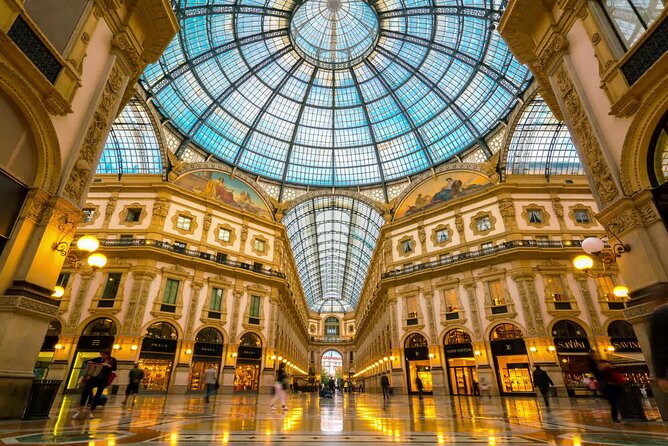
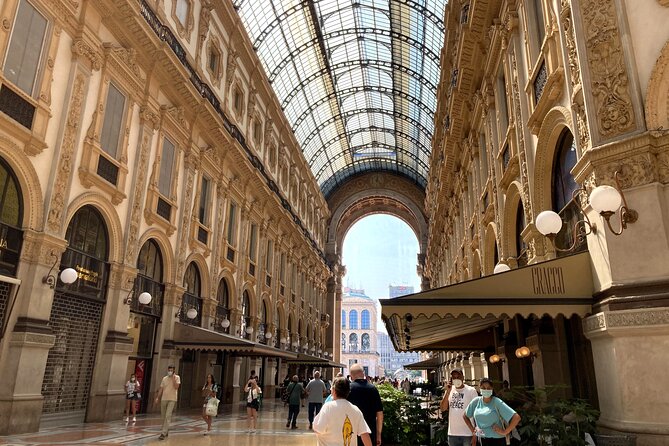
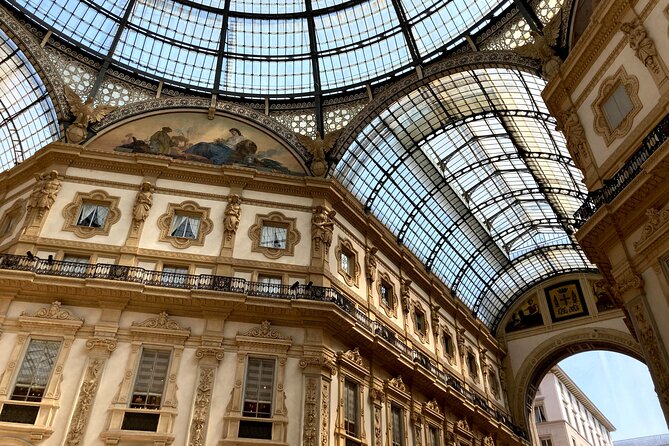
Then you walk into Galleria Vittorio Emanuele II. This is the grand shopping arcade crowned with vaulted glass and iron arcades—named after the first king of Italy. Even if you don’t shop, this space is worth your attention because it changes the feel of the city instantly.
The main value here is guided observation. Your guide can point out what makes the structure special: the roof, the iron-and-glass look, and how the galleria connects streets like a living passage. It’s one of those Milan moments where you can’t quite believe it’s real until you’re standing under it.
This is also a good mental reset point near the tour’s finish. Once you’ve seen the galleria, the walk back toward the Duomo zone feels more logical. It’s like the city starts to snap into place.
Duomo di Milano from the outside: what to focus on
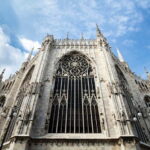
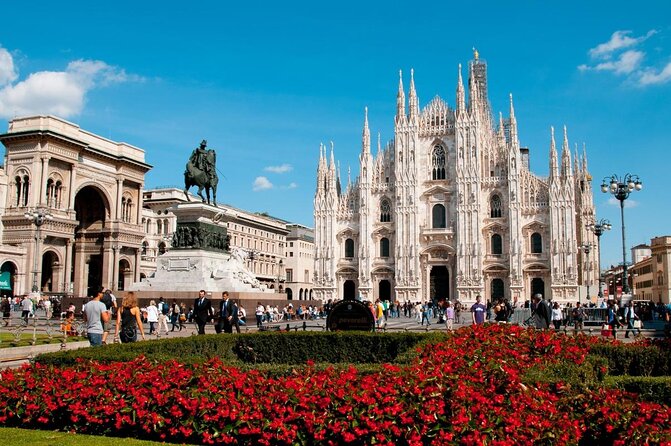
Finally, you head to Duomo di Milano. You’ll admire the cathedral from the outside for about 20 minutes. That may sound simple, but it’s actually a strong closer because the Duomo is a visual anchor for the entire trip.
A couple of things to keep in mind: the Duomo isn’t included as an entry, and the tour is mainly about orientation and context. But from the outside, there’s still plenty to watch—mass, façade rhythm, and the way the church dominates the square space around it.
This stop is also where your guide’s earlier commentary pays off. If you’ve learned how Milan’s eras connect, the Duomo looks less random and more like the culmination of civic identity.
You end at P.za del Duomo, near the cathedral area, so it’s easy to continue on your own afterward.
Price and value: is $44.71 worth it?
At $44.71 per person, this tour sits in the “useful first-day guide” category. You’re paying for something intangible: a licensed guide who gives you historical context while you’re walking, plus a small-group setup that keeps the experience from feeling like background noise.
A big value point here is that the tour includes the guide, but key admissions aren’t included. That’s not a negative. It just means the price is really about learning and orientation, not paying for museum entries. If you’re trying to see lots of highlights without committing to multiple paid entrances, this model works well.
You should also consider timing. Booking tends to happen about 51 days in advance on average, which suggests many people treat this as a first- or second-day activity. If you’re traveling in peak season, booking ahead helps you lock a slot that matches your schedule.
Who this Milan Highlights walk is best for
This tour fits you if you want:
- a quick way to understand Milan’s main neighborhoods and landmarks
- a guide-led route that reduces decision fatigue
- an easy start from a major meeting point and a clear end near the Duomo
- a mix of architecture and street-level history without long museum time
It may not fit you if you need lots of indoor time or step-by-step access inside specific monuments. The structure here is outside-looking, with the guide doing the heavy lifting on context.
Practical tips for a smoother walk
Here’s how I’d set yourself up so you get your money’s worth.
Wear good shoes. This is a walking tour through city streets and squares. Even if the duration is only about 2 hours, you’ll feel it by the end.
Plan for the fact that not every part will be equally easy to access. The tour notes that some sections may not be easily accessible for people with reduced mobility, so if that’s a concern, check details directly with the provider.
Also, don’t treat this as your only Duomo plan. Since the Duomo visit here is outside, you’ll likely want to decide separately whether you want to go inside during your free time.
If you like to follow up after tours, bring a little list. Write down what you want to revisit—Galleria, Navigli/canal areas, a medieval square detail your guide mentioned, or anything that sparked your curiosity.
Should you book this tour?
I’d book it if you’re trying to get your bearings in Milan fast and you value clear guide context more than ticking off paid entrances. The small-group approach, the mix of Sforza Castle area, central squares, La Scala frontage, Galleria Vittorio Emanuele II, and the Duomo zone is a solid “highlights plus meaning” plan.
I’d skip it (or pair it differently) if your priority is indoor monument access with guided entry tickets. Since major admissions aren’t included, you’ll need separate plans for places like the castle interiors or the theater.
If you want a first-day win, this is a good bet: you’ll walk away with a map in your head, not just photos on your phone.
FAQ
Where does the tour start and end?
The tour starts at Piazzale Luigi Cadorna (20123 Milano MI, Italy) and ends at Duomo di Milano, at P.za del Duomo, 20122 Milano MI, Italy.
What time does the Milan Highlights walk begin?
The start time is 9:30 am.
How long is the tour?
The duration is about 2 hours.
How big is the group?
It’s described as a small-group tour capped at 10 people for a more personal experience. The maximum listed is 16 travelers.
Are tickets to the castle, La Scala, or the Duomo included?
No. Castello Sforzesco, Teatro Alla Scala, and Duomo di Milano are listed as admission not included, so you’d need separate tickets if you want to enter.
Is hotel pickup included?
No, hotel pick up and drop-off are not included.
Can I cancel for a full refund?
Yes. You can cancel up to 24 hours in advance for a full refund. If you cancel less than 24 hours before the experience start time, the amount paid won’t be refunded.
Is the tour accessible for people with reduced mobility?
Some parts may not be easily accessible for people with reduced mobility or disability. If you’re unsure, you can contact the provider for details.