REVIEW · MILAN
Bernina Red Train, Swiss Alps & St Moritz From Milan
Book on Viator →Operated by TAOTRAVEL · Bookable on Viator
One train ride can change a day. This Milan to St. Moritz trip pairs a Bernina Red Train climb through the Alps (UNESCO route) with time in St. Moritz, the slick, high-altitude resort town people dress up for even when the air bites. I especially like that you get guided help and built-in transport, so you’re not stitching schedules together after a long day.
Two things I like a lot: the coach-to-train-to-coach flow that keeps the hassle low, and the fact that the train climb reaches 2,253 meters (7,390 feet), the highest point reached by trains in Europe. One consideration: it’s a long day. You’re on vehicles for hours, and St. Moritz time is limited, so it rewards you if you love big views more than slow wandering.
Guides and drivers can make or break day trips, and this one tends to land on strong people. Names that pop up in feedback include Sabrina, Mya, Monika, Alejandro, Maria Christina, Barbara, Lina, and Monica, with drivers such as Salvatore, Fabrizzio, Enzo, and Claudio often praised for getting everyone there safely and on time. If you want a relaxed pace, this tour may feel rushed. If you’re okay with a packed schedule, it’s a great way to see a lot of Switzerland in one shot.
In This Review
- Key highlights worth your attention
- The Bernina Red Train climb: the main character here
- Milan pickup and the reality of a long day
- The road stops: Lake Como views and quick reset breaks
- St. Moritz time: a quick orientation and real spending money needed
- The train seat strategy: window time, crowd level, and photo pacing
- Tirano in the evening: what you get (and what you don’t)
- Who the guides and drivers are (and why it matters)
- Price and value: what $168 buys in a single day
- Packing and timing tips that make the day easier
- Should you book this Bernina and St Moritz day trip?
- FAQ
- How long is the Bernina Red Train, Swiss Alps & St Moritz day trip?
- What train ticket do I get?
- Is food included?
- Where do I meet in Milan?
- Do I need a passport or ID?
- What’s the group size?
- Final verdict: is this the right day trip for you?
Key highlights worth your attention
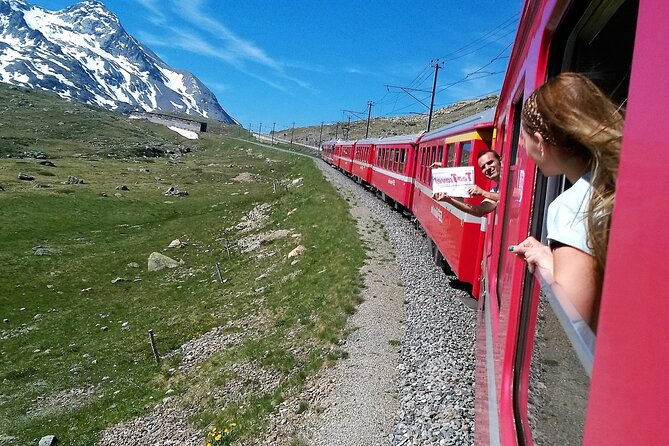
- Bernina Red Train second-class ride with opening windows: great for photos and fresh air
- UNESCO-listed route through the Alps, with a climb to Europe’s highest rail point
- St. Moritz free time for shopping and pastry stops (own expense)
- Central Milan pickup near Milano Centrale area, then back the same place
- Small-group feel for the rail experience, with a maximum of 48 people
- Real-world timing: a long day, but with multiple chances to get viewpoints and breaks
The Bernina Red Train climb: the main character here
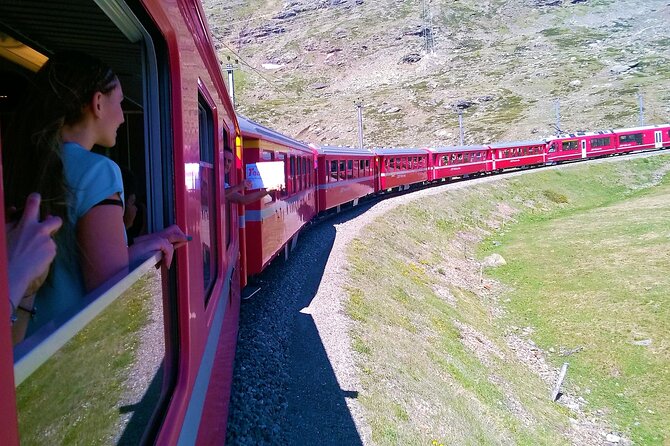
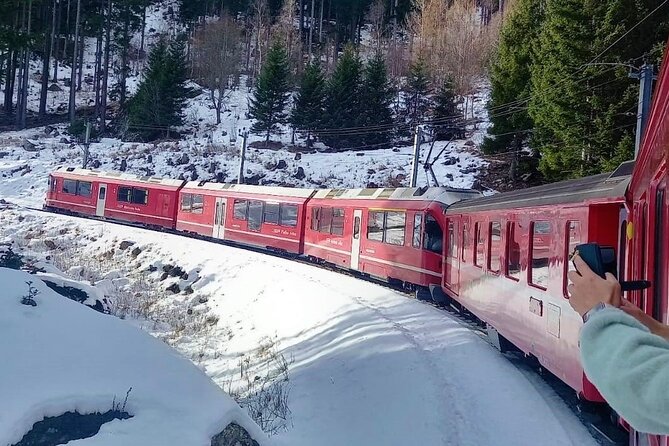
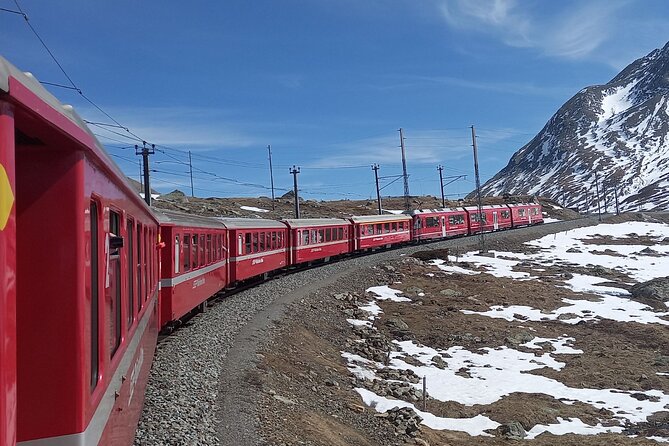
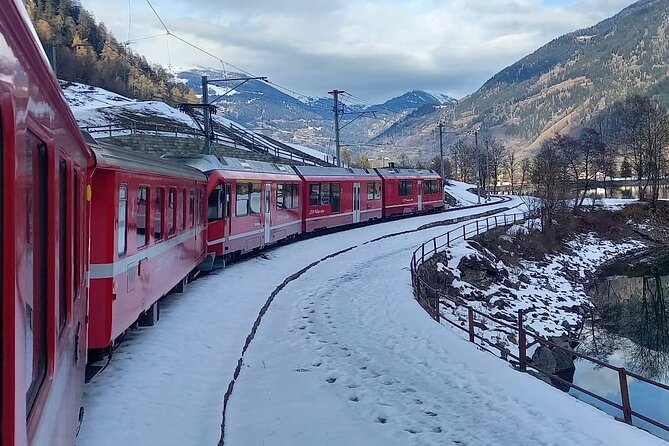
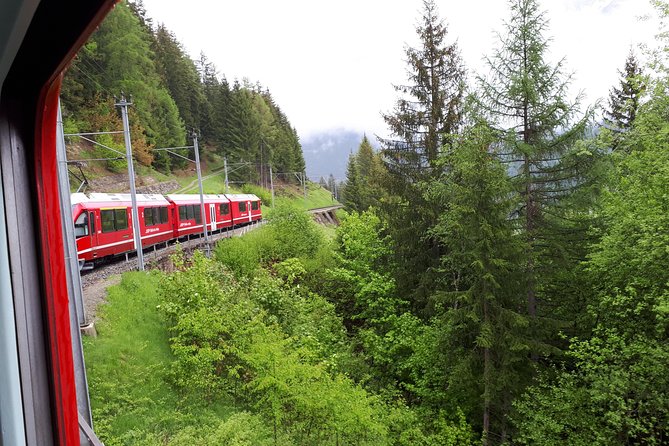
This tour is basically built around the Bernina Red Train experience, and that’s the right mindset. The route runs through the Alps on a UNESCO World Heritage setting, and the train gains altitude fast enough that you feel like you’re leaving the ordinary world behind. You’ll ride up toward 7,390 feet (2,253 meters), the highest point reached by trains in Europe—yes, that’s the kind of fact that sounds like trivia until you’re watching the scenery change.
A helpful expectation-setting detail: this is the Red Train ride you see on standard services, not a special version with roof-top windows. One review explicitly points out that it’s not the roof-window style, but you still get strong views from the sides. Translation for you: don’t worry, you can still photograph the Alps well. Just choose seats with your camera ready and expect window light changes as the train curves and the sky shifts.
The tour also includes an on-board explanation, so you’re not just staring out the window with zero context. Even if you’re not a rail nerd, it makes the scenery feel more “readable,” like you know what you’re looking at instead of just enjoying pretty mountains.
You can also read our reviews of more tours and experiences in Milan.
Milan pickup and the reality of a long day
You start in Milan, meeting at Piazza Duca d’Aosta. The meeting point is near major transit, and the tour ends back at the same spot (including a drop-off at Hotel Gallia Piazza Duca d’Aosta, 9). Most of the day runs on approximated travel times, and that’s true for any cross-border mountain itinerary. Still, the structure is consistent: coach/bus out of Milan, train through the Alps, then coach back.
The trip duration is about 12 hours, and reviews repeatedly flag that it’s long. Here’s the trade: you spend the day covering distance so you can experience the train and St. Moritz, but you’re not doing deep sightseeing in each small stop. If your ideal day is two or three places with long walks and slow meals, you might find this too compressed.
On the other hand, the long day often pays off for people who want “big Switzerland” without planning. You get air-conditioned transport, an English-speaking guide, and train tickets that remove a key headache: figuring out rail timing after you’ve already been on a morning bus.
The road stops: Lake Como views and quick reset breaks
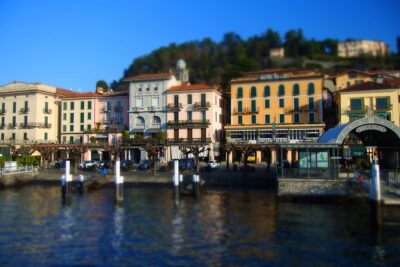
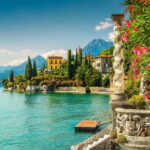
Between Milan and the Alps, the day doesn’t just teleport. You’ll make a breakfast stop and a couple of short breaks that keep the schedule moving. One of the most memorable roadside moments is the chance to admire Lake Como along the way. Even if it’s just glimpses through the windows, that first hit of Italian scenery makes the shift into Switzerland feel less abrupt.
There’s also a breakfast stop around Piantedo (short duration) and then travel toward St. Moritz with a longer stretch that includes Maloja as a waypoint. In practical terms, these stops exist so you can use the bathroom, grab something to hold you over, and reset your expectations: once you’re in the train portion, you’ll want snacks and patience for the ride.
Tip that matches what I’d do: bring your own water and a couple of easy snacks. Food and drinks aren’t included, and on a schedule like this, you don’t want to start hunting for something edible right when everyone else is doing the same.
St. Moritz time: a quick orientation and real spending money needed
St. Moritz is where the tour adds contrast. You go from train views to a town where the pace is slower and the storefronts are… let’s say, confident. The city portion is short, followed by free time in St. Moritz for shopping or food tasting (all own expense). Plan for about an hour and a half of city orientation plus free time, depending on how the timing works on your date.
St. Moritz sits high in the Engadin valley at 1,856 meters, and it was developed in the 19th century. Even in winter, it feels like a resort designed for people who like their scenery paired with style. In colder months, you may find the town can look like a postcard—some feedback mentions snow adding drama to the day.
Two realistic notes for your planning:
- In September to November, many shops may be closed. If you’re hoping for a shopping spree, check what season you’re going.
- St. Moritz is expensive by Swiss standards. If you’re going to do a pastry tasting or a proper sit-down lunch, treat it as a budgeting event.
For restaurant strategy, the guide can help. People often mention guides giving suggestions for where to eat and what to try. Also, don’t waste your free time searching for the meeting point later. Get your bearings fast, then slow down.
The train seat strategy: window time, crowd level, and photo pacing
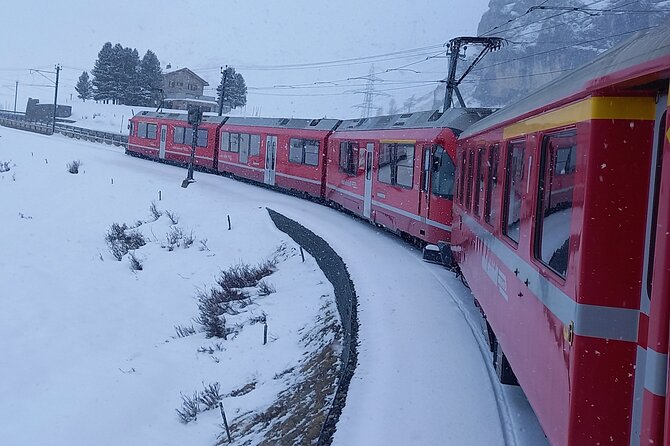
Your Bernina train ride is about 2 hours 20 minutes (the St. Moritz–Tirano option). Some itineraries can involve a St. Moritz–Thusis option instead, but in either case the key is the same: you’re in for serious Alpine views and a steady climb-and-descent feel.
Seat strategy matters because views change as the train curves. Feedback mentions that views come from both sides at different times. So if you can choose, consider this logic:
- If you care more about wide valley views, pick a side that faces open sections when the train heads toward those viewpoints.
- If you mainly want dramatic peaks close-up, you can still get them from either side, but you’ll want to be ready to switch attention as the route changes.
Comfort is usually fine, but this is still a group rail day trip. One review describes being squeezed in a crowded carriage, so if you’re sensitive to crush-level seating, treat that as a possibility. In general, keeping your expectations aligned with second-class travel is smart: you’re paying for the route and the experience, not a private rail coupe.
One more note that’s worth your attention: reviews mention opening windows. That’s huge for two reasons—photo clarity and fresh air. Just be mindful that in cold conditions you’ll want gloves on quickly and a hat that stays put.
Tirano in the evening: what you get (and what you don’t)
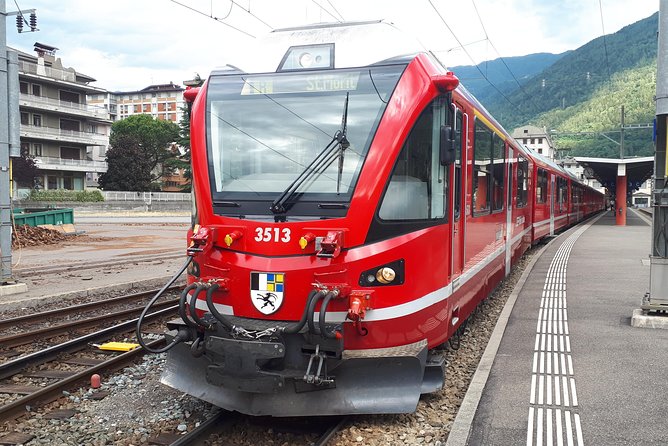
After the train, you arrive in Tirano in the evening. Think of Tirano as the “end of the rail chapter,” not as a full second sightseeing day. The tour then returns to Milan by coach/minibus.
Evening return timing means you’re unlikely to explore Tirano deeply. The value is that the day finishes with the main Alpine highlight already done. You’ll likely get a short moment on the ground, then get back on the bus.
One small but helpful practical reality: the return drive can feel long, especially in the dark. Reviews commonly mention the ride back being a bit long, even when people enjoyed the day overall. Bring something to pass the time—download an offline playlist, and keep your charging cord ready.
Who the guides and drivers are (and why it matters)
This itinerary depends on coordination. That means your guide’s pacing and your driver’s skill matter, especially with narrow roads and tight meeting schedules.
Feedback highlights guides like Sabrina, Mya, Monika, Alejandro, Maria Christina, Barbara, Lina, and Monica for being organized, friendly, and clear about where to meet and what comes next. You’ll also notice a pattern: strong guides explain what you’re seeing, not just where you’re going. That turns “pretty mountains” into “I get the story of this valley and this route.”
Drivers named in feedback—Salvatore, Fabrizzio, Enzo, and Claudio—are repeatedly praised for safe, skilled driving. You don’t need to be a bus expert to appreciate that. If you’re prone to motion sickness, this is one reason to take the tour seriously: a confident driver makes a huge difference when the roads start winding.
Price and value: what $168 buys in a single day
At $168.09 per person, you’re paying for a bundled experience: Milan transfers, an English-speaking guide, time in St. Moritz, and the train ticket on the Bernina route in second class. You’re also paying for time convenience. You don’t have to design a transport plan from scratch or worry about rail connections while juggling jet lag or a busy travel schedule.
What’s not included is also part of the value equation. Food and drinks are your responsibility, and St. Moritz is where that adds up fast if you go wild. You’ll likely want to budget for:
- pastries or coffee during your Italian stretch
- a meal (or two) in St. Moritz
- snacks and water for the train portion
If you can handle long days, this price can feel like a bargain because the expensive part—transport and the iconic train segment—is already handled. If you hate riding in vehicles, the cost might feel high because most of your time is spent moving rather than roaming.
Either way, treat this as a rail-and-views day. Not a deep dive into every town along the way.
Packing and timing tips that make the day easier
Here are the practical moves that fit how this trip runs, and they line up with common real-world notes:
- Bring snacks and water. Food isn’t included, and you don’t always have long breaks to shop.
- Dress for shifting temps. You go from Italy to higher elevations and potentially snow. Layers beat one heavy coat.
- Be ready for a rushed feel in St. Moritz. Plan to hit highlights quickly: pastries, a quick wander, and then back to meeting points.
- Double-check meeting instructions if you’re arriving early. One review flags that the meeting place can be confusing, and late confusion kills travel energy.
- Keep your passport/EU ID handy. A valid passport or EU ID card is required on the travel day.
Also note a logistics detail that can matter: luggage storage on the bus is not guaranteed. If you’re traveling with bulky bags, ask the guide how storage will work on your route.
Should you book this Bernina and St Moritz day trip?
Book it if you want the Bernina Red Train in a low-stress, organized package and you’re okay with a full day schedule. This is a strong pick for first-timers to Switzerland who want the iconic rail experience plus a taste of St. Moritz without spending days planning transit.
Skip it (or consider a different style of trip) if you hate long travel days, struggle with crowds, or prefer lots of time in one place over quick hits. This itinerary gives you big Alpine views, but it doesn’t pretend to be a slow, deep sightseeing tour of every stop.
If you’re on the fence, I’d base your decision on one question: do you want the train and the scenery more than you want a laid-back pace? For many people, that answer is yes—and that’s exactly why this day trip earns such strong ratings.
FAQ
How long is the Bernina Red Train, Swiss Alps & St Moritz day trip?
The duration is approximately 12 hours, with transfer times that can vary based on traffic and time of day.
What train ticket do I get?
You get a second-class train ticket for the Bernina Red Train segment (St. Moritz to Tirano or vice versa). Depending on the itinerary, there may also be an option involving St. Moritz to Thusis.
Is food included?
No. Food and drinks are not included. You’ll have free time in St. Moritz where you’ll pay on your own for shopping and food.
Where do I meet in Milan?
You meet at Piazza Duca d’Aosta, near Hotel Gallia (pickup and drop-off are back at/near the same central meeting point).
Do I need a passport or ID?
Yes. You need a current valid passport or EU ID card on the day of travel.
What’s the group size?
This tour/activity has a maximum of 48 travelers.
Final verdict: is this the right day trip for you?
If your goal is one unforgettable Alpine rail ride plus a taste of St. Moritz, this is a solid, practical choice. Just go in knowing it’s a long day with limited town time, and plan for expenses in St. Moritz. If you match that pace, you’ll likely leave with exactly what this tour is built to deliver: big mountain views and a Bernina ride you’ll talk about long after the photos are posted.